





















Comparing Sitecore and CoreMedia?
If you're weighing both platforms, details matter. See how CoreMedia and Sitecore stack up on licensing, integrations, flexibility, deployment, security, compliance and support, side by side, so you can decide with the full picture.

Choose the right CMS (FAQs)
Here's everything you need to know to make an informed decision.
How does a composable CMS reduce complexity compared to Sitecore?
A composable CMS reduces complexity compared to Sitecore by letting teams run each capability, content management, personalization, experimentation, and customer data, independently or together, so you adopt only what you need instead of a full suite bought all at once. Sitecore's DXP was assembled through multiple acquisitions, which can leave you integrating and paying for components you don't use. CoreMedia's CMS connects to your existing stack through 150+ pre-built connectors, so you extend the platform rather than rebuild around it.
What are good alternatives to Sitecore for personalization and experimentation?
Good alternatives to Sitecore for personalization and experimentation include CoreMedia, Adobe Experience Manager, and Optimizely. CoreMedia stands out with built-in personalization, A/B testing, and flexible integration into composable architectures without the rigidity of a monolithic DXP. Optimizely and Adobe are strong options for organizations prioritizing experimentation or already invested in their broader ecosystems.
Is CoreMedia easier to implement and maintain than Sitecore?
CoreMedia supports fast deployment and long-term maintainability through its best-of-breed architecture, cleaner upgrade paths, and lower operational complexity. Enterprises can migrate to CoreMedia within 90 days, move faster without extensive customization or heavy infrastructure overhead.
Can CoreMedia be used as a replacement for Sitecore in enterprise environments?
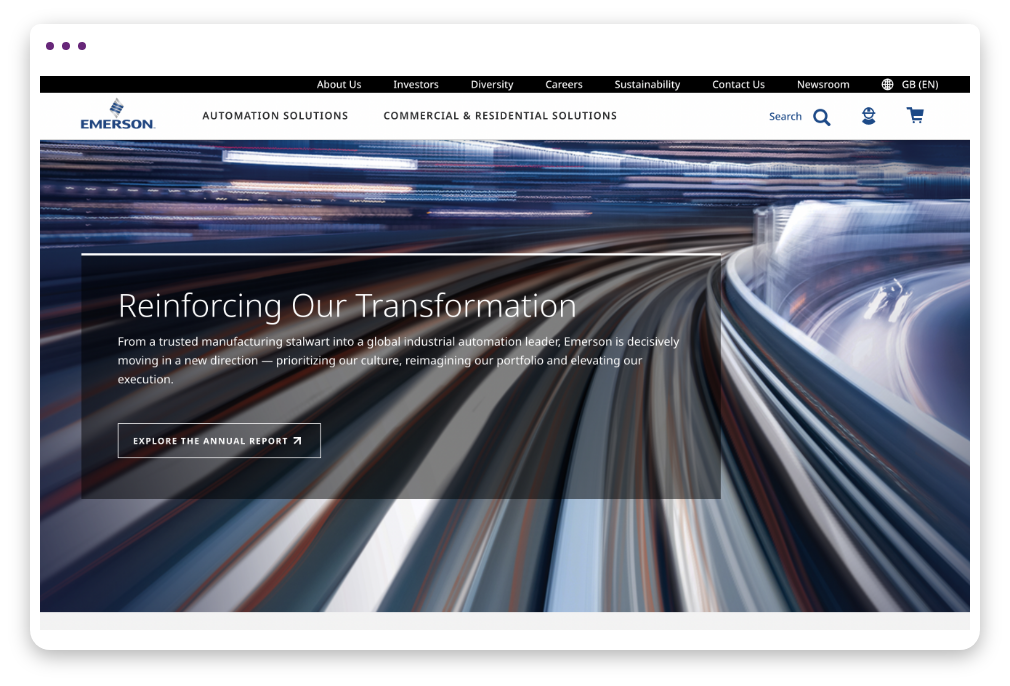
Yes, CoreMedia can be used as a replacement for Sitecore in enterprise environments. CoreMedia runs large-scale, multi-brand, multi-region operations for enterprises like Emerson, which unified 400 websites and 62 brands in a single CMS. It offers native personalization, deep commerce integrations, and enterprise governance such as role-based access and approval workflows, with certifications including ISO 27001 and GDPR compliance, which suits regulated industries.
When should organizations consider migrating from Sitecore to CoreMedia?
Organizations should consider migrating from Sitecore to CoreMedia when they want to reduce complexity, improve time to market, or move to a composable architecture that scales without per-add-on licensing. The common triggers are paying for bundled features that go unused and facing a costly forced cloud migration, which is why many teams evaluate at renewal or ahead of a major replatform.
Why is built-in experimentation important for enterprise teams?
Built-in experimentation helps teams learn what works while content is live, rather than relying on assumptions or post-campaign analysis. When testing and optimization is part of everyday workflows, teams can improve performance continuously without added complexity.
Low-risk migration in less than 90 days
Replacing Sitecore and migrating to another CMS seems complex, but with the right approach, it’s easier than you think. Our proven migration process and expert-led team ensure a smooth transition - moving all your content, users, metadata, and assets with zero disruptions and maximum efficiency.
Coming from Sitecore, we start with a thorough assessment to map your content to the CoreMedia model. A discovery phase helps determine what needs to be migrated, streamlining the process. From a technical perspective, we extract content using Sitecore APIs, transform it for CoreMedia, and import it via CoreMedia’s ingest service. By employing a smart agile methodology, Enterprise Ireland migrated to CoreMedia within just 90 days.