





















Get to know CoreMedia with a personal introduction from an expert.
What you’ll get
- Explore key features relevant to you
- See how businesses like yours have grown with CoreMedia
- Guidance on changing platforms like a pro


| Area | What to require | What to ask the vendor for |
|---|---|---|
| Core system boundary | Content delivered over documented APIs, no write path into systems of record, no shared release schedule | An architecture diagram showing content flow and system boundaries |
| Security evidence | A current ISO 27001 certificate covering the platform you are buying, a tested disaster recovery plan, a recent penetration test | Each document with its date, scope and, for tests, whether findings were closed |
| Access and SSO | SAML-based single sign-on with your identity provider, multi-factor authentication, roles per business unit | A live connection to your identity provider and a permission model for two units |
| Approvals and audit trail | Four-eyes approval as a minimum, multi-step approvals per unit, full version history, a change log compliance can export | A demo of a two-unit approval flow and an exported audit log |
| Deployment and data residency | Managed cloud in an EU region you choose, private cloud or on-premises, fixed in the contract per entity | Hosting locations named per environment and the subprocessor list |
| Exit and data handover | Full content export in a portable format | The export process and how long a handover takes |
| Editorial speed | Visual editing and omnichannel preview, with no developer needed for routine changes | A live demo run by a business user |
| Translation and localization | A changed disclosure updates in every market and language, with translations tied to the source | A demo of one disclosure change reaching the translated pages, and how outdated translations are flagged |
| Personalization and CX | Segments and A/B tests managed by editors, each variant approved, human handoff to advisors | A demo of a personalized variant going through approval |
| AI governance | Human approval on every AI suggestion, a choice of language model, a known processing location | Documentation of where AI runs and how its output is reviewed |
| Updates | A predictable release cycle and long-term support versions | The release cadence and how breaking changes are announced |
| Total cost of ownership | Routine copy changes handled by editors, with no developer or release needed | Which routine changes need a developer, and which metrics the license is based on |
Why CoreMedia for Banking?
Deliver unified customer experiences across branches, mobile apps, websites and contact centers. The CoreMedia Experience Platform connects every channel, so customers get relevant, joined-up interactions at each touchpoint.
Combine AI-driven analytics with real-time, privacy-first data to tailor every experience. Using zero- and first-party data, the platform keeps personalization accurate and compliant, so a new visitor exploring loan options and a returning customer managing an account each get content matched to their needs. The result is higher satisfaction and stronger loyalty, built on data your customers trust you with.
AI handles large data sets and repetitive tasks well, but trust and empathy stay human. CoreMedia lets your teams read customer needs in real time while keeping the personal touch that builds lasting relationships. Give customers the option to reach a human advisor at decisive moments, such as completing a credit application, upgrading a loan, weighing investment options, or finalizing a mortgage. That lifts both satisfaction and conversion by adding personalized support at the moments that decide the outcome.
Security underpins every financial relationship. CoreMedia is ISO/IEC 27001:2022 certified and GDPR-ready, with role-based access, approval workflows, and audit logs that keep sensitive customer data protected and every change accountable. Hosting and data residency options, and how the platform supports GDPR, DORA, and the EU AI Act, are covered in "A secure CMS built for regulated financial services" above.
Banking is evolving faster than ever, and customers now demand seamless digital experiences, personalized attention and genuine support. Meeting these expectations isn’t just important, it’s how financial institutions stay ahead.
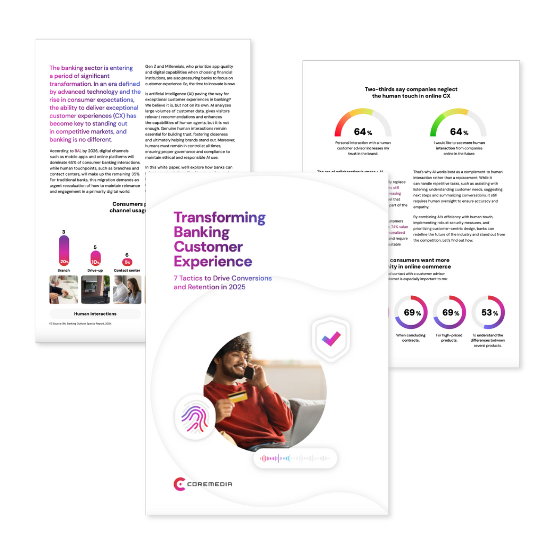
Get this white paper and discover 7 actionable strategies for creating unforgettable customer experiences, building loyalty and driving growth, by combining the power of AI with a human touch — not just to keep up but to lead the way.
Book a demo, or talk to an expert about GDPR, DORA, EU hosting, and multilingual content for your institution.
Look at five areas: security and compliance, workflow and approvals, architecture, integrations, and how fast your editors can publish and personalize. Financial services sites carry more risk than a standard corporate website: they handle sensitive data, need multi-step approvals and have to keep a complete audit history. Most shortlisted platforms pass the security baseline, so weight the rest by your own structure: a single-entity insurer can treat governance lightly, a group with several licensed entities cannot, and anyone whose content sits near a transactional journey should put architecture first.
There is no fixed list, and the useful question is which shortlist your own structure produces. A multi-entity banking group and a single-brand insurer will reach different finalists from the same market. Start from your entity structure and your core system boundary rather than from a vendor roundup. CoreMedia Digital Experience Platform covers each of these areas, and Deutsche Bundesbank and IKB Deutsche Industriebank are running proof: a central bank with its publications decoupled from its delivery applications, and a bank that consolidated separate legacy systems onto one platform its own team controls.
A CMS for financial services needs a clear boundary between published content and transactional systems. Headless architecture is one way to deliver that boundary, and it earns its place when the same content also feeds apps, portals and in-branch screens. A headless CMS wired directly into a core system delivers no boundary at all, so ask for an architecture diagram showing which system calls which.
Ask for evidence issued or retested within the last 12 months rather than whatever was current at the last audit cycle. A compliance certification says an audit was passed, while compliance evidence shows when it happened, who performed it and what was tested. The dates matter more than the list: an ISO 27001 certificate issued three years ago with no surveillance record tells you less than a penetration test from last quarter with its findings closed. The evidence is what you file in your own records and show your supervisory authority.
CoreMedia is GDPR-ready and ISO/IEC 27001:2022 certified, with EU data residency options, role-based access, approval workflows, and audit logs. These give compliance teams a defensible foundation. Compliance depends on how the platform is configured and operated.
Yes. CoreMedia can be hosted in an EU region so content is stored and processed within Europe, or in your own private cloud or on-premise.
DORA sets ICT risk and operational resilience requirements for EU financial entities. Under DORA, the CMS contract also goes into your register of ICT contracts, classified by whether it supports a critical or important function. CoreMedia supports these obligations with flexible EU hosting, role-based governance, audit logs, and a proven record of stability with institutions like Deutsche Bundesbank and German federal parliament. Your compliance team owns DORA compliance; CoreMedia provides controls to build on.
Yes. CoreMedia runs on-premise, in a private cloud, on any major cloud, or in a hybrid setup, so you can keep sensitive workloads inside your own environment.
Use a single governed source with built-in translation and localization workflows — so you manage content across languages and regions from one place, with governance and approvals to keep every market consistent and compliant. CoreMedia manages this in one platform, with per-market permissions and full audit trails.
Deutsche Bundesbank, Eurex, IKB, LGT and Truity Credit Union build on CoreMedia, among other financial and public institutions.
Keep a person accountable at every step. A rate, fee or disclosure on a public page is a statement a supervisor can hold the bank to, so AI output should never go live unreviewed. AI in a regulated environment should be baked directly into your content workflows, so it never operates outside the system, outside your governance, or outside your data boundaries. That means working inside existing roles and permissions, requiring named editor approval before any AI-assisted change goes live, and giving you the choice of which language model processes your data, including models hosted within your own infrastructure. CoreMedia comes with AI out-of-the-box, with human oversight in the architecture, in line with the EU AI Act's requirements for regulated environments.
What you’ll get

Content Management
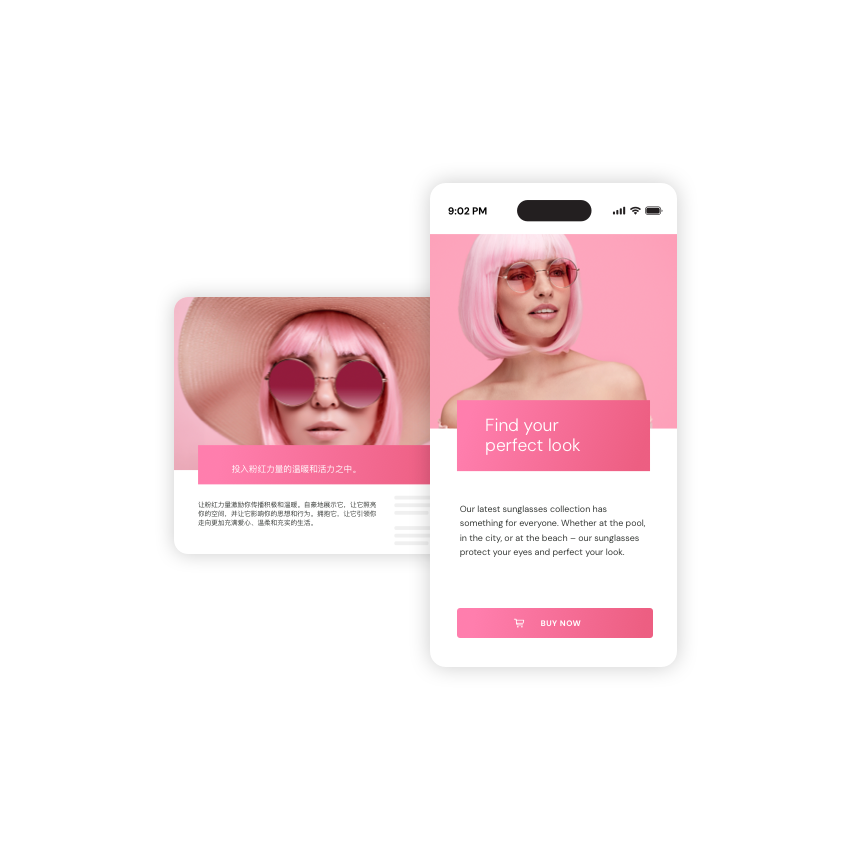
Create highly engaging content for all channels, regions and languages - turbocharged by AI.
Personalization & Experimentation
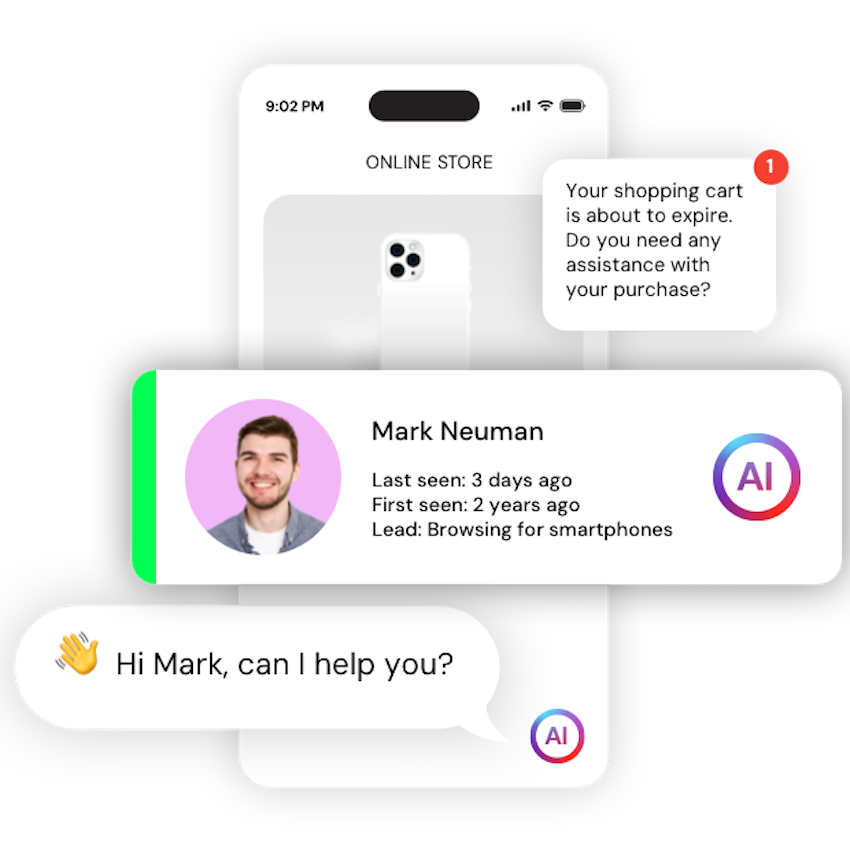
Deliver personalized experiences that adapt to each user – powered by data, insights and ongoing optimization.

Marketing Automation
Automate and orchestrate campaigns across every channel – turning data into timely, relevant messages.
Customer Engagement
Turn visitors into loyal customers with conversational, human-centered experiences.