





















What is a multisite CMS?
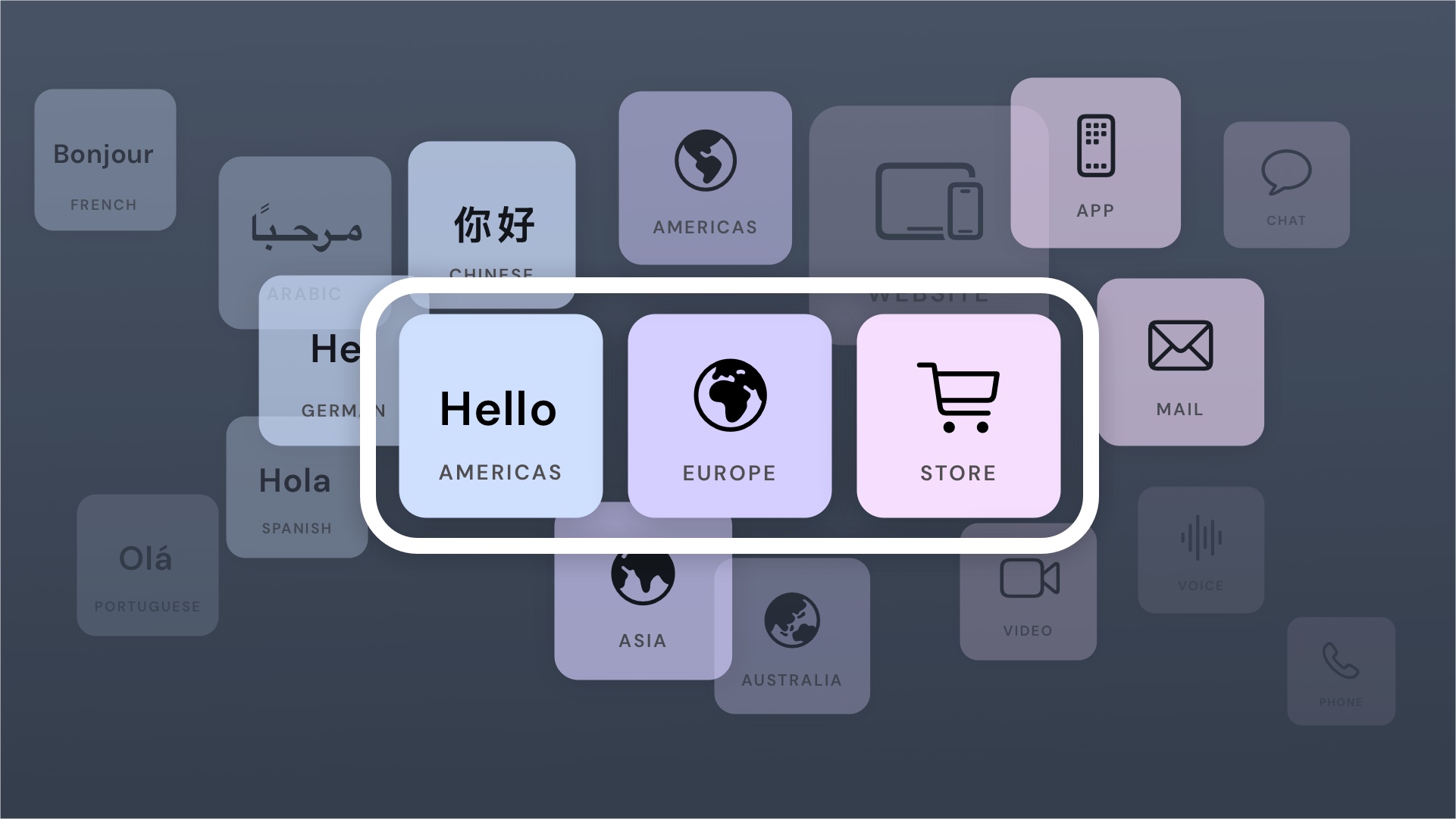
A multisite CMS is a content management system that lets an organization build, manage, and publish multiple websites from a single platform. Instead of maintaining a separate installation for each instance, teams work in one environment, share the underlying infrastructure, templates and content, and control every site from a central dashboard.
That can include:
- Regional storefronts
- Sub-brand microsites
- Event or campaign microsites
- Investor relations or press portals
- Dealership or reseller portals
- Country-specific corporate sites
- Individual brand sites within a multi-brand portfolio
- Department and municipality sites within a government's digital estate
A multisite CMS handles the shared plumbing (hosting, security patches, the underlying content models) while giving each site room to look and behave differently. Managing multiple sites this way turns a sprawling digital ecosystem into something one team can easily maintain, which is what protects an organization's wider digital presence as it grows.
Why large organizations and public institutions need a specialized multisite platform
A specialized multisite platform matters because single-site tools assume one site, one team, one release cycle. Run twenty regional sites that way and you get twenty of everything to maintain, plus twenty copies of content that need to stay up-to-date.
Forrester’s Digital Experience Platforms Wave for Q4 2025 found that content platforms have reached broad feature parity, so what separates them now is how well they coordinate content and data across sites. For an enterprise or institution managing separate sites, three things make the case for moving to a multisite content management system:
- Lower cost. Running a separate content management system for different sites multiplies licensing, hosting, and maintenance, and most of that spend stays hidden until you add it up. Gartner estimates that 85% of the effort and cost in a digital experience platform program goes into integrations with internal and external systems, as reported by CMSWire. One platform means fewer systems to build, secure, and patch.
- Greater scalability. Shared infrastructure absorbs a traffic spike in any single market instead of a separate server sized for each one, and adding a site, brand, or region draws on the same platform rather than standing up a new stack.
- Consistent brand identity through centralized control. A multisite platform prevents brand dilution by keeping templates, components, and digital assets under central governance. When sites sit on separate systems the same product gets described in various ways and the checkout looks different in every country; centralized control lets regional teams adapt within guardrails instead of rebuilding, so brand identity holds across every market, even with multiple brands in one portfolio.
To summarize, the benefits of a multisite CMS are:
- Consistent branding and messaging across multiple sites
- Faster entry into new markets and regions
- Lower hosting, licensing, and maintenance costs
- Faster launch of new sites and campaigns
- Stronger data integrity and governance
- Greater security through centrally controlled hosting and integrations
- Simplified updates and security patches across all sites
Common uses for a multisite CMS
A multisite CMS applies across public and commercial sectors alike, wherever an organization needs to run more than one site under one shared standard while still letting each site look and function differently:
- Multi-brand portfolios: Run each brand's own site under one shared platform, so a parent company doesn't need separate infrastructure per label.
- Industry and manufacturing: Run a brand site and a dealership portal from one content model instead of separate builds.
- Insurance and healthcare: Manage member sites across regions under one compliance standard, for example, a national site and a regional claims portal.
- Utilities: Run a separate site per service area under one shared brand.
- Banking and financial services: Run separate sites for retail banking, business banking, and investor relations under one governed platform instead of maintaining each independently.
- Telecommunications: Manage high-volume content across consumer touchpoints, a shop site, a support portal, and an app, from one source.
- Franchises: Give each location its own page for local details while keeping the parent brand consistent.
- Universities: Manage separate departments or campus sites under one institution.
- Public sector: Run many department or agency sites under one security standard, for example, multiple ministries sharing one platform while keeping control over their own site.
Longer-running auxiliary sites, a press or newsroom section, a careers site, a support portal, typically sit on the same platform too, alongside shorter-lived ones like a product launch microsite, a conference or event page, or a seasonal campaign site spun up on the same platform rather than built separately each time.
Key features of enterprise multisite CMS
The key features of an enterprise multisite CMS are the ones that let a small team run multiple websites without the workload growing site by site. Each capability below removes a task that would otherwise repeat every time you add a market or brand.
- Centralized dashboard: oversee every site’s content and status from one interface, instead of logging in and out of separate systems.
- Shared templates and components: reuse page structures and building blocks so new sites launch from proven layouts rather than custom builds.
- Content reuse: create a piece of content once and adapt it per site, so the same article, product story, or asset feeds many sites without duplicate content.
- Automated workflows: route content production through approval chains across global and local teams, so editors work in sequence without chasing email.
- Localization workflows: manage translation and localized content in one place, so multiple languages and markets stay in sync instead of diverging.
- Omnichannel delivery: publish the same content to multiple channels, including web, mobile apps, and digital signage, from one source of truth, not just the website.
- AI content support: draft, tag, and optimize content with built-in AI, so a small team produces more without more headcount, and content stays structured for search and AI answer engines.
- Governance and security: role-based access, approval workflows, and audit trails applied across every site, so all of them clear the same security and compliance bar.
Granular access control and security
Role-based access control (RBAC) is what makes centralized control safe: it lets a global team give each user permission to change only the sites, sections, or content types they are responsible for. A local editor in Spain can publish to the Spanish site and touch nothing else; a global manager can supervise across every market. Permissions restrict access without adding friction to daily work.
Security improves for the same reason consolidation saves money. When every site runs on one governed platform, a single update patches a vulnerability across all of them at once. With separate systems, each site has to be patched on its own, so any site not yet updated stays vulnerable in the meantime.
Compliance follows the same logic: a unified content management platform applies consistent data handling, with permissions aligned to your organizational structure so global and local teams can work the way they actually operate, and meeting regional laws such as GDPR and CCPA is one policy enforced everywhere instead of a per-site scramble. For banking, insurance, and public sector teams, where an unpatched or non-compliant site is a reportable risk, that consistency is often the deciding factor.
How to consolidate multiple CMS instances into one multisite CMS
Many large organizations have a fragmented landscape of several different CMS platforms, a custom system a regional team built years ago, accumulated through organic growth, M&A, and agencies each choosing their own tools.
The recommended approach is a phased migration that reduces risk:
- Audit content, templates, and integrations across every existing site and platform, since content models and permission structures rarely map cleanly onto each other when the starting point is several different CMS products rather than variations of one.
- Choose one site to migrate first as a pilot, ideally from the most common platform in the mix, where content-model mismatches and integration gaps surface ahead of migrating the rest.
- Map redirects and re-establish hreflang and canonical tags per region before cutover, so rankings built over years don't disappear on launch day
- Migrate and test content in phases, and keep legacy systems running until each new site is fully validated, so there's a fallback if something breaks post-launch
CoreMedia supports this kind of phased migration in practice. Phoenix Contact consolidated around 20 separate communication channels, each on its own system, by bringing them onto CoreMedia's platform in stages. IKB Deutsche Industriebank is a similar case from a 100-year old bank that ran multiple websites on entirely different CMS platforms before consolidating onto CoreMedia. A phased approach is what makes consolidating a fragmented CMS landscape achievable without the risk of a single big-bang cutover.
Why enterprises choose CoreMedia's multisite CMS
CoreMedia is built to run complex multisite, multi-brand, multi-language, and multi-channel content operations from one platform through a hybrid headless architecture. One shared content management repository empowers large organizations to run multiple websites from one place while developers and marketing teams each earn the flexibility to work the way they prefer. This is the practical answer to the divide that slows most enterprise web teams: a purely headless setup gives developers freedom but leaves marketers waiting on engineering for routine changes, while a traditional system keeps marketers fast but boxes developers in.
- On the developer side, content is delivered through APIs, so front-end teams build in React, Vue, or any framework and pull the same content into websites, mobile apps, and other channels.
- On the marketing side, editors work in a visual editor with live preview, making everyday text and layout changes without opening a ticket.
Modular content architecture
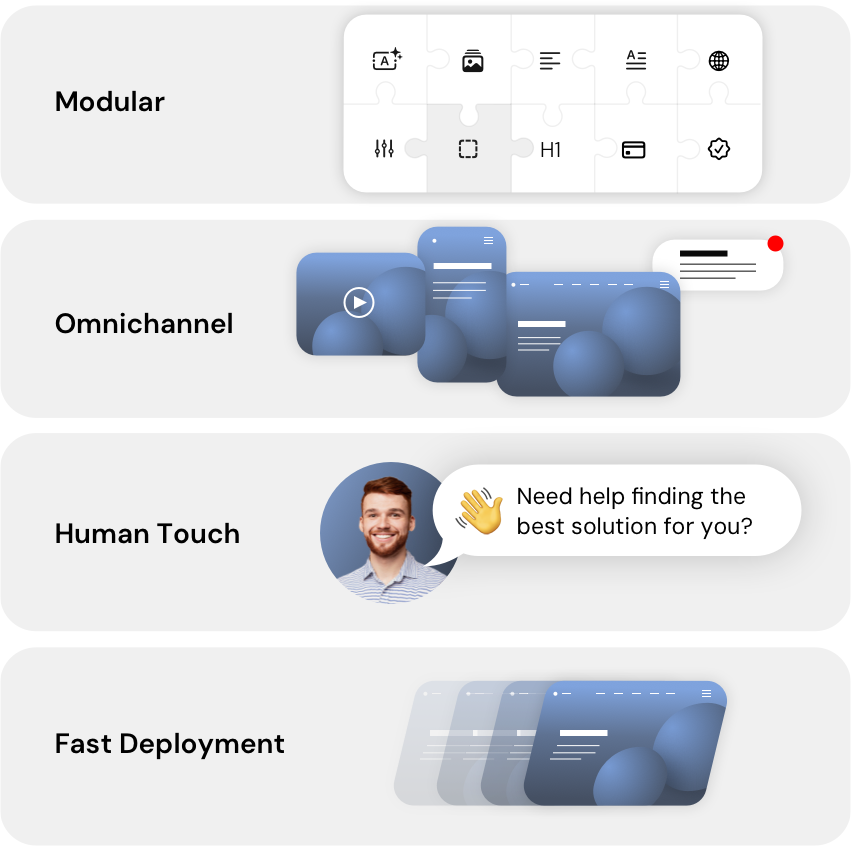
Because content is stored as structured objects rather than fixed pages, one article, image, or product story can be reused across sites and channels instead of copied and re-copied.
New sites start from an existing one. CoreMedia uses a master-site model: to launch a site for a new region or language, teams derive it from a master site, copying its structure and content into the new site as a starting point rather than building from scratch. That is how a multisite CMS turns a new-market launch from a project into a task. The same platform also brings existing sites together:
- The Irish government trade and innovation agency, Enterprise Ireland, runs its client portal and content across 39 international offices on CoreMedia, localized per market and GDPR-compliant.
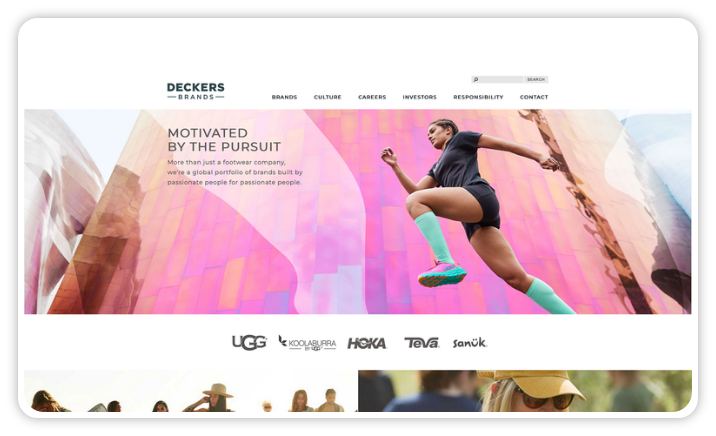
- For a faster-moving example, Deckers, the group behind UGG, HOKA, and Teva, used the same model across five brands and four continents to launch 12 mobile-first sites within 60 days and cut campaign production from weeks to hours.
Managing the sites is only half the story. The other half is what those sites do once content reaches every channel, region, and customer, which is where localization, commerce, and human touchpoints come in.
Omnichannel delivery, localization, and inspirational commerce
CoreMedia can deliver content from one repository to multiple channels, whether a website, a mobile app,a dealership portal, an investor hub or a local campaign page, and adapt it for each market through built-in localization workflows. Those workflows connect to AI translation with human approval, so a global campaign becomes localized content in each language without content managers rekeying it by hand. Regional teams then adapt the global version to local context, language, and imagery, so the localized content stays on brand and helps maintain brand consistency through the shared templates they work within.
Commerce is where CoreMedia frames its own position: inspirational commerce, blending brand storytelling with the ability to buy, built in the editor without a developer rebuilding the page. The same content-plus-action mechanic adapts by industry:
- Retail: make an image or video shoppable, or turn a lookbook or blog post into a place to buy.
- Utilities: embed a tariff calculator or service sign-up inside an explainer page.
- Public sector: place a form, appointment booker, or service locator directly in editorial content.
- Insurance: drop a quote or claims starter into a guide, so the page becomes a place to act.
Human-assisted touchpoints across the customer journey
CoreMedia connects digital content to live human help, so a customer showing high intent or hesitation can be offered a live chat, a click-to-call, or a video call at the moment it matters. High-value journeys, complex B2B buying or considered purchases, often stall at a point where a person needs to answer one question before they commit. A static site cannot see that moment, but a connected platform can.
This works because content and engagement sit in the same system rather than in separate tools. Many setups keep the website in one platform and the contact center in another, so the two never share what a customer just did. In the CoreMedia Digital Experience Platform, the signal from the site, hesitation on a pricing page, repeated visits to one product, can trigger the right human touchpoint. Teams retain complete control over when those human-assisted moments appear inside governed workflows. It is offered selectively, when someone is likely to convert or is clearly stuck, because showing a video-call button to every visitor is noise. Shown at the right moment, it drives conversion.
Faster deployment and content operations with CoreMedia KIO
CoreMedia KIO is an embedded AI copilot that speeds content creation, tagging, and optimization, with every suggestion requiring editor approval before it goes live. It drafts, translates, and optimizes localized content, tags assets automatically, and structures it for search and AI systems, drawing on direct access to customer data, real-time performance metrics, and brand guidelines for ensuring consistent branding so its output matches the brand’s voice. By taking the repetitive parts of content management off editors plates, and reducing manual handoffs for development teams, CoreMedia was able to reduce teams time-to-web for new content from weeks to hours or minutes. Without reusable multisite foundations, adding new sites can still require significant development time.
The deeper payoff is AI readiness. AI systems increasingly scan and shortlist brands before a person ever visits a site, and they can only work with content they can read and trust. Gartner’s Irina Guseva has argued that as answer engines and generative search reshape SEO, governed, structured content becomes the limiting factor, an agentic AI is only as good as the content and data behind it. Gartner has also predicted that by 2027, 40% of organizations will fail to deliver strong digital experiences for lack of content coordination and operations strategy. A multisite CMS that stores content as structured, governed objects is building the operational layer AI reads from across multisite environments, not just the human-facing layer.
How to choose the right multisite CMS for your organization
Choosing the right multisite CMS comes down to a handful of questions that cut through most of the noise in a vendor evaluation:
- How many sites, brands, or regions does this need to support today, and in three years?
- Does the permission model support a real organizational structure, local editors, regional managers, global administrators, without custom development?
- Is content modeled as structured, reusable objects rather than flat pages, so the same content and templates work across sites and channels instead of being rebuilt for each?
- Does the vendor provide a reference implementation or starter workspace for developers, including pre-built, secure integrations, so a build doesn't start from scratch and migrations move faster with less security risk?
- What do translation and localization workflows look like out of the box, and do humans stay in control of AI orchestration workflows?
- What's the total cost of ownership across licensing, hosting, and the specialist support a platform requires?
Frequently Asked Questions (FAQs)
What is the difference between a multisite CMS and a multi-tenant CMS?
A multisite CMS and a multi-tenant CMS differ in infrastructure, not just in how sites are managed. A multisite CMS runs multiple websites from one installation that share content, templates, and resources, which is what makes cross-site reuse and central governance possible. A multi-tenant architecture runs multiple isolated tenants on shared infrastructure with their data kept separate, which prioritizes separation over sharing. Enterprises consolidating brands and regions usually want the sharing a multisite model gives them.
How does a multisite CMS handle SEO for different regions?
A multisite CMS handles SEO for different regions with hreflang tags, localized metadata, and canonical structures managed per site. Hreflang tags tell search engines which language and region each page targets, so the right version surfaces in the right market. Localized metadata and canonical rules keep localized content from competing with itself across regions, which is a common cause of ranking loss across multiple sites.
Can a headless CMS manage multiple sites?
Yes, a headless CMS can manage multiple sites, and its API-first delivery makes reusing content across them efficient. In practice, that also covers what some teams call a Multi Site CMS. The caveat is the marketer experience: a purely headless CMS often gives developers control while leaving editors dependent on engineering for routine changes. A hybrid headless CMS keeps the API flexibility and adds a visual editor, so marketing teams can manage multiple websites and handle everyday content creation without being blocked.
How long does it take to deploy a new site on a multisite platform?
Deployment time for a new site on a multisite platform depends on complexity, but shared templates and a master-site model shorten it from months to weeks. Once a master site exists, new individual websites can be launched faster by reusing its structure instead of rebuilding from scratch, even though more complex requirements still affect timing. As a reference point, CoreMedia reports that Deckers launched 12 sites in 60 days across five brands and four continents; a single site added to an existing setup is faster still.
What are the security benefits of a multisite CMS?
The main security benefit of a multisite CMS is that it replaces many separate security perimeters with one governed platform, so consolidation strengthens security rather than concentrating risk. Every site inherits the same patching, role-based access, and audit trails, so no older, unmaintained site is left exposed. CoreMedia adds on-premise, cloud, and private-cloud hosting for data-sovereignty needs: the Bundeswehr runs more than 70 consolidated sites on one self-hosted platform with a single security perimeter.
What changes for an enterprise after it migrates multiple websites onto one multisite platform?
When different websites become one platform, an enterprise moves from maintaining sites in isolation to running them from a shared foundation, which changes both speed and consistency. Content is created once and adapted per market through localization workflows, so a global audience sees the same brand and the same accurate information in its own language. New sites and campaigns launch faster because they reuse existing templates and content, and governance, security, and updates apply everywhere at once instead of site by site.
What are the best multisite CMS?
The best multisite CMS is the one that matches how many sites, brands, and regions you run and how your teams are structured, not a single universal winner. For large, multi-brand, or regulated organizations, the strongest options combine a hybrid headless architecture, structured content reuse, built-in localization, role-based governance, and enterprise security and hosting. CoreMedia fits that profile for enterprises and public institutions running many sites under one governed platform. The selection questions above are a faster way to compare than any ranked list.
Which enterprises use CoreMedia’s multisite CMS?
Enterprises using CoreMedia’s multisite CMS range from public institutions to global manufacturers and retailers. Users include the Bundeswehr and the Deutscher Bundestag in the public sector, Henkel, CLAAS, and Emerson in manufacturing, and Deutsche Telekom and VF Corporation, Deckers Brands in telco and retail. Manufacturers are a common case, since a single group often runs separate brands plus B2B, dealer, and partner portals: Henkel manages its brand portfolio from one platform with a central content pool, reusing and adapting content across brands, markets, and channels, and pushed a 2022 global rebrand across all its sites without editors touching a page. The full list is on CoreMedia’s client stories page.
Manage multiple sites in one system
The case for a multisite CMS is not that it manages more websites. It is that it stops the workload, the cost, and enables brand security. Consolidating multiple sites onto one governed platform is what lets a lean team launch faster, keep brand consistency across markets, and build the structured content that both customers and AI systems now depend on across the whole digital ecosystem. If you are weighing how many sites your current setup can realistically carry, that is the number worth pressure-testing first. To see how CoreMedia handles multisite management for global brands, explore the client stories or book a demo.