






















Get to know CoreMedia with a personal introduction from an expert.
What you’ll get
- Explore key features relevant to you
- See how businesses like yours have grown with CoreMedia
- Guidance on changing platforms like a pro


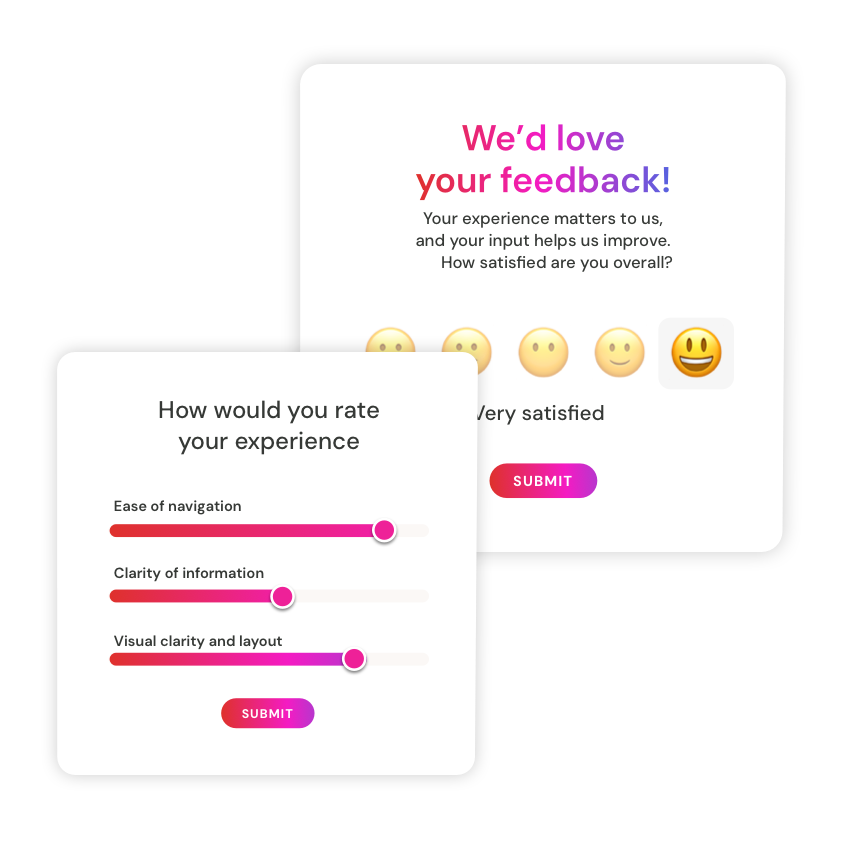
All customer feedback-related things.
Customer satisfaction surveys help you understand how customers feel about key experiences across their journey. By asking simple, relevant questions at the right moment, businesses can identify what’s working, where friction appears and which improvements will drive more impact. These surveys provide direct insight into expectations, emotions and pain points, helping teams take action before churn risks grow.
CSAT (Customer Satisfaction Score) measures short-term satisfaction with a specific interaction. It’s usually asked as: “How satisfied were you with your experience today?” This type of CSAT survey helps organizations track and improve customer satisfaction in real time.
Customers rate on a scale (often 1–5 or 1–10), and your CSAT score is the percentage of positive responses.
NPS (Net Promoter Score) measures long-term loyalty and willingness to recommend your brand. Customers answer: “How likely are you to recommend us from 0 to 10?"
Promoters (9–10) minus Detractors (0–6) equals your NPS score.
CSAT reflects how satisfied customers feel about a specific moment or interaction. NPS reflects how they feel about your brand overall.
CSAT surveys are useful right after the experience you want to measure — checkout, support, onboarding or help-center use. Timing increases accuracy and survey response rates, especially when applying CSAT survey best practices.
Benchmarks vary across sectors, but generally:
With this formula: NPS = % of Promoters − % of Detractors.
By acting instantly: routing unhappy users to support, personalizing recovery experiences or removing friction before they abandon you, especially when CSAT survey insights and customer satisfaction metrics highlight warning signs.
What you’ll get

Content Management
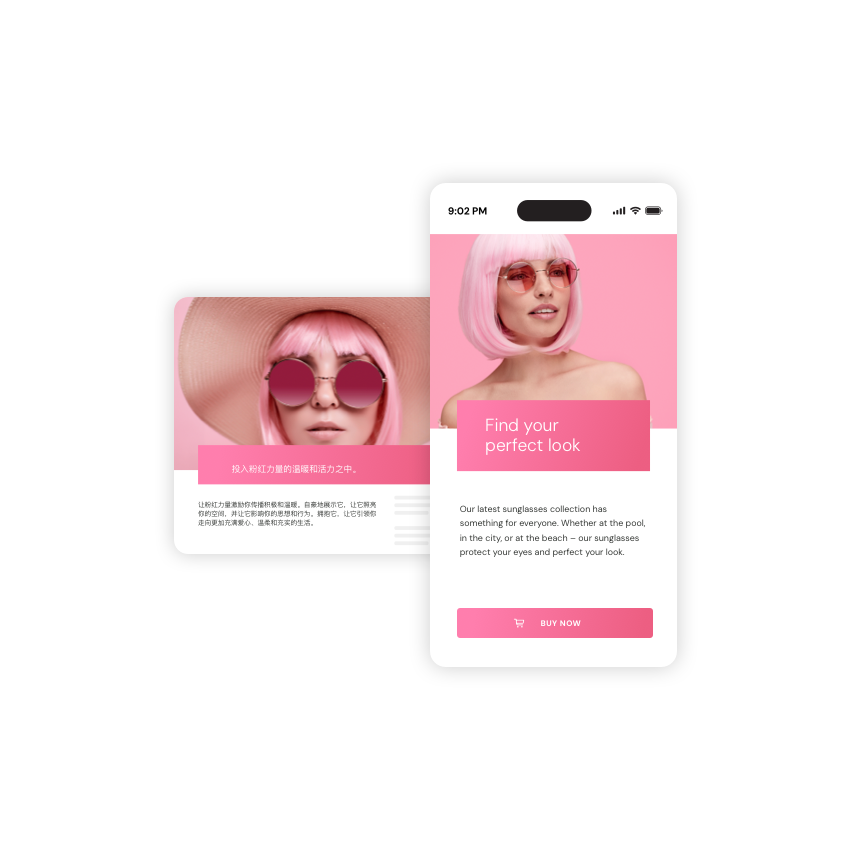
Create highly engaging content for all channels, regions and languages - turbocharged by AI.
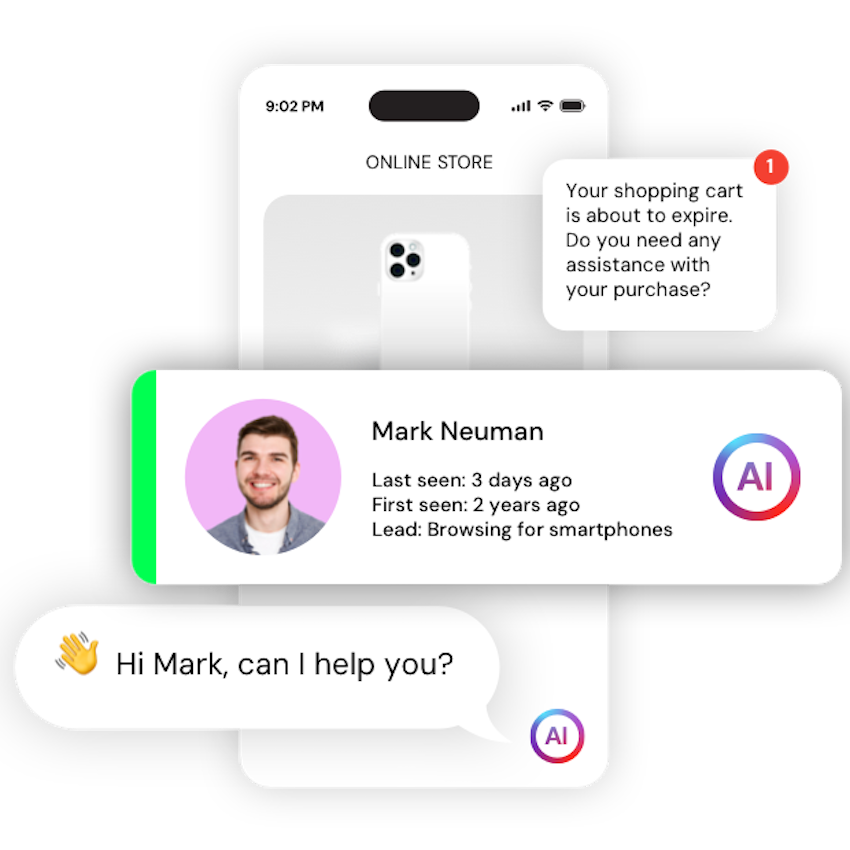
Personalization & Experimentation
Deliver personalized experiences that adapt to each user – powered by data, insights and ongoing optimization.

Marketing Automation
Automate and orchestrate campaigns across every channel – turning data into timely, relevant messages.
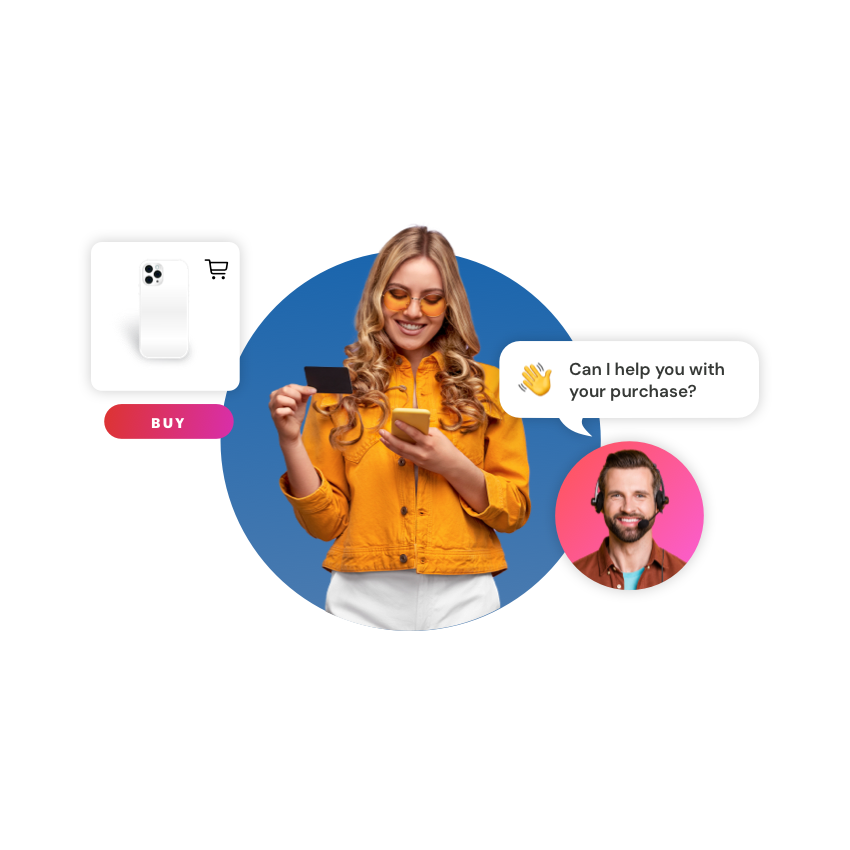
Customer Engagement
Turn visitors into loyal customers with conversational, human-centered experiences.