





















header-mobile-bg

Sitecore vs CoreMedia: The ultimate enterprise DXP comparison

Sitecore and CoreMedia are both enterprise DXPs with headless delivery, AI, and personalization. For routine content operations, the two are comparable. The differences that matter are architectural.

Sitecore built its DXP through acquisition, so you license separate products and integrate them to act as one platform. CoreMedia built its capabilities as one system and natively includes a human engagement layer (live chat, click-to-call, video, cloud contact center); Sitecore centers its engagement on marketing and does not include that layer natively.

Deployment also differs: Sitecore XM Cloud is SaaS-only on Azure, while CoreMedia offers single-tenant managed cloud, private cloud, and on-premises, which matters if data sovereignty or infrastructure control is a requirement.

This guide compares Sitecore and CoreMedia across architecture, content, commerce, personalization, AI, security, and cost, so enterprise decision-makers can judge which platform fits.

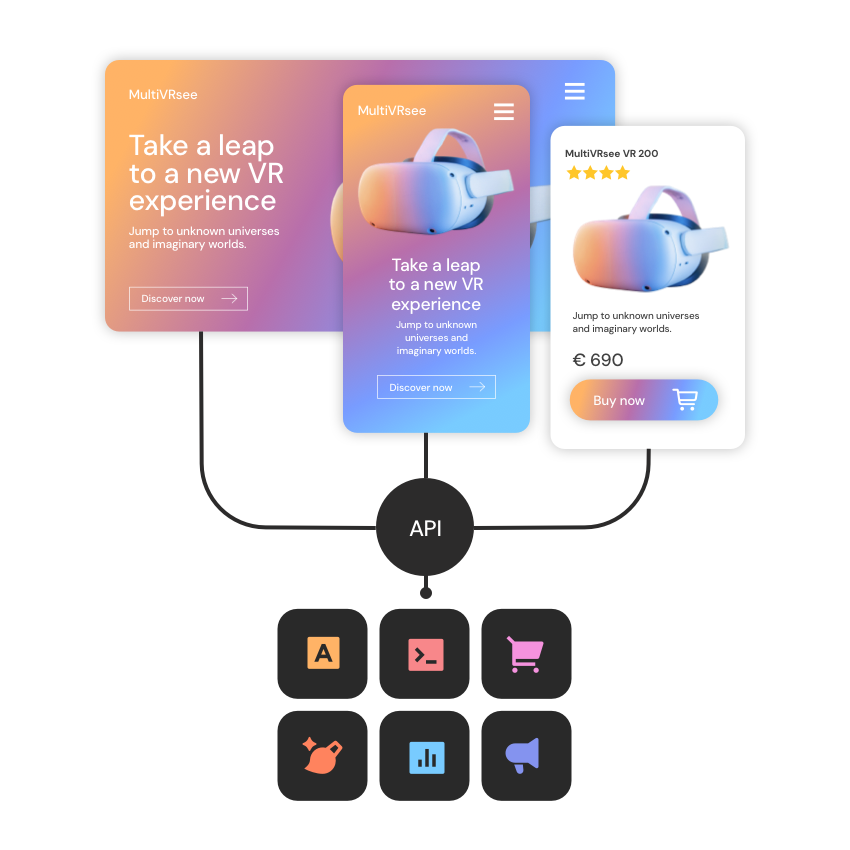
API content delivery through every channel
Key takeaways

Both platforms claim composable architecture, but the basis differs: Sitecore’s DXP is a portfolio of separately acquired, separately licensed products, while CoreMedia’s capabilities are natively integrated and can also be deployed independently.

Sitecore is strong on deep standalone customer data and personalization, first-party OrderCloud commerce, a very large developer ecosystem, and SaaS simplicity on Azure.

CoreMedia is strong on natively bundled capabilities such as personalization and experimentation, native human-assisted engagement, deployment flexibility including on-premises and EU data residency, and concurrent user pricing.

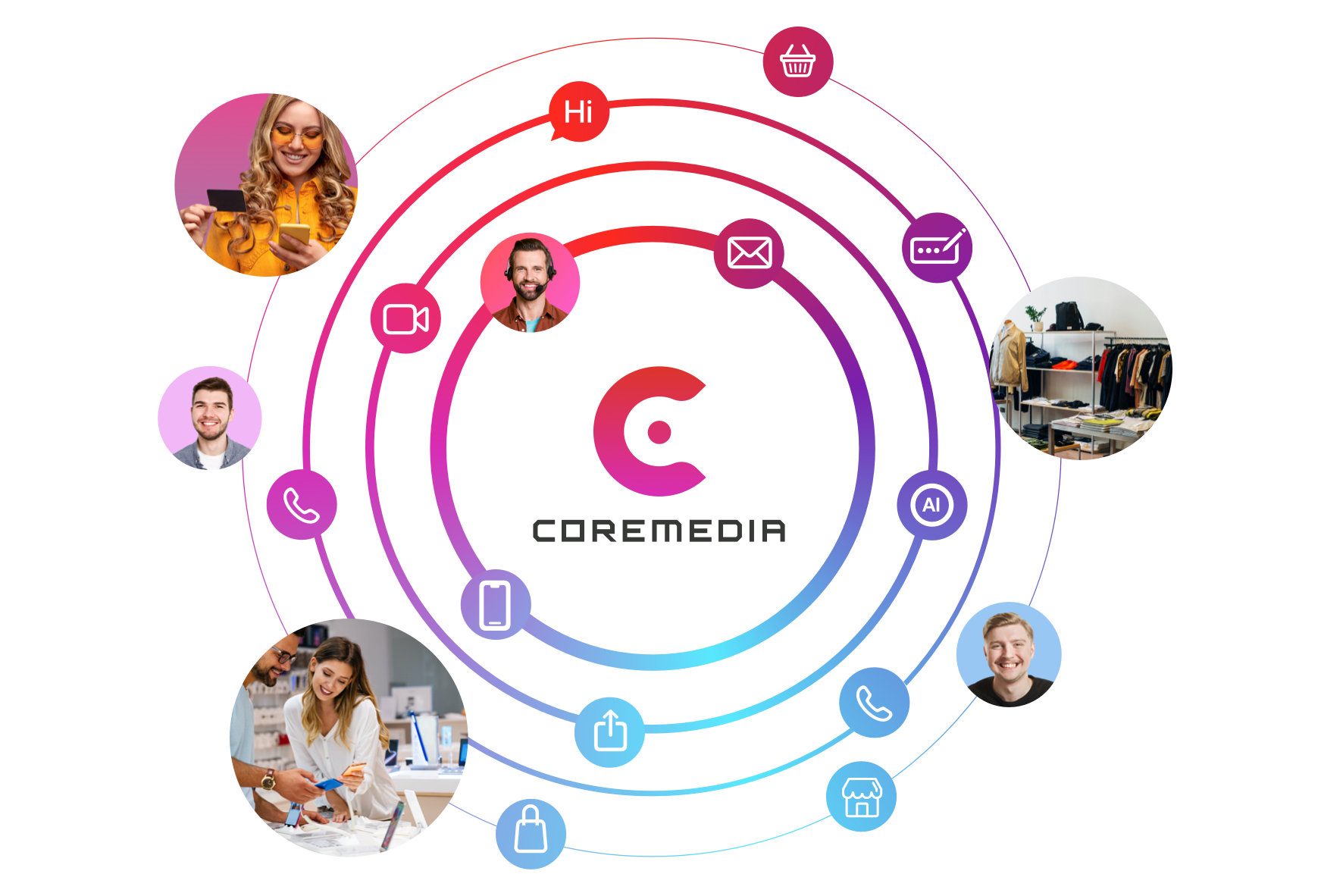
CoreMedia natively includes a human engagement layer (live chat, bots, click-to-call, video, cloud contact center) connected to the same platform that manages content; Sitecore’s portfolio does not. In high-value journeys, this is where the two platforms differ most.

Best fit comes down to three questions: how much front-end development you own, whether you need deployment control (single-tenant managed cloud, private cloud, or on-premises), and whether human-assisted engagement is part of how you convert.

Omnichannel CMS Generic

The shift in the enterprise DXP landscape

Enterprise digital experience has moved decisively from monolithic suites toward composable, API-first architectures. The shift Gartner projected, at least 70 percent of organizations mandated toward composable DXP by 2026, up from 50 percent in 2023, has now largely arrived. In The Forrester Wave: Digital Experience Platforms, Q4 2025, Forrester argues the frontier has moved again, from composability itself to how intelligently a platform orchestrates content, data, and AI toward outcomes.

The question has shifted from “how do we publish content” to “how do we orchestrate content, commerce, and customer data across every touchpoint, at scale,” and enterprises want to do it without a full replatforming cycle.

They want hybrid, cloud-based delivery that gives developers API-first agility and lets marketers make changes without waiting on engineering. Both Sitecore and CoreMedia have built toward this model and both describe themselves as composable and hybrid headless. Where they differ is in how much is bundled natively, how they deploy, and what they include beyond content and marketing personalization.

CoreMedia overview: The composable hybrid headless DXP
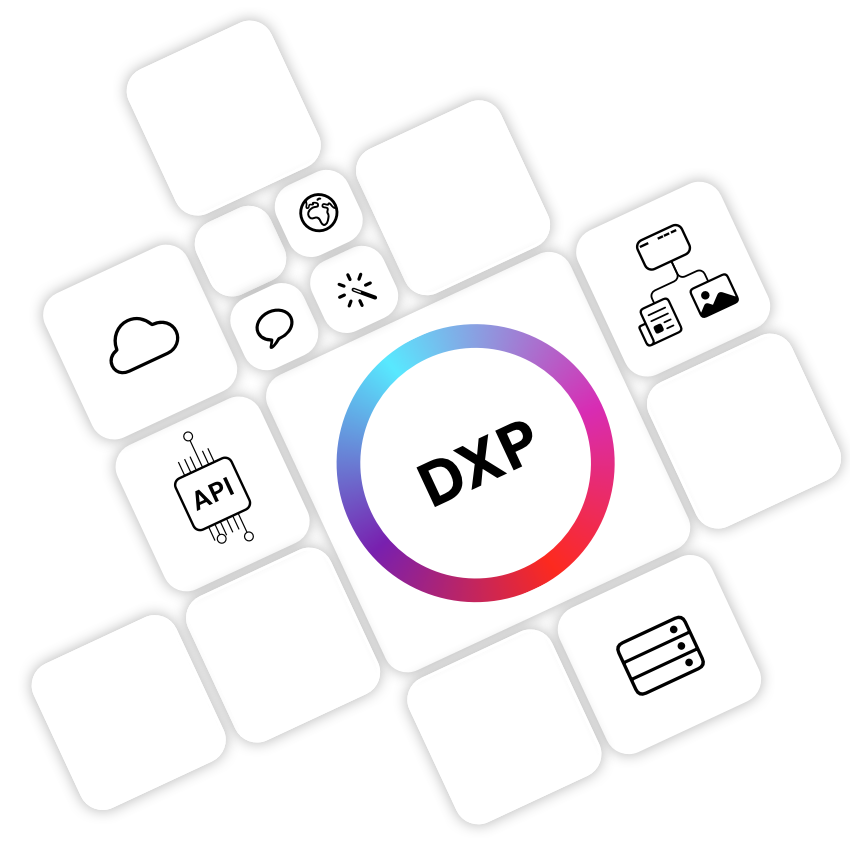
CoreMedia is a composable digital experience platform, organized around two product areas: the CoreMedia Content Management System for content, with native personalization and experimentation, and the CoreMedia Customer Engagement Platform for marketing automation and human-assisted interaction. CoreMedia KIO, the platform’s embedded AI copilot, supports content and workflow tasks across both.

CoreMedia is hybrid headless. It gives developers API-first, headless delivery for any front-end, while giving marketers a WYSIWYG visual editor to create, preview, and publish without depending on IT for routine changes. Content is built from reusable blocks that can be deployed once and reused across sites, apps, and channels.

The platform targets complex, global organizations active across multiple regions, languages, and brands. Its core verticals are B2B manufacturing, financial services, insurance, public services, and telecommunications, with consumer-facing use in luxury retail and travel. CoreMedia fits into existing enterprise stacks, integrating with systems such as SAP Commerce Cloud and Salesforce rather than requiring a rip-and-replace, and reports up to 75% faster time to web.

Composable DXP
Customer Data Platform (CDP)

Sitecore overview: An established enterprise DXP in transition

Sitecore is a long-established enterprise DXP, historically a monolithic suite, now transitioning to a composable, SaaS-native model. Its content management runs on XM Cloud, a cloud-native, headless CMS with a visual Page Builder and modern front-end tooling. Around it sits a portfolio of separately licensed products, including Content Hub, Sitecore Personalize and CDP, Send, Search, and the OrderCloud commerce engine. In late 2025 Sitecore introduced SitecoreAI, an AI-first layer with agentic capabilities.

Sitecore’s strengths are real. It offers deep, mature personalization and a standalone customer data platform with real-time decisioning, an integrated marketing suite, native commerce through OrderCloud, and one of the largest developer and partner ecosystems in the category. It is consistently placed as a Leader in major analyst evaluations.

The pain points tie to its history. Enterprises on legacy XP or XM face a migration to reach XM Cloud that takes planning and cost, and traditional setups are associated with complex upgrades, slower time-to-market, and heavy developer reliance. Buyers weigh the depth of the portfolio against the effort of operating several separately licensed products.

Feature-by-Feature Comparison

Content authoring

CoreMedia: Hybrid headless with WYSIWYG editing and reusable blocks.

Sitecore: XM Cloud hybrid headless with a visual Page Builder.

Best fit: Comparable; both are hybrid headless.

Architecture and composability

CoreMedia: Natively integrated DXP, four pillars built to work together, deployable independently, deep integrations with third-party tools.

Sitecore: Composable portfolio of separately licensed products, assembled through acquisition as Sitecore moved away from its monolithic .NET origins. Flexible by license; integration between products requires work.

Best fit: CoreMedia for native integration without stack assembly. Sitecore for Azure-first organizations or where SI partner expertise already exists.

Personalization and customer data

CoreMedia: Native personalization and A/B testing in the platform.

Sitecore: Sitecore Personalize plus CDP, deep real-time decisioning.

Best fit: Sitecore for standalone CDP depth, CoreMedia for native simplicity.

Commerce

CoreMedia: Deep out-of-the-box integrations with SAP Commerce Cloud, commercetools, Shopify, and Salesforce Commerce Cloud.

Sitecore: Native OrderCloud engine plus connectors.

Best fit: Sitecore if you are selecting CMS and commerce together from one vendor. CoreMedia if your commerce platform is already in place.

AI and automation

CoreMedia: CoreMedia KIO spans content creation, orchestration, personalization, and live agent assist. Governed AI; every action requires human approval before publishing or acting. Model-agnostic; not tied to a single LLM provider.

Sitecore: SitecoreAI and Sitecore Stream, agentic capabilities.

Best fit: CoreMedia for governed AI across the full customer journey. Sitecore for autonomous workflows where governance overhead is not a priority.

Human-assisted engagement

CoreMedia: Native live chat, chat- and voice bots, click-to-call, video, cloud contact center.

Sitecore: Not a native part of the portfolio.

Best fit: CoreMedia.

Deployment and data residency

CoreMedia: Single-tenant managed cloud, private cloud, or on-premises.

Sitecore: XM Cloud SaaS on Azure.

Best fit: CoreMedia for deployment flexibility and data control, Sitecore for SaaS simplicity.

Security and compliance

CoreMedia: ISO/IEC 27001:2022, GDPR-ready, EU hosting options.

Sitecore: Enterprise-grade on Azure with broad certifications.

Best fit: Comparable; CoreMedia for EU data residency.

Licensing

CoreMedia: Concurrent user pricing.

Sitecore: Per-product licensing across the stack.

Best fit: Depends on team size and number of products.

Ecosystem and community

CoreMedia: Established enterprise partner network, strong coverage in Germany, UK, and across Central Europe, with particular depth in regulated industries and public sector.

Sitecore: Very large global developer community.

Best fit: Sitecore where an existing global SI relationship determines the platform shortlist. CoreMedia where European partner expertise, regulated industry experience, or public sector delivery is the priority.

Time-to-market

CoreMedia: Up to 75% faster time to web (CoreMedia figure); phased migration.

Sitecore: Fast on XM Cloud SaaS; legacy migration adds time.

Best fit: CoreMedia (figure attributed to CoreMedia).

CoreMedia and Sitecore comparison across the buyer criteria

Both give marketers a visual editor over a headless core: CoreMedia’s WYSIWYG environment and Sitecore Pages in XM Cloud. CoreMedia leans on reusable content blocks deployed across sites, apps, and displays, which suits central teams managing many channels, brands, and regions. The practical question is how much front-end development you want to own. Day-to-day authoring is comparable, so the real difference is the size of the front-end build each platform expects your team to carry.

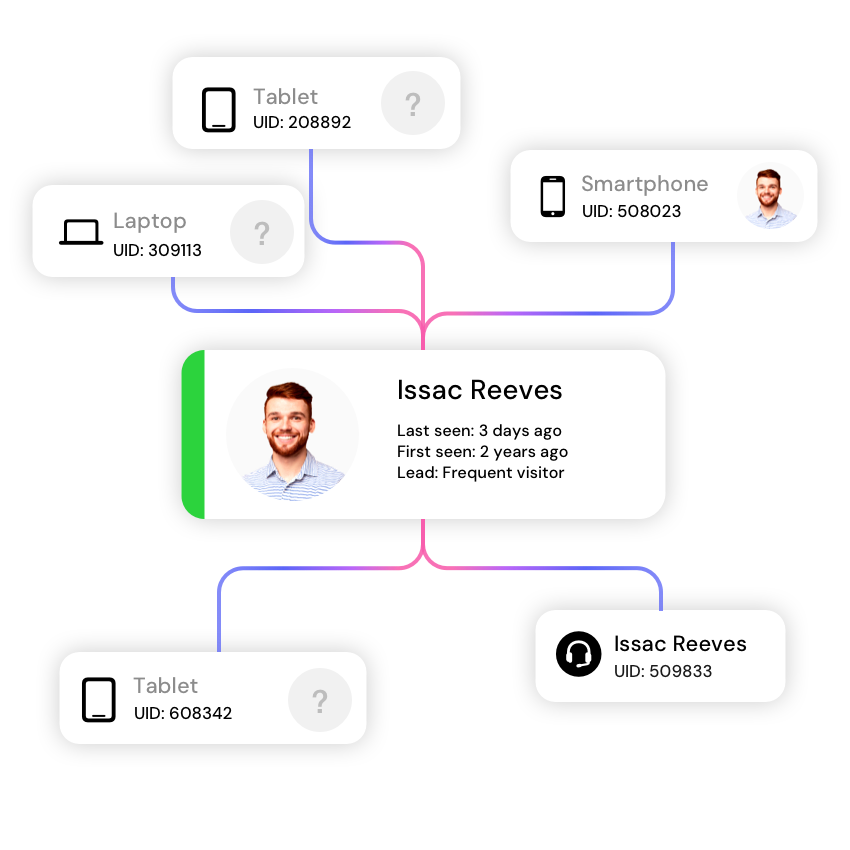
Sitecore offers a first-party commerce engine in OrderCloud and mature real-time personalization through Sitecore Personalize and its CDP, licensed as separate products. CoreMedia integrates with major commerce engines such as SAP Commerce Cloud and Salesforce Commerce Cloud, and includes native personalization and A/B testing, with a focus on making editorial content directly shoppable. For organizations with an existing CDP, CoreMedia offers basic CDP functionality or integrates with the CDP of your choice. The trade-off: Sitecore gives you a commerce engine to own, while CoreMedia sits on top of the commerce platform you already run.

This is where the platforms diverge most, and it is the reason a “traffic without conversion” problem often survives a DXP purchase. Both platforms personalize content and orchestrate marketing. Sitecore’s engagement capabilities are built around marketing: customer data, personalization, email, and campaign optimization. What Sitecore’s portfolio does not natively include is a human-assisted engagement layer, live chat, conversational bots, click-to-call, video, and a cloud contact center, connected to the same platform that manages content.

In complex or high-ticket journeys, that layer is often what closes the gap between a visitor and a sale. A prospect researching a financial product, a B2B purchase, a telco plan, or a luxury item reaches a point of hesitation that content alone does not resolve. CoreMedia detects high-intent and hesitation signals and can offer a live chat, click-to-call, or video call at that moment, and gives contact center agents the context to prioritize high-value contacts. For enterprises whose problem is converting qualified traffic rather than publishing, this is the most consequential difference between the two platforms.

Both vendors have invested heavily in AI. Sitecore’s SitecoreAI and Sitecore Stream added agentic and generative capabilities in 2025. CoreMedia embeds CoreMedia KIO as an AI copilot with access to brand guidelines and performance data, automating routine tasks and surfacing suggestions an editor approves before shipping. On both platforms, embedded AI reduces time-to-market for content and campaigns. Buyers should compare AI on their own workflows.

The architectural difference matters for organizations with LLM preferences or data residency requirements. Sitecore’s AI runs on Azure OpenAI infrastructure. CoreMedia KIO is model-agnostic and cloud-agnostic — it works with OpenAI, Azure OpenAI, Anthropic, or custom models, and can run on any cloud or on-premises, giving organizations full control over which models process their data and where.

Both manage enterprise-grade security and compliance across borders, but they differ most on data sovereignty. CoreMedia is an EU-headquartered vendor, based in Germany, holds ISO/IEC 27001:2022 certification, and is GDPR-ready. For organizations with EU residency requirements, it can host entirely in the EU, either self-managed on-premises or as a managed service in EU AWS regions such as Frankfurt and Ireland, and it serves German public-sector bodies including the Bundestag and Deutsche Bundesbank. Sitecore’s XM Cloud, from a US-headquartered vendor, runs as managed SaaS on Azure with broad certifications, which suits buyers without strict EU-residency needs. Both support role-based access and secure API management, though a composable environment needs deliberate identity and API governance.

On both platforms the license is only part of the cost. Sitecore’s portfolio is assembled from separately licensed products, so cost scales with how many products you adopt and is harder to predict as the stack grows; legacy XP and XM customers should also budget for migrating to XM Cloud. The hidden cost of a monolithic history is the upgrade and migration cycle.

CoreMedia uses concurrent user pricing, which scales across large editorial teams without charging per named user, and bundles core capabilities natively rather than as add-ons. Because marketers can own routine changes, organizations can reduce continuous developer intervention for day-to-day content work. CoreMedia reports up to 75 percent faster time to web, and enterprises with disciplined planning have completed migrations in as little as 90 days, with Enterprise Ireland as one example.

Neither model is universally cheaper; compare each against your required capabilities and team size.

Omnichannel

Which DXP is right for your enterprise?

Choose Sitecore if your organization is already invested in the Sitecore ecosystem, has a large development team, wants a deep first-party customer data platform, needs native commerce through OrderCloud, and is comfortable operating a SaaS-only, Azure-hosted platform assembled from separately licensed products. Its ecosystem scale and depth are genuine advantages.

Choose CoreMedia if you are a global brand in B2B manufacturing, financial services, insurance, public service, telecommunications, luxury retail, or travel that needs to unify content, personalization, and human-assisted engagement in one platform, needs deployment flexibility including private cloud or on-premises for data residency, and wants to close the gap between qualified traffic and conversion with marketer autonomy.

Request a demo

Frequently Asked Questions (FAQs)

What is the main difference between Sitecore and CoreMedia?

Both are hybrid headless DXPs with comparable content management. The main difference is architecture: CoreMedia is a natively integrated platform — personalization, marketing automation, and customer engagement built as one system. Sitecore is a portfolio of separately licensed products assembled through acquisition, with a stronger standalone CDP and first-party commerce via OrderCloud. CoreMedia also natively includes a Customer Engagement Platform including live chat, conversational bots, click-to-call, video, and a cloud contact center, which Sitecore does not offer.

Does CoreMedia integrate with my existing e-commerce platform?

Yes. CoreMedia integrates with major commerce engines including SAP Commerce Cloud, commercetools, Shopify, and Salesforce Commerce Cloud, so teams can make content shoppable without replacing the commerce platform they already run. Sitecore takes a different approach with its own first-party commerce engine, OrderCloud.

Is CoreMedia a purely headless CMS?

CoreMedia is hybrid headless. It combines API-first, headless delivery for developers with a WYSIWYG visual editor for marketers, so content teams can create, preview, and publish routine work without developer involvement. Sitecore's XM Cloud uses the same hybrid headless approach.

How does data security compare between composable DXPs and monolithic systems?

Composable DXPs rely on secure API integrations between services, which adds flexibility but requires deliberate identity, access, and API governance. CoreMedia holds ISO/IEC 27001:2022 certification, is GDPR-ready, and offers EU hosting options for data residency. Enterprise-grade security is achievable in both models with the right governance.

Is CoreMedia EU-hosted, and where is Sitecore hosted?

CoreMedia is an EU-headquartered vendor. Its managed cloud runs on AWS EU regions (Frankfurt and Ireland), with no data stored or processed outside the EU. For stricter requirements, private cloud and on-premises options give organizations full infrastructure control. Sitecore XM Cloud runs as SaaS on Microsoft Azure and supports EU regions, but Sitecore is a US-headquartered company — relevant for organizations concerned about the CLOUD Act, which allows US authorities to compel data access regardless of where it is physically stored.

How long does a CoreMedia implementation take?

CoreMedia uses a phased implementation that keeps existing systems live while content, workflows, and integrations move in stages, rather than a rip-and-replace, and it fits into your current stack such as SAP Commerce Cloud or Salesforce. With disciplined planning, enterprises have gone live in as little as 90 days; Enterprise Ireland is one example.

Can CoreMedia replace Sitecore in demanding, multi-industry environments?

Yes, for many enterprise use cases. CoreMedia runs demanding, multi-brand, multi-region operations for global brands in manufacturing, financial services, telecommunications, public sector, retail, and travel, with deployment flexibility and native human-assisted engagement. Sitecore may still fit better where a deep standalone CDP or first-party OrderCloud commerce is central to the requirement — though CoreMedia integrates with existing CDPs including Tealium, Segment, and others for organizations where that is already in place.