





















header-mobile-bg

Liferay vs CoreMedia: Comprehensive DXP and CMS comparison

When operational portals and customer-facing commerce require different platforms.

The most important distinction between Liferay and CoreMedia is not architectural: it is intent. Liferay is built for operational efficiency. Its core use cases are employee portals, intranets, authenticated self-service, and B2B account management, environments where the primary user is logged in, role-defined, and completing a structured task. CoreMedia is built for commercial outcomes: omnichannel customer journeys, inspirational commerce, and personalized, revenue-generating experiences across web, mobile, and commerce touchpoints. 

For enterprises whose digital strategy is built around customer acquisition and revenue, CoreMedia is the right platform. Learn what differentiates CoreMedia from Liferay:

  • Omnichannel content and commerce orchestration — Deliver connected, revenue-generating experiences across web, mobile, commerce platforms, and service touchpoints from a single, centralized platform.
  • Composable architecture built for commercial ecosystems — CoreMedia's composable, hybrid headless foundation is production-ready for omnichannel commerce integration today, without the architectural transition constraints that characterize platforms designed primarily for operational use cases.
  • Marketer autonomy in service of revenue — Visual editing tools, drag-and-drop workflows, and business-user publishing controls are designed to let marketing and merchandising teams build and optimize customer-facing experiences without developer involvement.
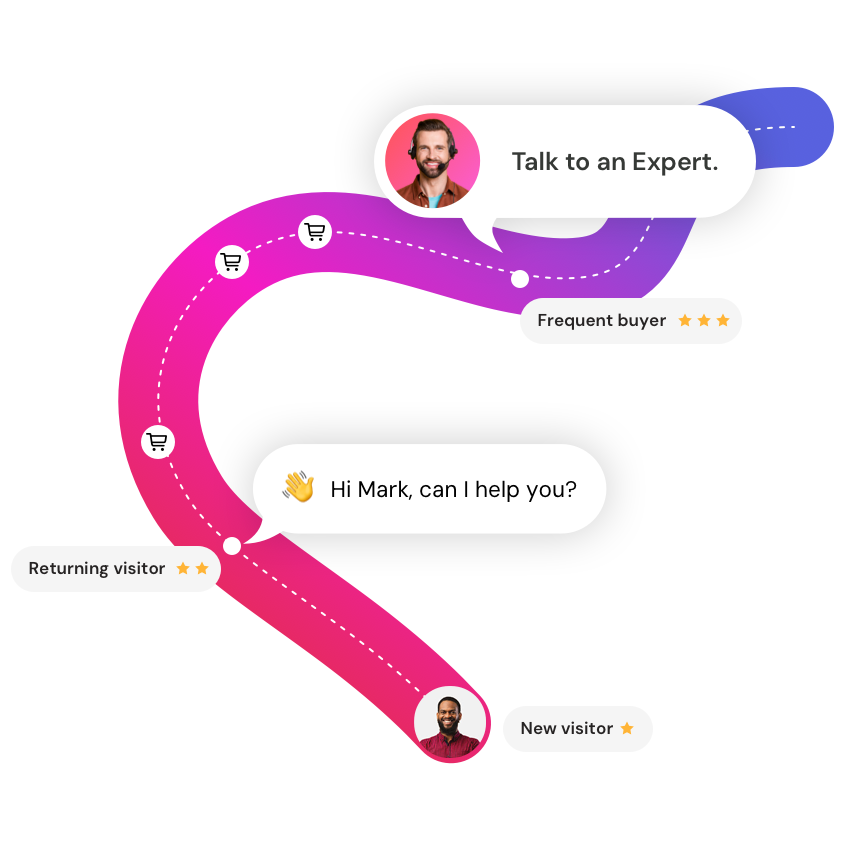
  • Human-assisted engagement for high-value customer journeys — Connect digital touchpoints with live chat, video, and service interactions to support complex purchase decisions and increase conversion on high-consideration products. 
Bridging the digital-to-human

Why enterprises built for commerce choose CoreMedia over Liferay

Inspirational commerce and shoppable experience management

Connect editorial content with product discovery and transactional journeys, enabling merchandisers and content teams to build shoppable experiences without complex custom integrations or developer dependency.

Hybrid headless architecture for business and developer teams

Combine API-first delivery with visual content management tools, giving developers the flexibility to build across channels while allowing business users to create and publish experiences independently.

Native out-of-the-box personalization

Deliver audience-specific content based on behavioral signals, session context, and defined segments directly within CoreMedia's Digital Experience Platform, without requiring a separate personalization layer.

Digital journeys connected to human-assisted touchpoints

Bridge self-service digital experiences with live service interactions — including chat, video, and guided sales — to support high-consideration purchase decisions in sectors such as telco, financial services, and luxury retail.

AI-powered content operations with CoreMedia KIO

CoreMedia KIO supports content generation, translation, SEO optimization, and workflow automation, allowing enterprise teams to scale content production and maintain quality standards across markets.

Editorial workflow built for marketing teams

Content approval chains, role-based publishing permissions, and channel preview tools are designed for marketing and editorial teams to operate independently, not as extensions of an IT administration layer.

What changes when you move from an operational portal to a commerce-first DXP

Liferay is built around IT-buyer priorities: employee portals, authenticated self-service, and intranet environments where the primary user is logged in and completing a structured task. Features and workflows reflect that orientation, which is a sound fit for organizations whose digital priority is operational efficiency.  
For organizations that need their DXP to directly drive customer acquisition, sales conversion, and content-led commerce, CoreMedia Digital Experience Platform is built specifically for that use case, with tools and workflows designed for marketers, merchandisers, and editorial teams operating at commercial velocity. 

Liferay's composable architecture is a work in progress. It can act as an orchestrator of composable services, but much of its core has not yet been restructured into independently deployable components, meaning organizations building toward a fully composable digital stack may encounter constraints as requirements evolve.  
CoreMedia is built on a composable, hybrid headless foundation, enabling organizations to integrate best-of-breed commerce, personalization, and engagement tools at the architecture level rather than through workarounds. Enterprises in rapid digital transformation can adopt CoreMedia's composable model without waiting for platform-level composability to mature. 

Liferay's go-to-market focus on IT buyers shapes its tooling: the platform is designed to be configured and maintained by technical teams, which can create friction for nontechnical users in marketing and merchandising roles. 

Organizations that need marketers and content editors to operate independently — building campaigns, launching experiences, and publishing across channels without developer involvement — often find this a meaningful constraint. CoreMedia Digital Experience Platform is designed for both audiences, providing developer-grade API infrastructure alongside visual editing tools and drag-and-drop workflows that allow marketing and merchandising teams to work without engineering dependency. 

Liferay's AI capabilities are oriented toward operational tasks: content generation via an external LLM connector, search optimization, and analytics within authenticated environments. Its customer journey mapping and applied AI capabilities, as reflected in its product positioning, are less developed for anonymous, conversion-led customer journeys.  
CoreMedia KIO brings AI-powered automation to content generation, SEO optimization, and editorial workflows natively within the platform. Combined with CoreMedia's personalization capabilities, this enables teams to build and optimize customer journeys at a scale and speed that manual editorial processes cannot support. 

Liferay's architecture is optimized for authenticated experience use cases such as environments where users are logged in, role-defined, and operating within a structured access control framework. This is a genuine strength for employee portals and B2B self-service, but a structural constraint for organizations managing inspirational, pre-purchase experiences for anonymous visitors across public-facing channels.  
CoreMedia Digital Experience Platform handles both authenticated and anonymous customer experiences, enabling organizations to deliver personalized, commerce-integrated digital journeys from the first brand touchpoint through conversion and post-purchase engagement. 

Liferay's commerce capabilities are built for B2B operational efficiency: simplifying account-based purchasing, managing reorders, and supporting dealer and distributor buying processes. This is a well-defined strength for organizations whose digital commerce priority is streamlining procurement. For organizations in luxury retail, telco, or consumer-facing B2B that need to connect content-led storytelling with product discovery and conversion, this transactional orientation is a structural mismatch.  
CoreMedia's content-commerce integration is built for the opposite use case: giving merchandisers and editorial teams the tools to build shoppable, brand-driven experiences that move anonymous visitors from inspiration to purchase. 

Liferay supports live chat by connecting to external providers, including Zendesk, HubSpot, LiveChat, and LivePerson, through marketplace integrations. These are third-party relationships, separately licensed and managed outside the core platform.  
CoreMedia's Customer Engagement Platform is built into the DXP itself: click-to-call, video shopping, and contextual live chat are triggered natively by visitor behavior and personalization signals, without a separate vendor or integration layer. For enterprises in sectors where high-consideration purchases depend on real-time human guidance, including telco plan selection, financial product consultation, and luxury retail. This distinction has a direct impact on conversion rates and implementation complexity. 

Enterprise implementations on Liferay frequently require significant development overhead for organizations seeking to extend the platform beyond its core IT-centric functionality. Customizing workflows for marketing teams, building commerce experiences that go beyond B2B transactional use cases, and integrating third-party tools for chat, personalization, or AI all accumulate as ongoing developer costs. CoreMedia's unified platform for content management, personalization, and experience orchestration reduces the custom integration and fragmentation overhead that typically accumulates in developer-intensive implementations. 

A fast, low risk CMS migration to CoreMedia – under 90 days

Migrating from an existing enterprise platform should not disrupt business continuity or stall ongoing digital programs. For organizations moving from Liferay, whether transitioning customer-facing experiences to a dedicated commerce and content platform, or consolidating disparate systems under a single DXP, the priority is maintaining momentum while the new environment is established. 

CoreMedia follows a phased migration methodology that avoids the risk and complexity of a full cutover. Rather than rebuilding everything simultaneously, organizations can transition content structures, workflows, and integrations incrementally, keeping existing systems operational where needed while the new platform scales up. This approach is particularly relevant for enterprises managing multiple brands or regions, where sequenced market-by-market migration reduces risk at each stage. 

The migration process includes a structured content governance review, which ensures that the transition is not simply a lift-and-shift but an opportunity to rationalize content architecture and publishing workflows before they are replicated on the new platform. This reduces technical debt and positions teams to operate more efficiently from day one. 

With clear planning and defined governance, enterprises can move quickly without sacrificing stability. Organizations such as Enterprise Ireland completed their migration to CoreMedia in as little as 90 days, demonstrating that strategic execution enables speed without instability. 

Learn more
Enterprise Ireland website

What our clients say

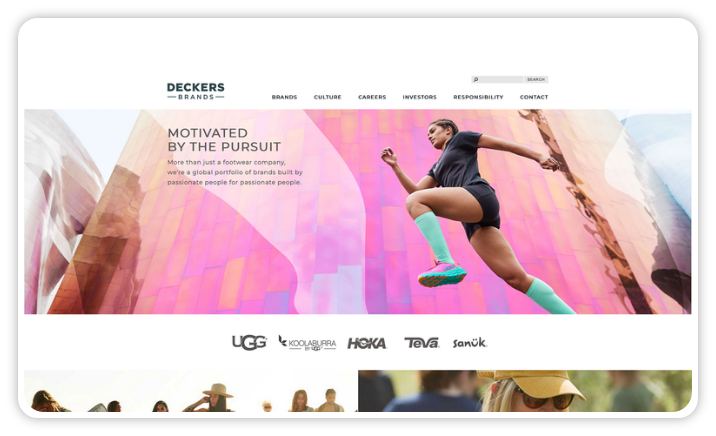
"What stood out about CoreMedia was how easy it was for merchandisers to drag and drop content and products from different repositories to provide new customer experiences."

Nick Smotek, Global Director Digital Technology and UX, Deckers Brand 

"Becoming a leader in today's competitive athletic space means reaching athletes with powerful digital experiences, whether they are ready to buy or simply want to view inspiring content. CoreMedia Content Cloud helps us efficiently manage it all in one place so we can launch new experiences faster, no matter where our customers are in the world."

Anonymous, Sports equipment company

"We started by adopting CoreMedia Click2Call at Yoigo. We then integrated CoreMedia's other lead activation and personalization tools. The implementation has resulted in a very significant increase in the volume of relevant customer calls from different visitor profiles, and we couldn't be more pleased."

Francisco Trujillo, Head of Online Sales, MásMóvil

"Integrating data from online and offline sides enriches our base and is part of our expertise in CoreMedia."

Anderson Mantelli de Araújo, Senior Manager Ecommerce & Growth, TIM Brasil

FAQs - everything you need to know

What is the main architectural difference between Liferay and CoreMedia?

Liferay is a developer-oriented DXP built primarily for authenticated experience use cases: employee portals, intranets, and customer self-service environments where users are logged in and role-defined. CoreMedia Digital Experience Platform is a composable, hybrid headless DXP built for omnichannel customer experience management, connecting content, commerce, and personalized journeys across public-facing channels and touchpoints. The two platforms share the DXP category but are optimized for different organizational functions and buyer outcomes.

How does Liferay's DXP differ from CoreMedia's?

Liferay originated as an enterprise portal platform and has evolved into a DXP with particular strength in authenticated, operational environments: employee portals, intranets, and B2B self-service. CoreMedia is built from the ground up as a commerce-origin DXP, designed to connect content, personalization, and customer engagement across the full customer lifecycle, including anonymous pre-purchase journeys and live human-assisted interactions. Both are DXPs built for fundamentally different business outcomes.

Why do enterprises move from Liferay to CoreMedia?

Organizations typically consider a transition when their digital experience requirements shift from operational, IT-centric portal management toward customer-facing commerce, personalization, and multi-channel experience orchestration. Common triggers include the need for stronger marketer autonomy, native personalization without additional tooling, content and commerce integration, and composable architecture that does not require extensive developer involvement to extend and maintain.

How does Liferay compare to CoreMedia for global, multi-brand management?

CoreMedia Digital Experience Platform is designed for global enterprises managing multiple brands, regions, and languages from a single environment. It supports centralized editorial governance, structured content reuse, and coordinated publishing across international teams. Liferay's multi-site and multi-language capabilities are strong within authenticated, operational environments, but its go-to-market focus on IT buyers means global content marketing and merchandising workflows are less central to the platform's design. 

Can Liferay match CoreMedia's time-to-market for global brands?

CoreMedia's hybrid headless architecture and business-user publishing tools are designed to reduce dependency on development cycles for content and experience updates. Marketing and merchandising teams can build, preview, and publish across channels independently, which shortens the time between campaign conception and go-live. Liferay's tooling is optimized for IT-administered environments, where content and configuration changes more frequently require technical involvement. For global brands launching experiences across multiple markets simultaneously, this distinction has a direct impact on execution speed. 

How does CoreMedia support omnichannel experiences compared to Liferay?

CoreMedia is built to orchestrate experiences across web, mobile, commerce platforms, and service touchpoints, including live chat, video, and guided sales interactions. Liferay's platform is optimized for authenticated experience use cases, making it a stronger fit for internal and self-service environments than for public-facing omnichannel customer journeys. For enterprises whose digital strategy spans the full customer lifecycle from anonymous discovery through conversion and post-purchase engagement, CoreMedia provides a more purpose-aligned architecture.

Does Liferay support e-commerce integrations?

Yes, but with an important distinction in scope and intent. Liferay includes a native commerce module designed for B2B transactional use cases: account-based purchasing, order management, reorders, and dealer or distributor buying processes. It also supports integration with third-party commerce platforms. What Liferay's commerce capabilities are not designed for is inspirational, content-led commerce: shoppable editorial experiences, product storytelling, and conversion-driven journeys for anonymous visitors. Organizations in luxury retail or consumer-facing B2B that need to connect brand content with product discovery and purchase will find CoreMedia's content-commerce integration a better structural fit.

What sets CoreMedia apart from Liferay on personalization?

CoreMedia delivers personalization natively within the platform, enabling teams to define audience segments, tailor content based on behavioral signals and session context, and manage personalized experiences from a single environment without requiring an external personalization tool. Liferay includes personalization capabilities oriented toward role-based, authenticated environments. For organizations that need to personalize experiences for anonymous visitors across public-facing commerce journeys, CoreMedia's personalization approach is more directly aligned with that use case. 

Does Liferay offer native contact center integration like CoreMedia?

CoreMedia's Customer Engagement Platform connects the DXP directly to contact center and live service infrastructure. Click-to-call, video shopping, and contextual live chat are triggered natively within the digital experience, based on visitor behavior and personalization signals, without requiring a separate third-party chat vendor. This allows enterprises to escalate high-consideration digital journeys to live human assistance at the right moment: a telco customer configuring a plan, a financial services prospect evaluating a product, or a luxury retail visitor requiring guided service. Liferay supports live chat through third-party marketplace integrations with providers such as Zendesk, LiveChat, and LivePerson, which require separate licensing and management outside the core platform.

Can CoreMedia and Liferay be deployed on-premises?

Yes. CoreMedia supports cloud, private cloud, and on-premises deployment with equivalent capabilities across all three models. This gives enterprises in regulated industries, including financial services, healthcare, and telecommunications, full control over infrastructure, data residency, and compliance. Liferay also supports on-premises deployment and has a high proportion of its installed base running in that configuration, but organizations planning a managed cloud transition should evaluate SaaS feature parity as part of their decision.

What drives up the total cost of ownership on Liferay?

TCO on Liferay increases when organizations need to extend the platform beyond its core IT-centric strengths. Customizing workflows for marketing teams, building inspirational commerce experiences, and integrating third-party tools for chat and personalization all require developer investment that compounds over time. Organizations requiring strong marketer autonomy or content-commerce integration typically carry higher ongoing development costs on Liferay than on a unified platform designed for those use cases from the outset.

How long does migration from Liferay to CoreMedia take?

With structured planning and a phased approach, enterprises can complete migration to CoreMedia in as little as 90 days. CoreMedia's migration methodology transitions content, workflows, and integrations incrementally, maintaining business continuity throughout. Organizations such as Enterprise Ireland have completed large-scale migrations within that timeframe when planning and governance are established upfront.

When should companies choose CoreMedia versus Liferay?

Liferay is well-suited for organizations whose primary digital experience requirements are operational: employee portals, authenticated B2B self-service, intranets, and structured account management environments. CoreMedia Digital Experience Platform is the stronger choice for enterprises in luxury retail, telecommunications, financial services, and B2B manufacturing that need to drive customer-facing commerce, manage personalized journeys across multiple channels, and equip marketing and merchandising teams to operate independently at global scale.

How does Liferay's composable architecture compare to CoreMedia's?

Liferay's composable architecture is a work in progress: it can orchestrate composable services, but much of its core has not yet been restructured into independently deployable components. CoreMedia is built on a composable, hybrid headless foundation designed for integration with best-of-breed services across commerce, personalization, and engagement. For enterprises planning a composable digital architecture, this is a relevant distinction to evaluate during the platform selection process.