























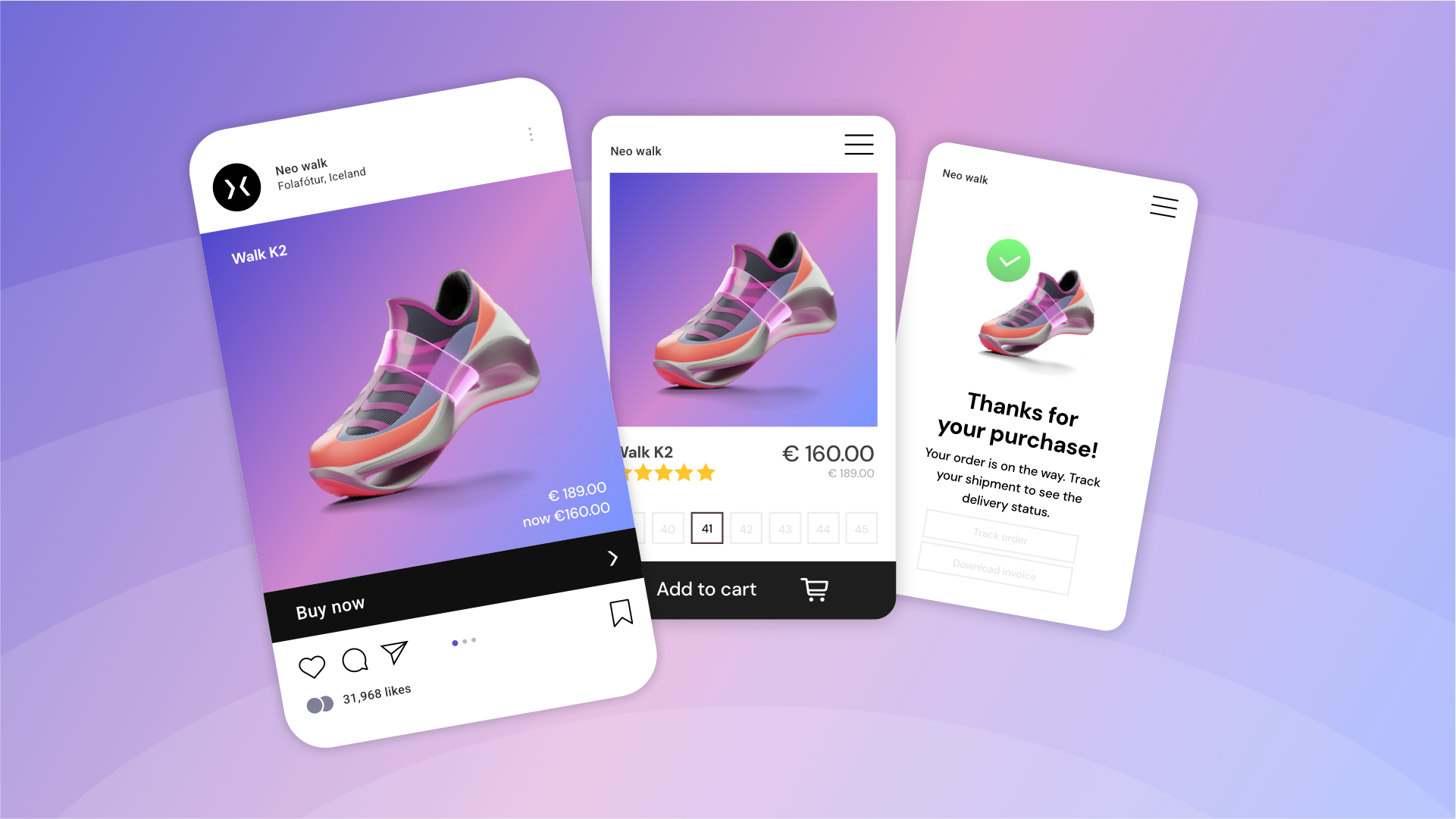
Instead of pushing customers to a separate page, shoppable content lets customers buy inside the experience that caught their attention. This guide explains what shoppable content is, the formats that work, why it matters for global brands, and how the technology behind it works at enterprise scale.
Understanding shoppable content in modern e-commerce
Shoppable content is any digital media, such as an image, video, article, lookbook, or social media post, that lets consumers buy a product directly or add it to a cart without leaving the experience. The product information, pricing, and checkout path are built into the content itself, so customers move from discovery to purchase without leaving the page.
This reflects a real change in how shoppers behave. Consumers now want to buy the moment something catches their eye, and every extra click is a chance to lose the purchase. eMarketer puts US social commerce sales at $87 billion in 2025, on track to pass $100 billion in 2026, a measure of how fast buying inside content has entered the mainstream of online shopping.
For years, brand storytelling and commerce lived in separate systems. The content team would create and publish inspiration on the brand website while the transactional product catalog sat somewhere else, and shoppers had to bridge the two on their own. Shoppable content removes that split by connecting product data to the story, turning editorial and rich media into a direct route to purchase. This is the core of what these brands now call inspirational commerce, and increasingly it is how brands sell products online.
Types of shoppable content for omnichannel delivery
Shoppable content takes many forms, and the strongest brands use several together rather than betting on one format. What matters across all forms is that customers can complete a purchase without leaving the experience.
Shoppable videos and livestreams
Video has moved from an awareness tool to a direct sales channel. Shoppable video content lets shoppers tap a product the moment it appears on screen and purchase it without stopping playback. Interactive overlays mark products at specific timestamps, so what the viewer sees and what they can buy stay in sync.
The same logic applies, for example, to YouTube videos with clickable product cards and to explainer videos on a brand website. Livestream shopping pushes shoppable video further: a host demonstrates products in real time while shoppers add featured products to a cart as they watch, a live shopping format that platforms like TikTok use to drive sales at scale in Asian markets and is growing elsewhere. For many brands, shoppable video is now their highest-converting format.
Interactive images, lookbooks and blogs
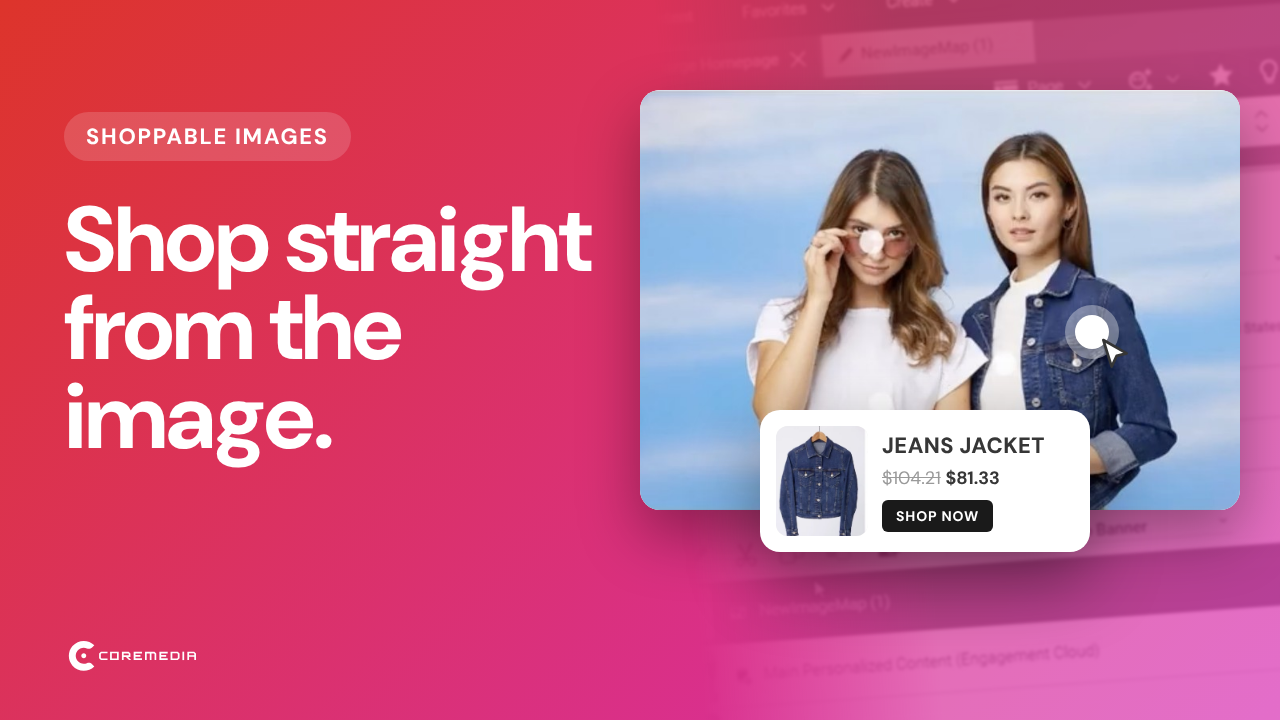
Static and editorial formats convert well when the products are one tap away. Shoppable images use clickable hotspots that link parts of a photo to specific products, so an inspirational shot becomes a route to checkout. Shoppable articles and interactive lookbooks let brands turn a product catalog or a story into revenue rather than engagement alone.
Luxury fashion houses use shoppable articles to make editorial directly buyable; the story and the product become one. B2B manufacturers use the same format differently: product explainers and digital catalogs with a direct path to a quote or procurement portal. The advantage at scale comes from reusable content components: brands can create a shoppable asset once and publish it across regions, languages, and channels without rebuilding it each time, then add shoppable content to new campaigns.
Shoppable social media & AR experiences
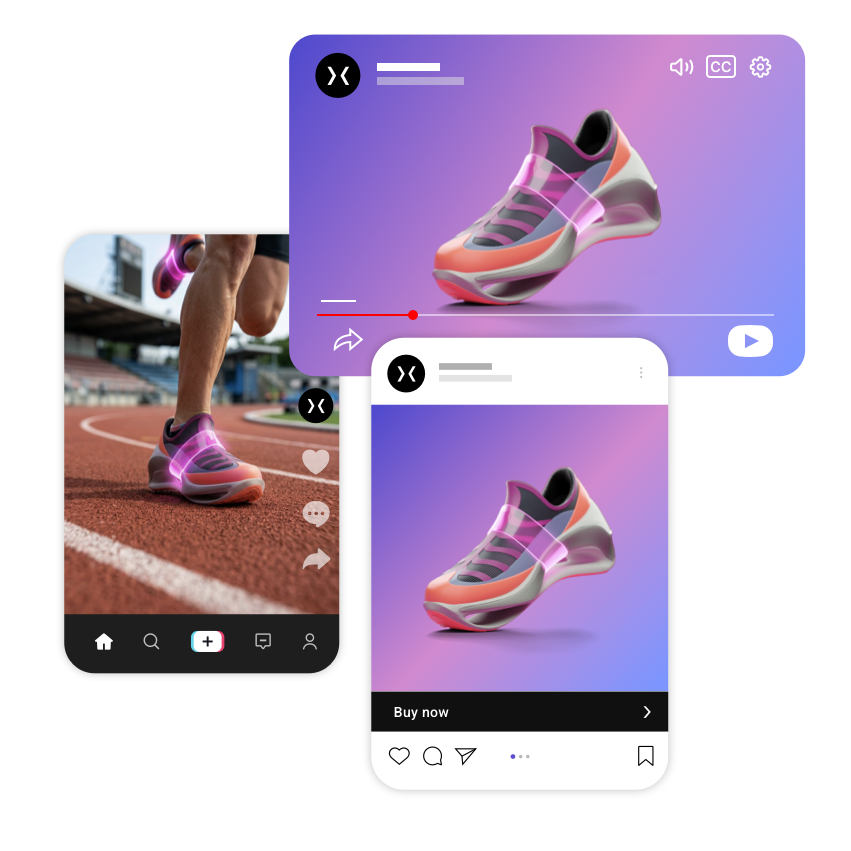
Social media platforms now support buying natively, and social commerce on these social media platforms keeps climbing. TikTok leads that growth, with its share of US social commerce approaching 20%, according to eMarketer. Shoppable posts and shoppable pins let brands tag products inside social media posts, with product tags that allow consumers to purchase directly in-app, and shoppable ads carry the same buy function into paid placements. Many brands run shoppable ads on social media because the shopper never leaves the feed, and well-built shoppable ads turn that attention into sales.
Brands can publish shoppable posts straight to their social channels, the foundation of social commerce and social shopping. The sheer volume of social commerce now makes social media posts matter to enterprise brands, well beyond small sellers. User generated content adds credibility: a real customer photo shared as one of many social media posts carries more social proof than a polished campaign, and that user generated content turns tagged products into sales.
Augmented reality extends the idea, for example allowing consumers to see a product in their own space before they purchase. Together, these social media formats help brands discover products" best audiences and reach potential customers where they already spend time.
The business value: Why enterprises need inspirational commerce
The real value of shoppable content lies in closing the distance between attention and revenue for customers.
Bridging traffic and conversion. High traffic with low conversion is the core problem shoppable content solves. Every step between seeing a product and buying it adds friction, and shoppers drop off. By making the content itself the point of sale, brands cut the path from discovery to direct purchase, reducing friction and recovering customers that would otherwise leak away. Done well, this lifts conversion rates on assets they already own and helps brands drive sales without buying more e-commerce traffic.
Managing global fragmentation. Enterprise brands rarely run one site in one language. They manage many regions, languages, and sub-brands at once, and keeping shoppable content accurate across all of them is hard. Prices, stock, and promotions change constantly, and a broken or outdated shoppable asset in one market damages the customer experience. Components fed by live product data keep every version current across owned media and paid channels alike.
Higher order values and loyalty. Contextual, personalized shopping moments lift average order value and bring customers back, turning one-time consumers into repeat customers. When a recommendation for complementary products fits what a customer is actually looking at, they add more to the cart, increasing average order value (AOV) and trust the brand more, which is how shoppable content helps brands engage customers over time rather than win a single purchase. The payoff is a better customer experience and repeat purchase from loyal customers.
Faster time to market. With the right setup, marketing teams launch shoppable campaigns in weeks rather than quarters. Prebuilt templates and direct commerce integration mean a new campaign reuses existing components instead of starting from scratch, so marketing efforts move at the speed the calendar demands. When content drives growth, that speed becomes a competitive advantage, and the brands that win build their marketing strategy around it.
The core technology powering shoppable content
The composable DXP and hybrid headless CMS
A composable digital experience platform (DXP) lets brands assemble the capabilities they need, from content management to personalization to commerce, instead of buying a single rigid suite. The content layer usually runs on a headless CMS, which separates content from how it is displayed. That separation makes a shoppable asset reusable: built once, the same asset feeds a website, a mobile app, an in store kiosk, or a digital display.
Pure headless has a catch. It gives developers an API but takes away the visual editing that marketers rely on, which makes tagging products and building shoppable content slow. A hybrid headless CMS keeps the API-first delivery developers want while giving marketers a visual editor. A content editor can create content and a shoppable asset, then preview it across channels without writing code. That balance is what lets brands create shoppable experiences at the pace customers expect.
Unifying content, commerce, and the cloud
Shoppable content depends on live product data. The platform has to connect to the commerce engine, often SAP or Salesforce, and to the system that holds product details, so price, stock, and product information stay accurate wherever the content appears. For example, when a product sells out, every shoppable asset and product page should reflect it at once.
Security matters as much as accuracy. Blending content with transactional commerce means handling checkout and customer data across regions with different compliance rules. The safe pattern is to route transactions to the commerce backend rather than store sensitive payment data in the CMS, which keeps checkouts compliant and turns consumer behavior into valuable data the brand can act on safely. That matters more in the AI era, when a secure platform like CoreMedia"s gives brands a safe home for content and data.
How to build a shoppable content strategy - best practices
Use AI to personalize, not to decide. For example, AI can tailor which shoppable content a visitor sees based on behavior and profile, and it can take routine work like tagging and metadata off the team"s plate. But shoppers want AI to help, not take over. A Gartner survey found consumer willingness to let AI make the actual purchase decision topped out at 11%, even for low-stakes categories, while far more consumers were open to AI that narrows choices and surfaces relevant products. The lesson for any digital strategy is to use AI to assist discovery and answer questions, and keep the purchase decision with the customer.
Connect content to outcomes. Shoppable content should be measured against sales, not clicks and views. That means connecting front-end interactions to downstream analytics so brands can see which assets, formats, and placements actually convert customers. For example, a single shoppable video can out-earn a dozen static posts. End-to-end data visibility turns a shoppable program into valuable insights instead of a vanity metric, and it is the backbone of a serious e-commerce strategy for e-commerce businesses.
Bring in a human at the right moment. For high-value or complex purchases, common in finance, travel, B2B and luxury, digital content alone often is not enough to close. The strongest brands let shoppable content hand off to a person through live chat, a click-to-call, or a video call when a shopper hesitates or signals high intent along the customer journey. The human does not replace the content. They close what the content opened, improving the consumer experience for customers at the moment it counts.
How CoreMedia drives conversions with shoppable content
The CoreMedia Experience Platform is built for this problem: connecting content, commerce, data, and human engagement so every digital touchpoint can become a route to purchase, without a rip-and-replace migration.
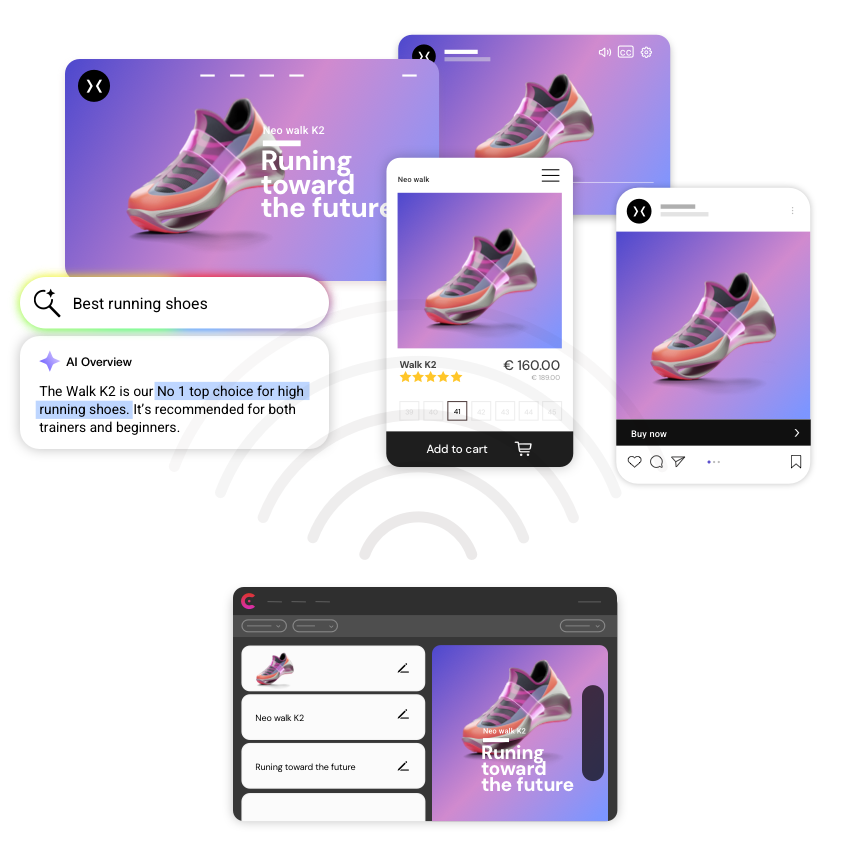
CoreMedia"s Content Management System allows editors to make existing media shoppable themselves. Shoppable images use hotzones to link products to areas of a photo, shoppable videos let editors attach products at specific timestamps on the video timeline, and inspirational content can be added directly onto a selected product page. Built-in commerce integration with systems like SAP, Salesforce, and Shopify keeps product, price, and stock data accurate wherever content is published, so editors can manage store content without leaving CoreMedia Studio.
Elkjøp, one of Europe"s largest consumer electronics retailers with more than 400 stores, is a clear example: it embeds product, stock, and price information into rich media, so videos become shopping tools with one-click purchase straight through to checkout.
The human layer is what sets the platform apart. Most shoppable content stops at the digital handoff. With CoreMedia"s Customer Engagement Platform, shoppable experiences can be connected to a cloud contact center, so when a high-intent shopper hesitates, the platform can offer live chat, a click-to-call, or a video shopping session, and the agent sees the full customer journey, so customers get help at the moment they hesitate. CoreMedia"s own benchmark puts the average order value uplift from adding that human touch at around 40%, which for global brands opens new revenue streams from traffic they already have.
Underneath both layers, CoreMedia KIO, the platform"s embedded AI copilot, speeds up the work: generating metadata, adapting tone and length per channel, and optimizing content so it stays discoverable in search and AI systems, with an editor approving every suggestion before it goes live.
Frequently Asked Questions (FAQs)
What is the difference between a standard e-commerce site and shoppable content?
A standard e-commerce site relies on grid-based product listing pages that shoppers browse and search. Shoppable content builds the buying option directly into editorial, video, and rich media, so consumers can purchase from the story or image that inspired them instead of navigating to a separate product page first.
What is an example of shoppable content?
Common examples include a shoppable video where products are tappable as they appear, a shoppable image with clickable hotspots, an editorial article or lookbook with buy buttons, and a shoppable social post or ad. In each, the shopper buys inside the content itself instead of leaving to find a separate product page.
How do you make content shoppable?
Brands connect content to live product data, then tag products inside images, videos, and articles so shoppers can buy without leaving the page. An enterprise CMS handles the tagging and keeps pricing and stock accurate. In CoreMedia Studio, editors add shoppable hotzones and product timestamps directly, with checkout routed to the payment backend.
How does a headless CMS enable shoppable content?
A headless CMS separates content from its presentation and delivers it through APIs, so brands can inject product and buying functionality into any touchpoint, from a website to a mobile app, using reusable components. The CoreMedia hybrid headless Content Management System adds a visual editor, so marketers build shoppable content without writing code.
What is inspirational commerce?
Inspirational commerce turns brand storytelling into a direct path to purchase, so the content that inspires a shopper is also where they buy. It blends shoppable content, omnichannel delivery, and human help for high-value sales. CoreMedia uses the term for connecting content, commerce, and engagement on a single platform.
Can shoppable content work for B2B companies?
Yes, and manufacturing is a strong fit. Manufacturers use shoppable content in product catalogs, technical explainer videos, and dealer or distributor portals: a shoppable exploded-view diagram can link each part to its spec sheet and a reorder or quote action, and a machine demo can carry a request-a-quote button. Because orders are complex, the content hands off to a sales engineer, a moment the CoreMedia Customer Engagement Platform supports through live chat, click-to-call, or video.
Is shoppable content secure?
It can be, when built on an enterprise-grade platform. Transactions are routed to the commerce backend that already handles payments, so sensitive customer data is not stored in the CMS. CoreMedia offers flexible hosting, cloud or on-premise, to keep content and data secure and compliant across regions, which matters more as AI use grows.
Which types of shoppable content convert best?
It depends on the audience and price point, so most brands combine formats. Shoppable video and livestreams tend to drive impulse purchases from consumers, while shoppable articles and lookbooks suit considered, higher-value buys. Test each format against actual sales, not views, to see what works for a given brand and audience.