





















The evolution of customer engagement in the enterprise
Many enterprises face a persistent problem: high traffic but low conversion. Marketing teams invest heavily in acquisition, bringing millions of visitors to their digital properties, but struggle to engage customers once they arrive. This often creates a customer experience (CX) gap — the difference between the experience a company believes it is delivering and what customers actually perceive. Visitors browse, compare, and leave without moving forward in the buying process. These gaps often emerge when companies collect large volumes of customer data but lack the ability to interpret behavior or act on insights in real time. Traditional customer engagement software often focuses on outbound automation rather than improving the on-site experience where decisions actually happen. Without the ability to analyze customer behavior and respond with personalized content in real time, even sophisticated engagement tools fail to deliver measurable impact.
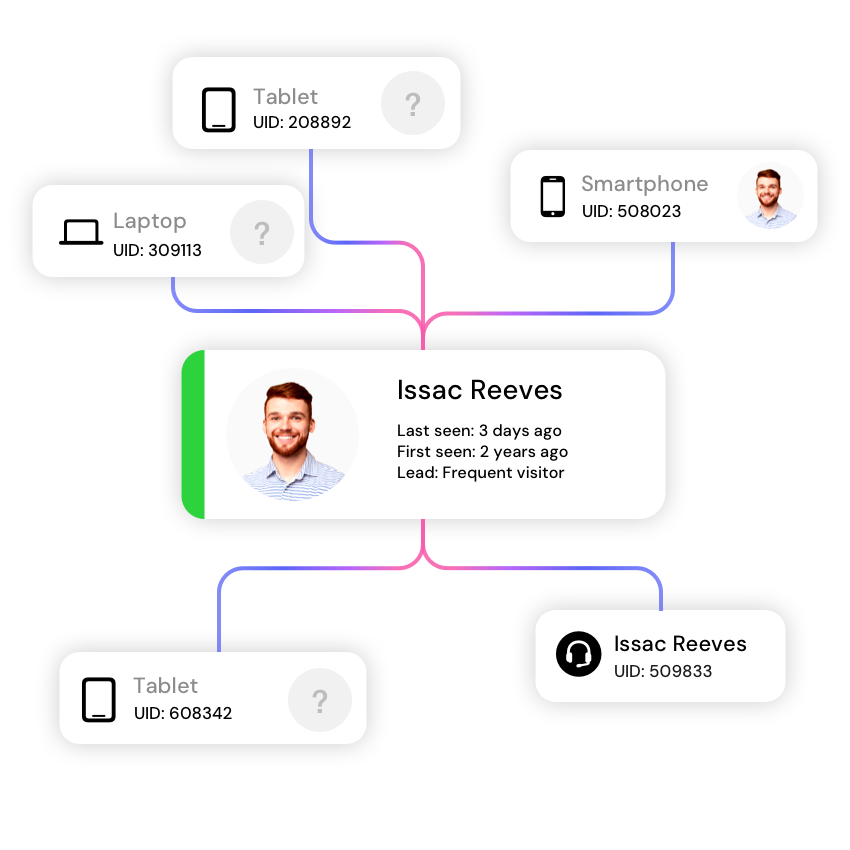
This challenge is driving a shift in how enterprises think about engagement technology. Instead of managing disconnected tools for email, social media, support, and analytics, leading brands are moving toward composable omnichannel engagement platforms that unify content, data, AI, and interaction within one platform. In this model, a modern engagement platform integrates CRM systems, analytics tools, and customer support capabilities to create a continuous view of customer interactions across the entire lifecycle. When these systems work together, organizations can anticipate customer needs, deliver personalized experiences, and build stronger customer relationships that translate directly into long-term business success.
Critical criteria: How to evaluate the "best" platform
For large enterprises, choosing the best customer engagement platform depends on how well its key features connect customer data, content, and human interaction across the entire customer journey. The most effective customer engagement platforms act as a strategic foundation for engagement rather than just another marketing tool.
- Data foundation (CDP integration): A modern engagement platform must integrate seamlessly with customer data platforms (CDPs), CRM solutions and enterprise systems to access real-time customer data. Instead of relying on static records, the platform should continuously interpret customer behavior, engagement history, and transactional signals from various systems in a single customer profile. This data foundation allows organizations to deliver personalized experiences, anticipate customer needs, and adapt engagement strategies as customers move through the buying process.
- Content driven engagement: Many traditional customer engagement solutions focus primarily on outbound messaging - email campaigns, push notifications, or social media interactions. However, the most advanced platforms also enable marketers to create rich, personalized content experiences such as editorial articles, product guides, digital lookbooks, product configurators and comparison tools that integrate directly with commerce. These hybrid capabilities transform engagement from simple communication into immersive digital experiences that encourage discovery and drive conversion.
- Human-in-the-loop engagement: Automation is powerful, but exceptional customer experiences often require human interaction. The best customer engagement software allows organizations to escalate seamlessly from automated chat or AI-powered assistants to live conversations - whether through call, video, or messaging - without losing context from previous customer interactions. This continuity ensures that customer support teams and sales teams can engage customers with full visibility into their journey and intent.
- Composable architecture: Finally, enterprise organizations rarely operate with a single platform. Instead, they rely on complex technology ecosystems that include commerce platforms, CRM software, analytics tools, and other specialized enterprise solutions. A modern customer engagement platform should integrate easily with these systems through APIs and modular services rather than forcing organizations to replace their existing infrastructure. A composable architecture enables companies to innovate faster, scale engagement capabilities across channels and markets, and continuously adopt new technologies without disrupting core operations or creating vendor lock-in.
Top customer engagement platforms
1. CoreMedia (Best for Unified Content & Human-Assisted Commerce)
CoreMedia stands apart from traditional customer engagement platforms by unifying content, data, AI and human interaction within a single architecture. CoreMedia's Digital Experience Platform (DXP) consists out of composable content management, personalization, marketing automation and customer engagement solutions - enabling enterprises to orchestrate customer journeys seamlessly across digital and human touchpoints. Instead of treating engagement as a series of isolated messages, CoreMedia enables brands to orchestrate meaningful customer interactions across the entire buying process, from content discovery to assisted purchasing.
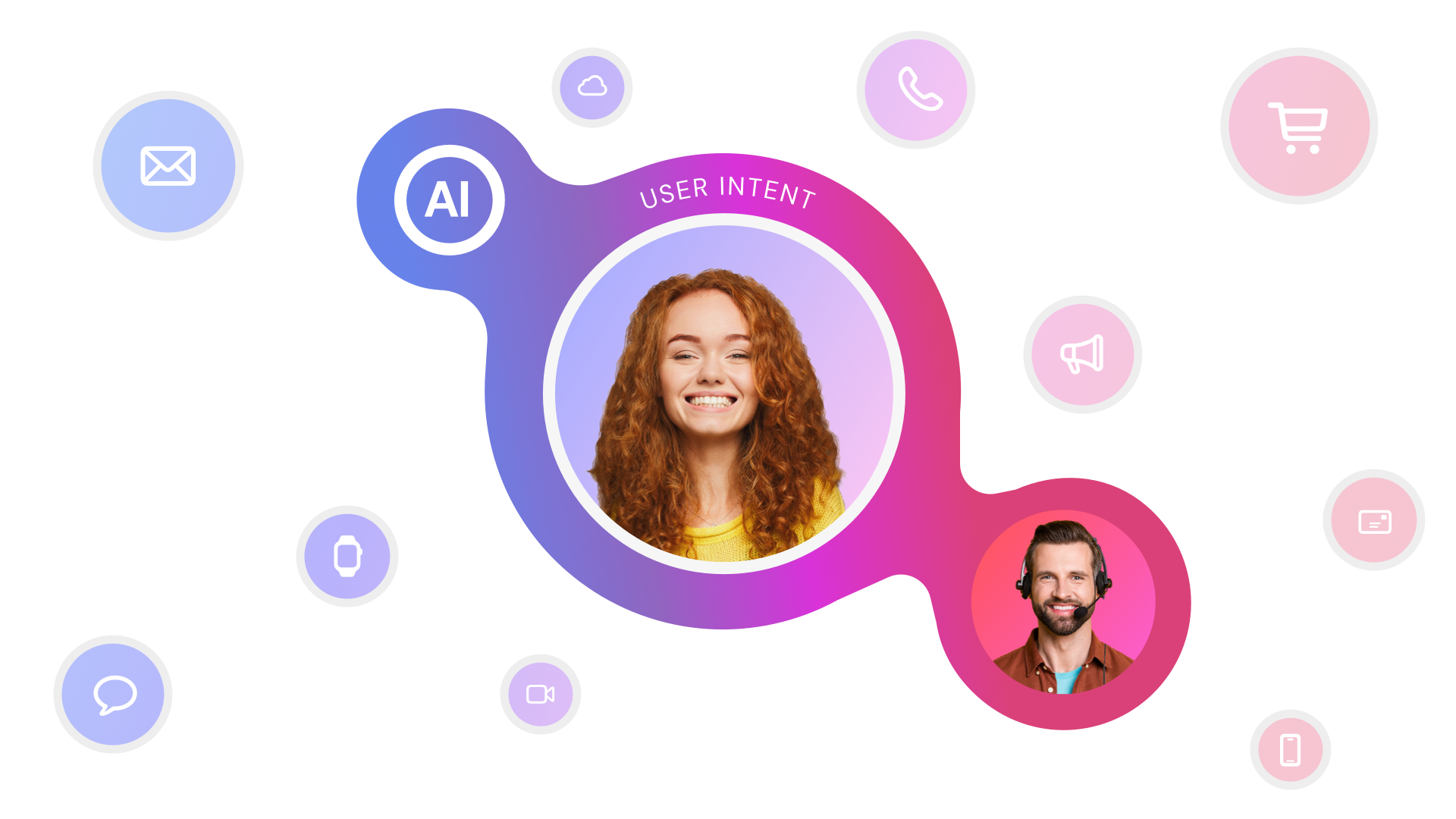
Key differentiator: CoreMedia’s key differentiator is its ability to activate customer intent in real time. Instead of treating engagement as a sequence of disconnected messages or campaigns, the platform analyzes customer behavior and interaction signals to determine the most relevant next step. Based on user intent, brands can respond dynamically with the right combination of content, commerce, and human interaction. For example, a customer exploring product details might receive personalized recommendations, be guided through interactive product experiences, or be connected to a live expert when additional support is needed. This intent-driven approach allows enterprises to respond to customer needs as they emerge, blending digital experiences with human assistance to create more meaningful engagement.
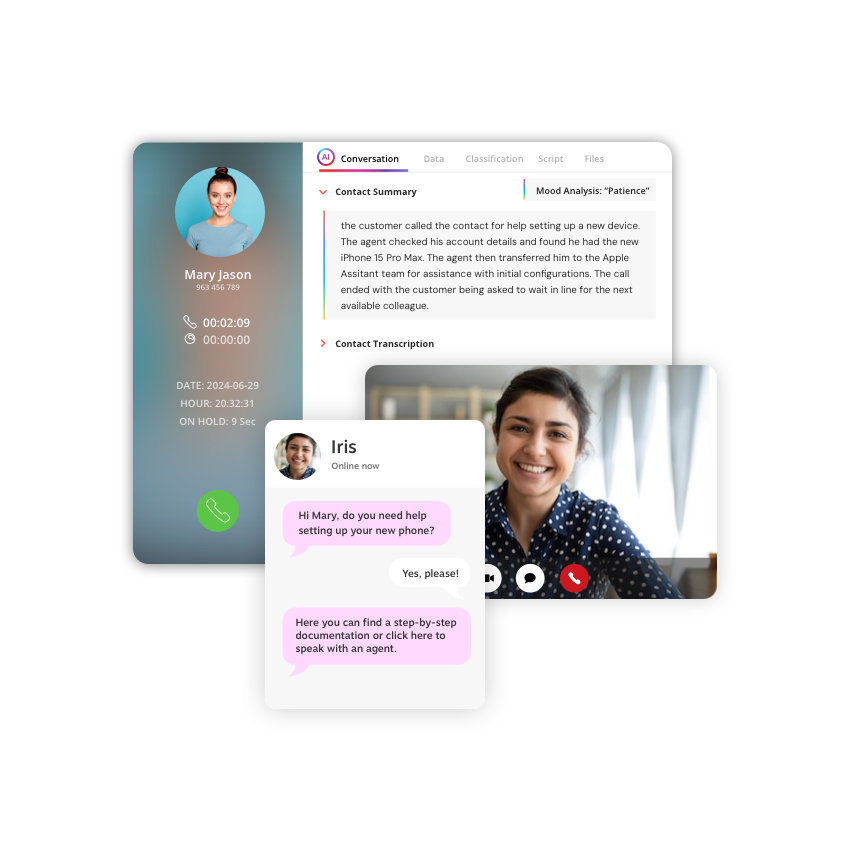
Automation with human interaction: While many customer engagement solutions focus purely on automation, CoreMedia connects digital experiences with real-time human interaction. Native chat, voice, and video capabilities allow customer support teams and sales teams to step into conversations when needed, providing context-aware assistance during high-value or complex purchasing decisions. CoreMedia's AI Agent Assist provides contact center agents with visibility into customer history and behavior, so that teams can deliver highly relevant interactions that strengthen customer relationships.
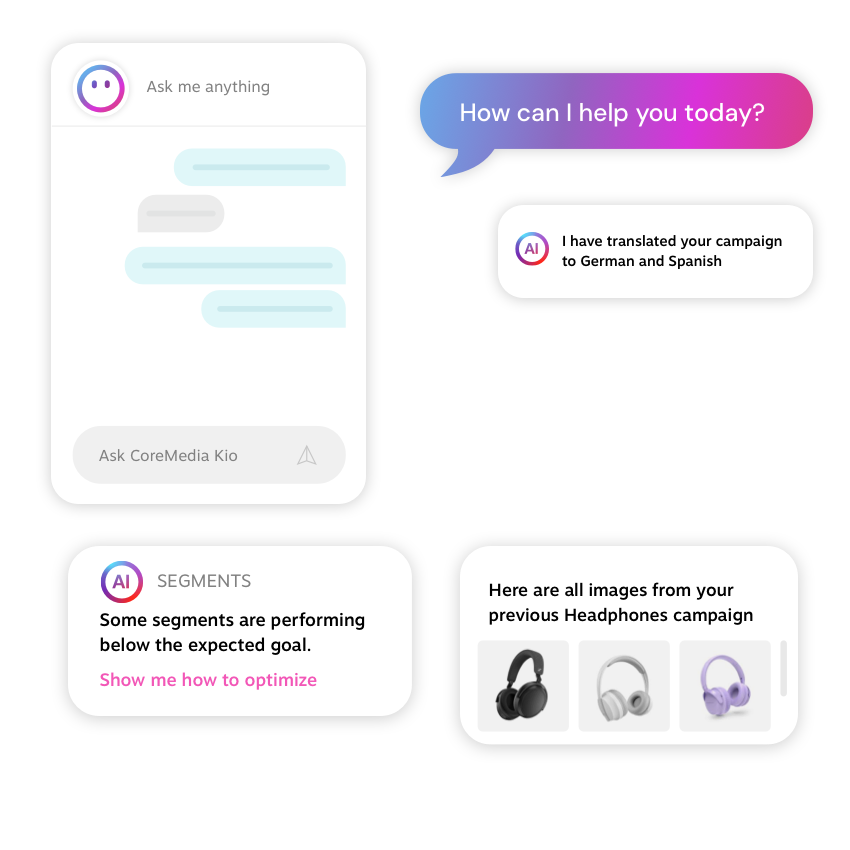
AI-driven engagement: CoreMedia enhances customer engagement with AI-powered intent analysis through CoreMedia KIO. The system evaluates signals such as past interactions, real-time behavior, and product or content engagement to detect when customer intent is rising and where the probability of conversion is highest. Based on these signals, KIO recommends the next best action — whether presenting relevant content, guiding customers through product experiences, or connecting them with a human expert — enabling enterprises to respond to customer needs in real time.
For enterprises seeking a modern customer engagement platform, CoreMedia offers a unique combination of composable architecture, real-time insights, and integrated intent-driven interaction tools. By bringing together content, customer data, and human engagement within one platform, organizations can create exceptional customer experiences, improve customer engagement efforts, and turn digital inspiration into measurable business outcomes and a clearer competitive advantage.
A strong example of this approach is EDP, a global energy leader that transformed its digital experience with CoreMedia. By creating personalized journeys and intelligent lead-recovery flows, EDP was able to guide visitors through complex solar purchase decisions more effectively. Features such as a smart simulator that saved user progress, targeted follow-ups for returning visitors, and unified tracking across online and assisted sales channels helped reconnect prospects who previously abandoned the process. As a result, EDP achieved a 120% increase in conversions, surpassing its original goal and delivering a digital journey that felt more personalized, responsive, and connected across channels.
2. Braze (Best for mobile-first marketing automation)
Braze is a well-known customer engagement platform focused on mobile-first marketing automation. It helps brands automate messaging across apps and mobile channels to engage customers at scale.
Key strengths
- Strong support for mobile apps, push notifications, and SMS campaigns.
- Integration with social media messaging channels for real-time engagement.
- Advanced tools to automate messaging based on user behavior.
- Real-time engagement across mobile devices and digital touchpoints.
- Well suited for high-volume B2C lifecycle marketing.
Limitations
- No native content management system for building websites or digital storefronts.
- Requires integration with external CMS platforms to manage content-driven experiences.
- Primarily optimized for messaging rather than full customer journey orchestration.
3. Salesforce Marketing Cloud (Best for pure CRM-centric ecosystems)
Salesforce Marketing Cloud is a widely adopted customer engagement platform built on the Salesforce CRM software ecosystem for enterprises already invested in the Salesforce ecosystem. It is designed to extend customer relationship management (CRM) capabilities into marketing automation, allowing organizations to manage campaigns and customer data within a centralized platform.
Key strengths
- Deep integration with the Salesforce CRM system, enabling unified access to customer data across marketing and sales teams.
- Strong capabilities for campaign automation, segmentation, and cross-channel marketing.
- Extensive ecosystem of partners and integrations for large enterprise deployments.
- Powerful tools for managing customer journeys across email, advertising, and other communication channels.
Limitations
- Often associated with a high total cost of ownership (TCO) and licensing complexity.
- Implementation frequently requires specialized partners or consultants.
- Customization and integrations can slow time-to-market for new digital initiatives.
- Less focused on content-driven experiences or immersive customer engagement on owned digital properties.
4. Zendesk (Best for post-purchase support & ticketing)
Zendesk is one of the most recognized platforms for customer service tools and support management. It focuses primarily on helping organizations manage customer inquiries, support requests, and service operations through structured ticketing systems.
Key strengths
- Industry-leading ticketing system for organizing and resolving customer support requests.
- Comprehensive tools for managing customer service interactions across multiple support channels.
- Automation capabilities that help support teams prioritize and resolve customer issues efficiently.
- Strong reporting and workflow tools for large-scale customer support operations.
Limitations
- Primarily designed for post-purchase support, not proactive customer engagement.
- Limited capabilities for driving product discovery or influencing the buying process.
- Requires additional platforms to support content-driven engagement, marketing, or commerce experiences.
- Focused on resolving problems rather than proactively engaging customers earlier in the customer journey.
The role of AI in scaling customer engagement
Artificial intelligence is transforming how enterprises scale customer engagement across digital channels. While early customer engagement software focused on basic automation or simple chatbots, modern engagement tools use AI technology to analyze customer behavior, understand intent, and deliver experiences in real-time that improve customer satisfaction.
One of the most valuable applications is agent assist. Instead of replacing human support teams, AI tools help them operate more effectively by summarizing previous chat history, analyzing conversation context, and recommending the next best offer or product during live interactions. This allows customer support teams and sales teams to respond faster, maintain continuity across customer conversations, and deliver more relevant guidance during the buying process.
Another major advancement is predictive personalization. By analyzing engagement patterns, AI-powered engagement platforms can determine the next best action for each visitor in real time. For example, the platform may automatically adjust on-site content, trigger a personalized product recommendation, or initiate a WhatsApp message or chat interaction when a visitor shows strong purchase intent. These capabilities help brands automate follow ups and ensure that digital experiences adapt dynamically as customers move through the decision journey.
For enterprises managing large volumes of traffic and customer interactions, these capabilities are becoming essential. AI-powered features allow organizations to scale engagement across channels without losing the human context that drives trust and customer satisfaction. When implemented within a unified customer engagement platform, AI tools enhance both automated interactions and human-led conversations, helping organizations increase engagement more effectively while maintaining personalized experiences.
Why "composable" is the future of engagement
As customer journeys grow more complex, many enterprises face a technical bottleneck when trying to orchestrate engagement across channels. Marketing teams must coordinate interactions across websites, commerce platforms, CRM systems, service environments, and mobile applications — often at the exact moment when customer intent emerges. At the same time, customer expectations are rising rapidly, shaped by the responsiveness and personalization people experience with modern AI tools.
When enterprise systems operate in isolation, responding to these expectations becomes difficult. Data is fragmented, signals arrive too late, and organizations struggle to adapt experiences in real time.
Composable architecture offers a more future-proof approach. Instead of forcing organizations into a single platform, composable engagement systems connect existing tools through APIs and modular services. CRM systems, commerce platforms, analytics tools, and service environments can contribute real-time signals about customer behavior and intent.
Importantly, composable does not mean fragmented. When designed well, composable platforms unify these signals into a coherent engagement layer that allows organizations to understand what customers are trying to accomplish and respond dynamically — recommending relevant content, guiding product exploration, or connecting customers with human experts when needed.
In this model, composable architecture becomes more than a technical design choice. It provides the foundation for future-ready customer journeys where data, automation, content, and human interaction work together seamlessly to respond to customer intent in real time.
Engagement strategy: Bridging the "Digital-to-Human" gap
Many customer engagement platforms focus primarily on digital automation, yet high-value transactions often require human interaction. In industries such as luxury retail, banking, insurance, utilities or B2B manufacturing, customers frequently begin researching online but seek expert guidance before making a final decision. This is where a strong strategy for omnichannel communication becomes essential - ensuring that digital experiences and human interactions work together seamlessly.
In a true omnichannel environment, a customer might start exploring products on a mobile app, continue on the website, and complete the purchase through a conversation with a sales team - using integrated sales software - or a support team. To make this transition seamless, organizations need visibility across every interaction.
Modern engagement platforms address this challenge with a unified agent workspace. When support or sales teams can see what customers viewed before initiating contact, they can provide faster assistance, offer relevant recommendations, and guide purchasing decisions more effectively.
FAQs: Choosing the Right Platform
What is the difference between a CRM and a Customer Engagement Platform?
A Customer Relationship Management (CRM) system primarily focuses on storing and organizing customer data, such as contact information, purchase history, and sales activity. It helps sales and service teams track relationships and manage accounts over time.
A Customer Engagement Platform (CEP) goes a step further by activating that data to create real-time customer experiences. Instead of simply storing information, a CEP uses customer behavior, content, and interaction data to personalize digital journeys, automate engagement, and guide customers through the buying process.
Platforms like CoreMedia combine content management, customer insights, and interaction tools to help organizations transform stored customer data into meaningful engagement across websites, mobile apps, and support channels.
How does a CEP improve ROI?
A modern customer engagement platform improves ROI by helping organizations deliver more relevant experiences throughout the customer journey. By analyzing customer behavior and engagement patterns, these platforms allow brands to present personalized content, targeted offers, and contextual recommendations at the right moment.
This level of personalization increases conversion rates, encourages repeat business, and helps organizations guide customers toward purchase decisions more efficiently. Instead of relying on broad campaigns, companies can focus their efforts on interactions that are most likely to drive measurable results.
With CoreMedia, enterprises can connect content, commerce, and human interaction to create more impactful engagement strategies that translate directly into stronger revenue outcomes.
Can I integrate these platforms with my existing stack?
Yes. Most enterprise customer engagement platforms are designed to integrate with existing technology ecosystems rather than replace them. Modern platforms use composable architectures and APIs that allow organizations to connect systems such as CRM software, commerce platforms, analytics tools, and customer data platforms.
This flexibility allows businesses to extend their current infrastructure while introducing new engagement capabilities across multiple channels.
For example, CoreMedia’s composable architecture allows organizations to integrate seamlessly with systems such as Salesforce, SAP, and other enterprise tools. This composable approach enables companies to build a scalable engagement ecosystem without disrupting their existing technology stack.
What features should enterprises look for in a customer engagement platform?
Enterprises should prioritize platforms that combine customer data integration, content management, AI-powered personalization, and omnichannel communication. The most effective platforms also support composable architecture, allowing organizations to connect with existing CRM systems, commerce platforms, and analytics tools.
Platforms like CoreMedia stand out because they unify content creation, digital experiences, and human interaction within one environment - allowing enterprises to scale engagement while maintaining consistent brand experiences across every customer touchpoint.
How does omnichannel engagement improve customer experience?
Omnichannel engagement ensures that customers receive consistent experiences across every interaction point - whether they begin on a mobile app, continue browsing on a website, or contact a support team for assistance. Instead of treating each channel as a separate system, omnichannel platforms unify data and communication so the customer journey remains continuous.
When organizations adopt this approach, customer interactions feel more natural and personalized. For example, a support agent can see the pages a customer viewed before initiating contact, allowing them to provide faster and more relevant assistance. CoreMedia enables this continuity by connecting digital content, commerce experiences, and human interaction within a single engagement ecosystem.
Why are composable platforms important for customer engagement?
Enterprise technology environments are complex, often including CRM systems, commerce platforms, analytics tools, and customer service solutions. A composable customer engagement platform allows organizations to integrate these systems rather than replacing them.
Through APIs and modular architecture, composable platforms enable companies to connect existing technologies while introducing new engagement capabilities. This flexibility allows organizations to evolve their digital experiences over time while maintaining a unified view of customer behavior.
Solutions like CoreMedia are designed with this composable approach in mind, allowing enterprises to integrate content management, engagement tools, and customer data into a scalable platform that adapts to changing business needs.
Conclusion: Making every interaction count
As customer expectations continue to evolve, the role of a customer engagement platform is expanding beyond simple automation. The most effective platforms no longer operate as isolated tools for messaging or support. Instead, they function as integrated ecosystems that unify content, commerce, and customer care across every channel.
By combining real-time customer data, personalized content experiences, and human interaction, modern engagement platforms allow organizations to deliver consistent and meaningful engagement throughout the entire customer journey. This approach helps brands improve customer experience, strengthen relationships with both new and existing customers, and create the kind of experiences that drive long-term customer retention.
CoreMedia was designed to support this new model of engagement. By bringing together hybrid headless content management, AI-powered engagement tools, and integrated human interaction, CoreMedia enables enterprises to connect digital inspiration with real conversations. The result is a unified platform that helps organizations deliver exceptional experiences and turn engagement into measurable business results.
Ready to see it in action?
Explore how CoreMedia’s Customer Engagement Platform helps brands unify content, commerce, and customer interaction.
Book a demo to learn how your organization can make every interaction count.