





















A fast, low risk CMS migration to CoreMedia – under 90 days
Migrating from Xperience by Kentico to CoreMedia carries particular strategic context. Organizations already planning a migration from Kentico Xperience 13 to Xperience by Kentico are already absorbing the organizational effort of a major transition, this being a full platform rebuild by any measure. For those whose global ambitions or enterprise complexity have reached the boundaries of a unified all-in-one DXP, this migration window is the most cost-effective moment to evaluate whether the destination platform is right, before committing to another multi-year implementation cycle.
CoreMedia follows a phased migration methodology that avoids the risk and complexity of a full cutover. Rather than rebuilding everything simultaneously, organizations can transition content structures, workflows, and integrations incrementally, keeping existing systems operational where needed while the new platform scales up. This is particularly relevant for enterprises managing multiple brands or regions, where sequenced market-by-market migration reduces risk at each stage.
The migration process includes a structured content governance review, which ensures that the transition is not a lift-and-shift but an opportunity to rationalize content architecture and publishing workflows before they are established on the new platform. This reduces technical debt and positions teams to operate more efficiently from day one.
Organizations such as Enterprise Ireland completed their migration to CoreMedia in as little as 90 days, demonstrating that with structured planning and defined governance, enterprises can move quickly without sacrificing stability.

Everything you need to know to choose CoreMedia
What is the main difference between CoreMedia and Kentico?
CoreMedia is a composable, hybrid headless DXP built for global enterprise complexity: multi-brand publishing, anonymous visitor personalization, inspirational commerce, and native human-assisted engagement. Xperience by Kentico is a unified, all-in-one platform on Microsoft .NET, designed for mid-market to enterprise organizations that prioritize speed-to-value and integrated tooling over architectural flexibility.
Do both Kentico and CoreMedia support headless architecture?
Both CoreMedia and Kentico offer hybrid headless delivery, but with a key difference. CoreMedia combines API-first architecture with native WYSIWYG visual editors, giving marketers full control to build, preview, and publish without developer involvement. Kentico's hybrid headless implementation is more developer-oriented, with the visual editing layer less central to its go-to-market design.
Between Kentico and CoreMedia, which platform is better for global e-commerce?
CoreMedia is purpose-built for global enterprise commerce, with native connectors for SAP Commerce Cloud, Salesforce Commerce Cloud, Elastic Path, HCL Commerce, and Spryker. It connects editorial content directly to product discovery and conversion, making it the stronger fit for Luxury Retail and B2B brands where inspirational, content-led commerce drives revenue. Xperience by Kentico includes native commerce capabilities oriented toward catalog management and campaign-led transactions.
How long does implementation typically take?
CoreMedia's new implementations can launch in as little as 8 weeks and see results from engagement tools within 4 weeks. CoreMedia delivers 75% faster time to web by enabling marketers to create, preview, and publish personalized multilingual content without IT or development involvement. Xperience by Kentico implementations vary by scope; migration from Kentico Xperience 13 to the new platform is a full rebuild. A full migration from Kentico to CoreMedia can be completed in as little as 90 days with a phased approach.
When should a company choose Xperience by Kentico over CoreMedia?
Xperience by Kentico suits mid-market organizations that want basic CMS, marketing automation, and commerce in a single .NET platform with a defined scope of sites and markets. CoreMedia is the stronger choice where composable architecture, anonymous visitor personalization, localization workflows, omnichannel content governance, and native human-assisted engagement are operational requirements.
What is Kentico's end-of-life situation for Xperience 13?
Support for Kentico Xperience 13 ends December 31, 2026. The transition to Xperience by Kentico is a full platform rebuild, requiring content migration, integration reconsolidation, and workflow redesign. For enterprises already committing to this effort, the evaluation window is a natural point to assess whether CoreMedia better fits their global requirements.
Does Kentico offer contact center or live engagement capabilities?
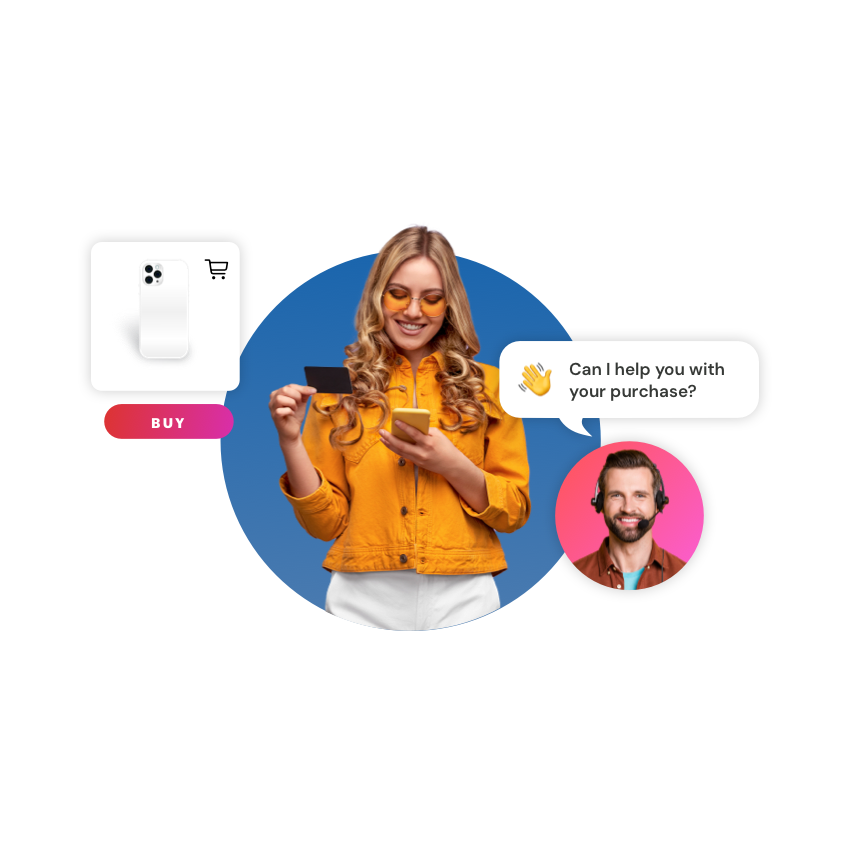
Xperience by Kentico does not include native live engagement features. Live chat, click-to-call, and video shopping require external tools and separate vendor relationships. CoreMedia's Customer Engagement Platform is built natively into the DXP, triggering these interactions by visitor behavior and personalization signals without a separate integration layer.
How does CoreMedia's personalization compare to Kentico's?
Kentico's personalization is built around known contact profiles tracked through forms, memberships, and email interactions. CoreMedia personalizes across both authenticated and anonymous journeys using session-based tracking, browsing behavior, traffic origin, and purchase intent, without requiring a login or a separate personalization tool.
What composable architecture capabilities does Kentico offer compared to CoreMedia?
Kentico positions Xperience by Kentico as delivering enterprise-grade capabilities without full composable architectural overhead — a deliberate trade-off suited to mid-market priorities. CoreMedia is built composable from the ground up, enabling enterprises to integrate, replace, and scale individual services independently across a complex global digital stack.
How does CoreMedia support multi-brand, multi-region publishing?
CoreMedia supports content locking, multi-level approval chains, role-based publishing permissions, and cross-channel preview for distributed teams across brands, regions, and time zones, all available out of the box. Kentico supports multilingual and multi-site management, but some enterprise governance features including content locking are still maturing in the current release.
What is the difference between a WCM and a DXP?
A WCM manages content creation and publishing primarily for web channels. A DXP orchestrates experiences across multiple channels, integrating personalization, commerce, and customer engagement. Kentico operates between traditional CMS and enterprise DXP. CoreMedia is a composable DXP built for the upper end of enterprise complexity across global, multi-channel ecosystems.
Does CoreMedia integrate with existing commerce and CRM platforms?
Yes. CoreMedia includes built-in connectors for Salesforce Commerce Cloud, SAP Commerce Cloud, HCL Commerce, Elastic Path, and Spryker, plus over 150 pre-integrated third-party solutions. Its composable architecture allows integrations to be replaced independently without platform changes. Kentico also supports CRM and commerce integrations within its unified .NET framework.