





















Introduction: The "Traffic vs. Conversion" paradox
The problem is rarely the lack of data. Most enterprise companies already collect enormous volumes of customer data across their digital ecosystem. Analytics platforms track user behavior, commerce systems record purchase history, and marketing platforms capture signals from multiple channels. On paper, organizations appear to have everything needed to create highly personalized experiences.
In practice, personalization often breaks down. Many companies have become “data rich” but content poor. Their systems can analyze user data and identify patterns in customer behavior, yet they struggle to respond with the right content variation in the moment. Delivering relevant product recommendations, adapting landing pages, or adjusting messaging across various channels requires a level of content agility that many personalization engines cannot support.
This gap between data insight and content delivery is where most personalization initiatives fail. Traditional personalization software focuses primarily on analytics and segmentation but lacks the ability to orchestrate the creative layer of the experience. As a result, brands collect signals about intent but cannot transform those signals into meaningful engagement.
For modern enterprises, the right orchestration layer must do more than process data. It must connect behavioral signals, content creation, and delivery across the full decision process. In other words, effective personalization requires an orchestration layer - often built on a modern Digital Experience Platform (DXP) - that bridges the gap between traffic and conversion, turning anonymous visitors into loyal customers and measurable ROI.
What is a personalization engine? (And what it isn't)
At its core, a personalization engine is software designed to adapt digital experiences to each individual user. Instead of presenting the same content or offers to every visitor, these systems analyze customer data, behavioral signals, and contextual inputs to determine what each person is most likely to engage with. Modern personalization engines rely on machine learning and behavioral analysis to interpret patterns in user behavior, enabling brands to respond dynamically across websites, apps, and other digital channels.
In practice, this means the system continuously evaluates signals such as browsing behavior, transaction history, location, and device context. Based on this information, the engine can adjust recommendations, modify layouts, trigger push notifications, or highlight relevant products. These actions are typically powered by AI driven personalization, which allows organizations to deliver tailored experiences in real time rather than relying on static segmentation rules.
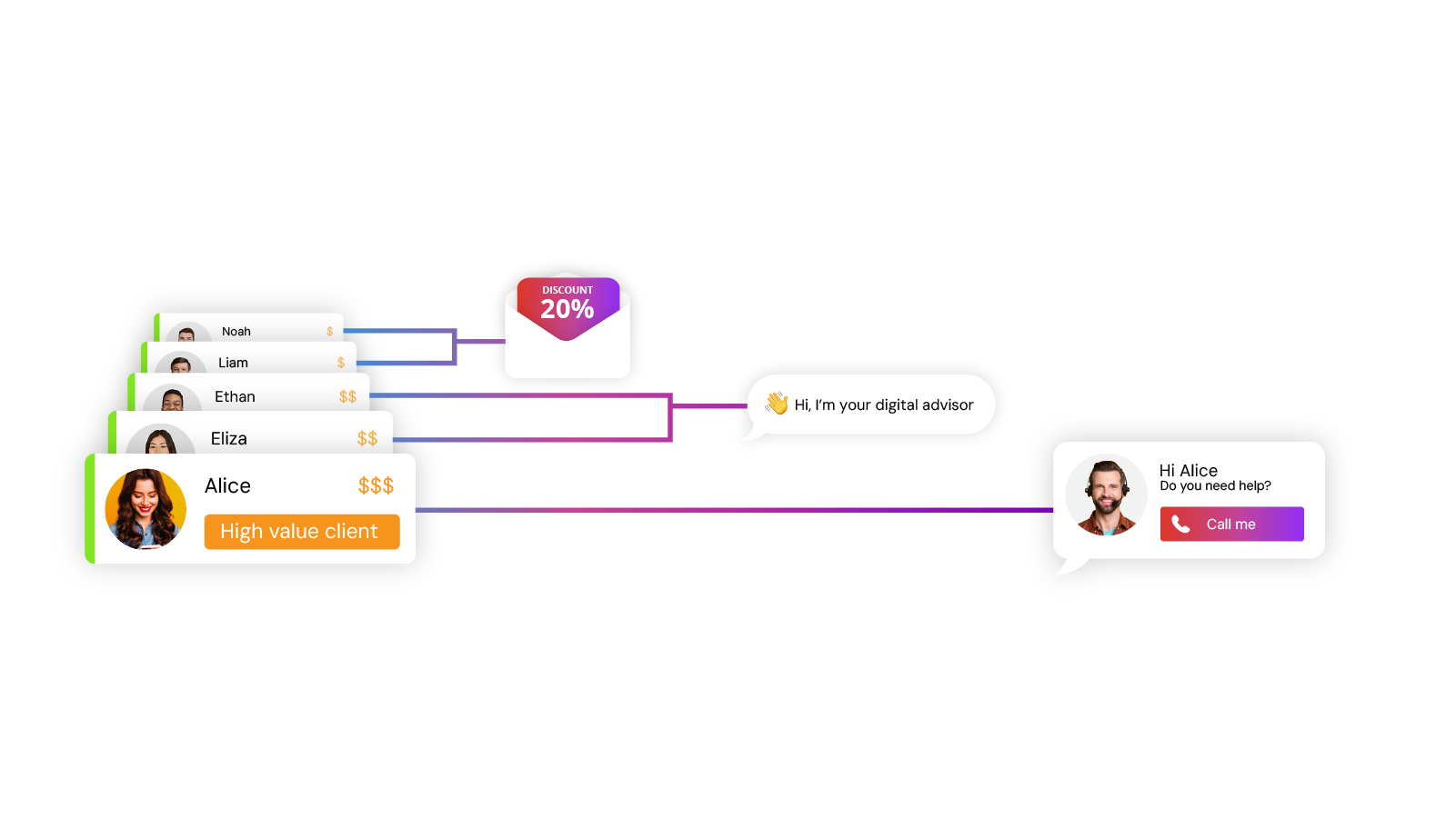
However, not every tool labeled as personalization software truly delivers this level of intelligence. Many traditional personalization platforms still operate primarily through rule-based segmentation. Marketers define audience groups, test variations through A/B testing, and measure which version performs better. While this approach can improve engagement, it remains fundamentally different from real-time advanced personalization. True personalization engines adapt continuously to individual behavior instead of assigning users to predefined segments.
Another important distinction is how these systems fit into the broader technology ecosystem. Most enterprise platforms integrate personalization capabilities with other components of the digital stack. A personalization engine typically connects to a Customer Data Platform (CDP) or data platform that aggregates behavioral signals and creates unified customer profiles. It may also integrate with CRM systems, ecommerce platforms, and marketing automation tools to coordinate cross channel interactions across multiple customer touchpoints.
Within this ecosystem, personalization engines function as the decision layer. They analyze signals from across the customer journey, apply algorithms to determine the next best action, and orchestrate dynamic content or messaging across websites, apps, and other channels. When implemented effectively, this capability helps enterprises move beyond static segmentation and toward continuous, data-driven engagement.
The core components of a high-performance engine
1. Unified Data & Real-Time Signals:
High-performing personalization engines begin with the ability to ingest and interpret customer data from multiple systems. Enterprise organizations typically collect information from CRM systems, data platforms, commerce environments, and marketing tools. When this data is unified, companies can create unified customer profiles that reflect interactions across multiple channels.
Modern personalization software also analyzes real-time interaction signals and intent signals such as clicks, dwell time, product views, and browsing behavior. By continuously evaluating these signals, AI powered systems can interpret customer behavior as it evolves and adapt experiences accordingly. This capability forms the foundation of real time personalization across the entire interaction path.
2. Content Orchestration (The Missing Piece):
Data alone does not create effective personalization. Many personalization platforms can identify user intent but struggle to activate the right creative asset quickly enough. Without flexible content management, insights remain theoretical.
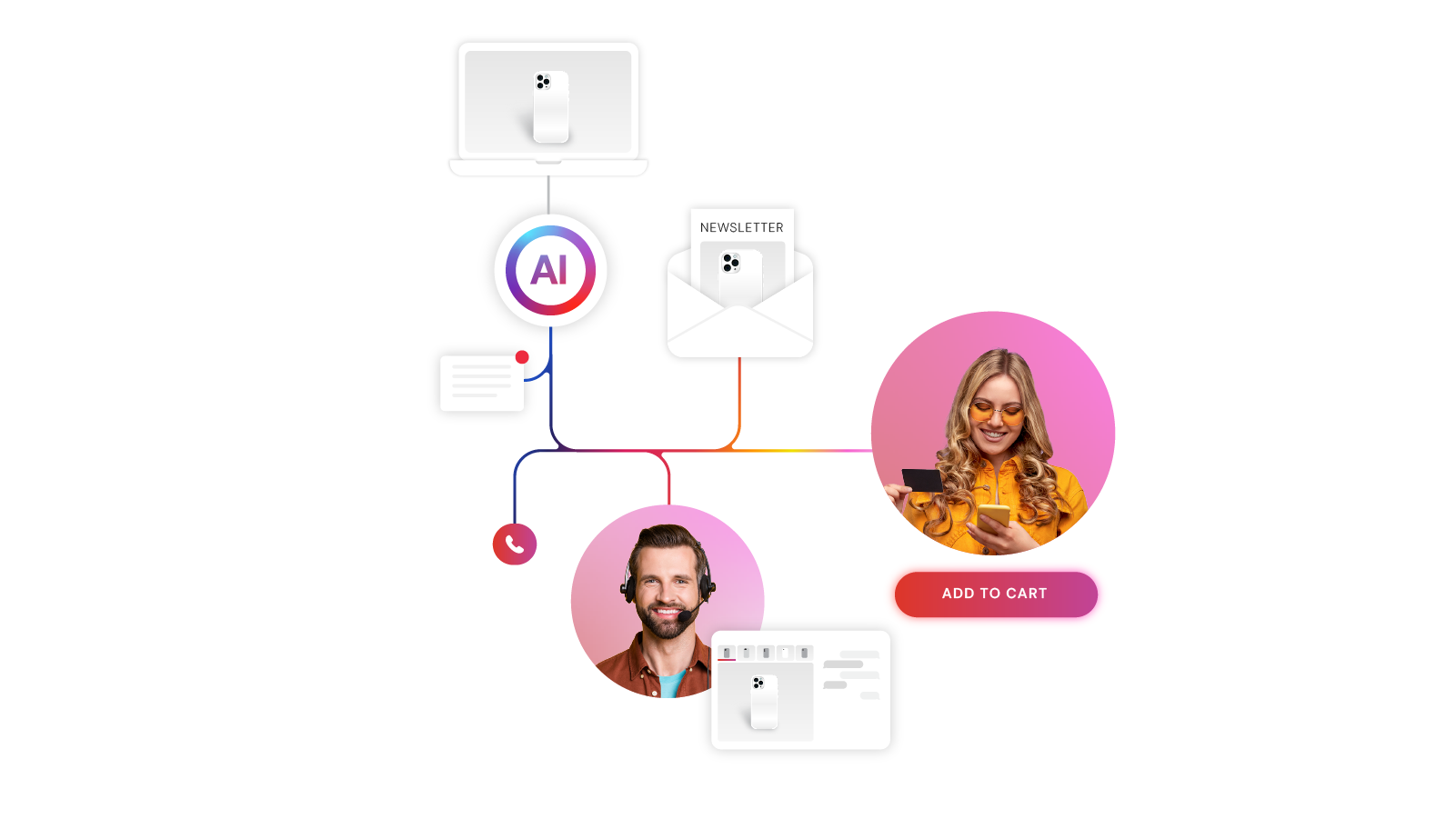
This is why content orchestration is a critical component of modern ecommerce personalization software. A high-performance engine must instantly trigger the correct banner, recommendation, or adaptive content variation based on incoming signals. Whether adjusting messaging during marketing campaigns, recommending products, or tailoring landing pages, the system must connect personalization logic with content delivery in real time.
For large enterprises operating across global e-commerce platforms, this often requires a Hybrid Headless architecture. This model allows teams to manage large volumes of content variations while maintaining the agility required for effective personalized web experiences across regions and languages.
Customers interact with brands across many digital touchpoints. They may start exploring products on a website, continue browsing through mobile apps, and later receive push notifications or follow-up communication through email.
To remain consistent across these interactions, leading personalization engines must deliver experiences across multiple platforms simultaneously. This includes website personalization, in app personalization, and coordinated messaging across customer support channels. Effective cross channel personalization ensures that messaging and offers remain aligned throughout the full customer journey.
Finally, enterprise-grade personalization tools must provide meaningful insights into performance. While engagement metrics such as clicks or views can indicate short-term interest, organizations need deeper visibility into revenue impact.
By combining analytics, AI models, and advanced analytics tools, companies can measure how personalization influences average order value, long-term revenue and customer retention. These insights allow teams to refine their personalization strategies and continuously improve how they deliver relevant experiences.
Evaluation criteria: How to choose the right tool
Scalability & Global Reach:
For enterprise companies, scalability is a fundamental requirement when evaluating personalization engines. The platform must support multi-brand, multi-language, and multi-region environments without adding operational complexity.
This means delivering consistent personalized web experiences, recommendations, and dynamic content across different channels, including websites and mobile apps, while maintaining performance at scale. Leading personalization platforms should also support localization strategies that allow organizations to adapt messaging and offers to regional markets while maintaining global governance.
Composable Architecture:
Another critical factor is how well the platform integrates with existing enterprise platforms and infrastructure. Many organizations already rely on CRM systems, data platforms, ecommerce platforms, and marketing automation tools to manage customer relationships and campaigns.
The right personalization software should integrate with these systems through APIs instead of forcing a disruptive “rip and replace” approach. Composable architecture allows companies to extend existing infrastructure while introducing advanced personalization capabilities and enabling cross channel personalization across the entire digital ecosystem.
Human-in-the-Loop:
Most AI powered personalization engines focus exclusively on automated decision-making. However, high-value interactions often require human involvement.
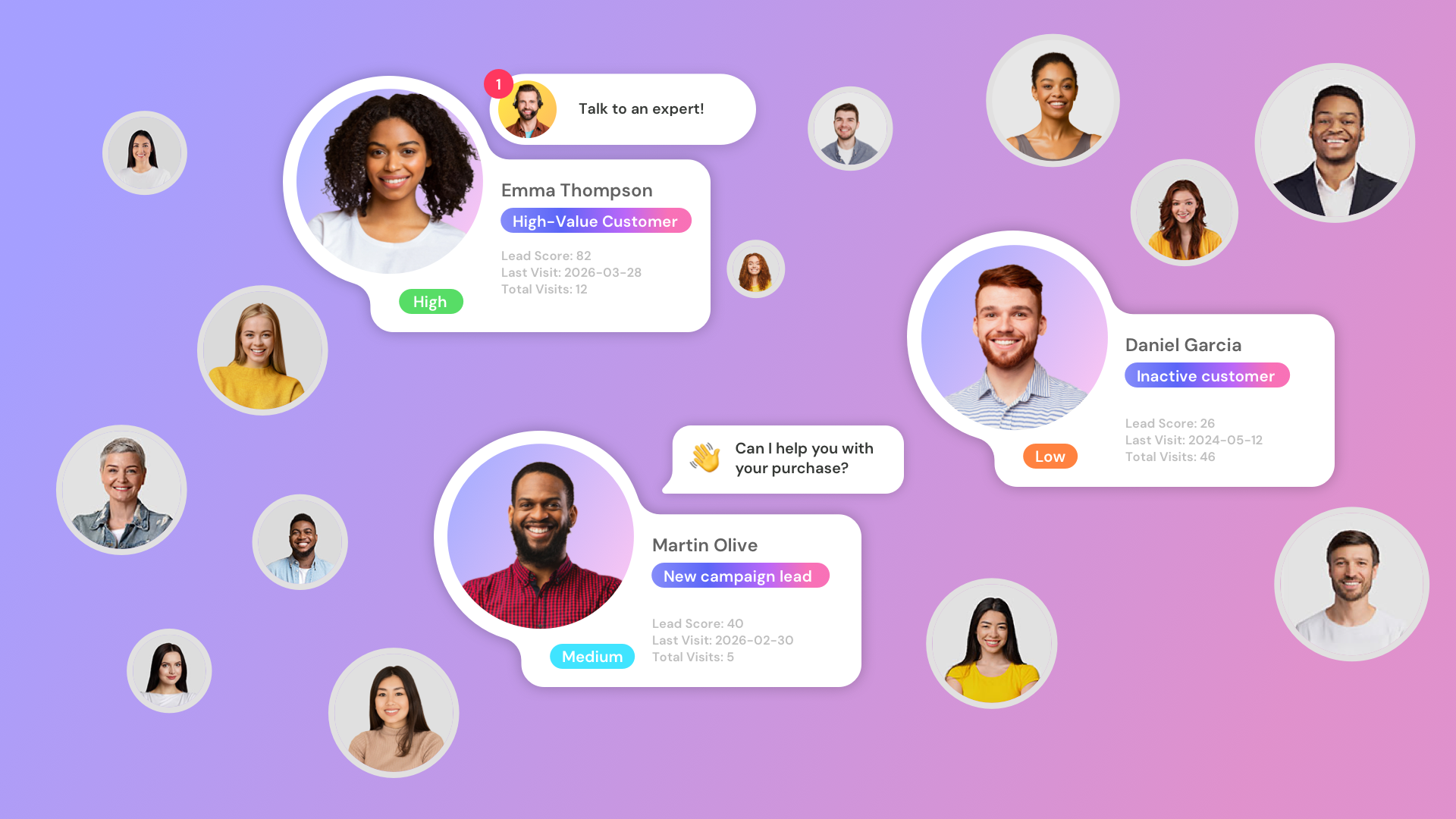
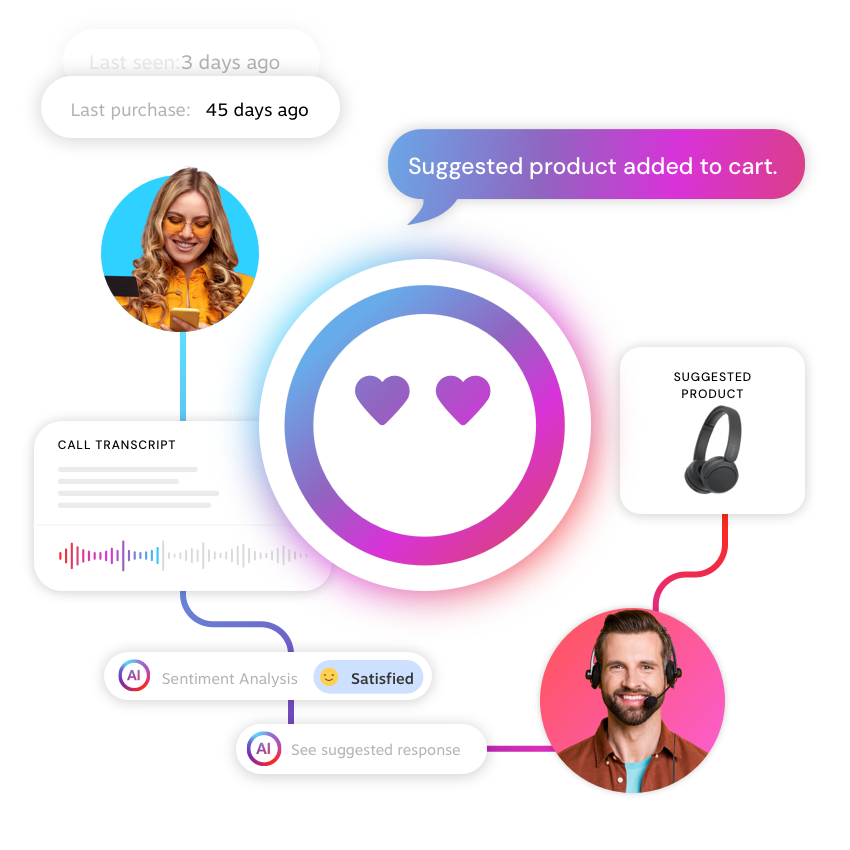
A strong platform should support a hybrid model where AI-based personalization identifies high-intent opportunities and routes those interactions to human teams when needed. For example, if the system detects strong purchase intent based on user activity or past purchases, it may trigger assistance from a sales specialist or customer service agent. This connection between automated insights and human customer interactions helps improve both conversion and customer satisfaction.
Time-to-Market:
Finally, organizations must evaluate how quickly teams can launch new experiences and experiments. Many companies rely on A/B testing to refine marketing campaigns, optimize the user journey, and improve results across online touchpoints.
If every change requires development support, personalization efforts slow down significantly. The most effective personalization tools allow teams to deploy new personalized content blocks, adjust recommendations, and launch campaigns quickly across websites, apps, and other digital experiences. Faster experimentation helps organizations increase average order value, improve engagement, and strengthen customer lifetime value.
Top personalization engines reviewed (Categorized by Use Case)
Not all personalization engines solve the same problem. Some platforms focus on experimentation and A/B testing, others emphasize cross channel personalization, while a few specialize in connecting content, commerce, and customer engagement. The tools below are grouped by their primary strength so enterprise teams can quickly identify which personalization software best addresses their current bottleneck.
1. CoreMedia (Best for content-driven commerce & hybrid experiences)
CoreMedia stands apart from many personalization platforms by focusing on the connection between content, commerce, and real-time engagement. Rather than treating ecommerce personalization purely as a data problem, CoreMedia enables brands to combine customer data, editorial storytelling, and real-time signals to create highly personalized experiences across the entire customer journey.
This approach supports “Inspirational Commerce,” where editorial content - such as guides, lookbooks, or product stories - can immediately become shoppable through adaptive content and contextual recommendations.
Key Features:
- CoreMedia's enterprise CMS: A hybrid headless CMS that enables teams to manage dynamic content and deliver website personalization across regions and languages.
- CoreMedia's customer engagement platform: Integrates human agents directly into the experience, allowing brands to combine ai driven personalization with real human customer interactions via chat or video.
- CoreMedia'sKIO (AI Co-Pilot): An AI powered assistant that helps teams automate content creation, define personalization logic, and optimize campaigns using intelligent models.
Best For: Luxury retail, B2B manufacturing, and telecommunications companies that want to combine ecommerce personalization, global content orchestration, and data-driven engagement across multiple channels.
2. Insider (Best for cross-channel marketing automation)
Insider focuses heavily on cross channel personalization, helping brands coordinate messaging across websites, mobile apps, email, and push notifications. The platform is particularly popular among growth-focused teams running high volumes of personalized campaigns and engagement initiatives.
Key Features:
- Strong mobile apps personalization and in app messaging capabilities.
- Predictive segmentation based on customer behavior and behavioral data.
- Automated messaging and push notifications across multiple engagement touchpoints.
Best For: Retailers and digital brands that rely heavily on mobile apps, messaging, and automated marketing campaigns to drive customer engagement.
3. Bloomreach (Best for search & merchandising)
Bloomreach is widely used in ecommerce platforms where search plays a central role in product discovery. The platform focuses on personalized search, merchandising automation, and AI-driven product recommendations.
Key Features:
- Personalized search that adapts results based on browsing behavior and purchase history.
- Automated product discovery and merchandising rules powered by machine learning algorithms.
- SEO-driven content generation to support large product catalogs.
Best For: Large ecommerce retailers where the search bar is the primary navigation method and where improving product discovery can significantly increase average order value.
4. Salesforce Marketing Cloud (Best for salesforce ecosystems)
Salesforce Marketing Cloud remains one of the most widely adopted enterprise platforms for marketing personalization and campaign orchestration. The platform integrates tightly with the Salesforce CRM ecosystem, enabling organizations to leverage large volumes of customer data across marketing, sales, and service teams.
Key Features:
- Deep integration with Salesforce CRM and data infrastructure.
- Journey Builder for managing complex customer decision processes across multiple environments.
- Automation capabilities for large-scale marketing automation initiatives.
Best For: Large enterprises already invested in Salesforce infrastructure and willing to invest in the implementation required to activate cross channel personalization at scale.
5. Dynamic Yield (by Mastercard) (Best for pure A/B testing & optimization)
Dynamic Yield is one of the most recognized personalization engines for experimentation and A/B testing. The platform focuses on optimizing layouts, recommendations, and website personalization through continuous testing and performance analysis.
Key Features:
- Advanced A/B testing and experimentation frameworks.
- Agile recommendation widgets driven by behavioral insights.
- Layout and content optimization powered by intelligent personalization.
Best For: Teams focused primarily on conversion rate optimization, experimentation, and iterative improvements to digital experiences rather than full-scale content orchestration.
Why "Content-Aware" personalization wins in B2B & Luxury
The pitch:
In high-consideration industries such as luxury retail and B2B manufacturing, the buying process rarely follows a simple transactional path. Customers often research extensively, compare options, and evaluate brand credibility before making a decision. In these environments, basic ecommerce personalization - such as recommending a single product based on browsing behavior - is rarely enough to influence outcomes.
Instead, brands must adapt the entire customer journey. This means tailoring product discovery, editorial content, and messaging so that each visitor encounters relevant content aligned with their interests and intent. Leading personalization engines use AI driven personalization, predictive analytics, and behavioral data to interpret signals from customer behavior and guide users toward the most meaningful next step.
The solution: "Inspirational Commerce"
For these industries, the most effective strategy combines personalization with storytelling. Rather than simply presenting products, brands create immersive content experiences - lookbooks, product guides, expert articles, or curated collections - that evolve dynamically based on the visitor’s interests.
This is where dynamic content and strong website personalization capabilities become critical. A high-performance personalization engine should be able to adjust entire content blocks, not just product recommendations, delivering narratives that resonate with each individual visitor. This approach - often described as Inspirational Commerce - connects brand storytelling with real time personalization, allowing companies to create personalized experiences that encourage exploration and increase average order value.
The human element:
Even the most advanced AI powered personalization capabilities have limits. In luxury and complex B2B purchases, the final decision often depends on trust and expert guidance. This is where human interaction becomes an essential part of the personalization strategy.
Platforms such as CoreMedia combine personalization software with engagement capabilities that allow organizations to transition smoothly from automated experiences to human support. For example, a VIP visitor exploring high-value products on a personalized page may be offered the option to connect with a stylist or product specialist via video or chat.
Because the platform maintains access to the visitor’s customer data, purchase history, and interaction signals, the agent enters the conversation with full context. The result is a seamless transition from digital personalization to human consultation - an experience that strengthens customer loyalty, increases long-term revenue per customer, and turns engagement into measurable business outcomes.
Future trends: AI and the "Signal Economy"
AI-Driven decisions:
The next generation of personalization engines is shifting from static rules to intelligent decision-making. Traditional systems rely on predefined logic - “If X happens, then show Y” - which can quickly become difficult to manage at enterprise scale.
Modern platforms instead rely on AI-based personalization powered by machine learning algorithms and predictive analytics. These systems continuously interpret interaction signals from customer interactions, and patterns in customer behavior to determine the most relevant action for each visitor.
Rather than assigning users to fixed segments, AI powered personalization platforms evaluate signals in real time and adapt the experience accordingly. This capability allows organizations to deliver real time personalization across websites, mobile apps, and other digital touchpoints, helping brands increase average order value and increase long-term customer value.
Privacy & trust:
At the same time, privacy expectations are reshaping how personalization works. As third-party cookies disappear, companies must rely increasingly on first-party customer data, contextual signals, and consent-based interactions.
Modern personalization software is evolving to support this shift by building unified customer profiles from trusted data sources such as purchase history, on-site behavior, and authenticated user activity. Instead of tracking users invisibly across the web, organizations focus on interpreting signals within their own ecosystems.
When handled correctly, this approach can actually improve personalization quality. By focusing on high-intent engagement signals gathered across multiple channels, brands can create more accurate insights while maintaining customer trust and improving customer satisfaction.
Generative AI:
Another major development is the integration of generative AI into personalization workflows. While many personalization engines can identify what experience a user should see, they often struggle to produce the content variations required to support those decisions.
Generative AI helps close this gap. AI powered systems can automatically generate headlines, product descriptions, or contextual content variations designed to match different audience segments. Combined with real time personalization, this capability allows organizations to scale personalized experiences without manually creating hundreds of content versions.
For enterprise companies managing global digital experiences, this shift represents a major advantage. When AI driven personalization is paired with strong content orchestration, organizations can deliver the right message at the right moment across cross channel environments - from websites and mobile apps to messaging platforms and support interactions.
In this emerging signal economy, the most successful personalization strategies will not simply collect data. They will interpret signals, generate the content needed to respond to them, and deliver experiences that evolve continuously with the user journey.
Frequently Asked Questions (FAQ)
What is the difference between a CDP and a Personalization Engine?
A Customer Data Platform (CDP) and a personalization engine serve different roles within the enterprise technology stack. A CDP focuses on collecting and organizing customer data from multiple sources such as websites, mobile apps, CRM systems, and commerce platforms. Its primary goal is to create unified customer profiles that give organizations a consolidated view of each user.
A personalization engine, by contrast, acts on that data. It uses predictive analytics, AI models, and behavioral data to determine what experience a user should see at any given moment. This includes adjusting personalized content blocks, delivering website personalization, triggering personalized messages, or recommending products during the purchase journey.
In short, a CDP gathers and organizes the data, while the personalization engine interprets signals and activates the experience.
How does personalization impact ROI?
For enterprise organizations, the value of personalization is most visible in the relationship between traffic and conversion. Companies often invest heavily in marketing and acquisition to attract visitors, but without personalization many of those users leave without taking action.
Effective ecommerce personalization helps. By analyzing customer behavior, shopping history, and contextual signals, AI-based personalization can present relevant offers, product recommendations, and dynamic content tailored to each individual visitor.
This approach typically leads to measurable improvements in key business metrics such as average order value, customer lifetime value, and customer retention. When implemented effectively, personalization transforms high traffic volumes into meaningful engagement and revenue growth.
Can personalization engines work with Headless CMS?
Yes, personalization engines can integrate with a headless CMS through APIs. In this model, the personalization platform analyzes customer data and behavioral signals, then delivers recommendations or content variations to the front-end experience.
However, many organizations discover that pure headless environments create operational challenges for marketing teams. Without visual editing tools or flexible content management, creating the content variations required for real time personalization can become dependent on development teams.
This is why many enterprises are adopting a Hybrid Headless approach. By combining the flexibility of a headless architecture with editorial control and visual content tools, a hybrid model allows teams to create and deploy personalized experiences faster across different channels, including websites, mobile apps, and other digital environments.
What are the key features of the best personalization engines?
The best personalization engines combine several core capabilities. These typically include predictive analytics, data models, and the ability to interpret user behavior across multiple online touchpoints.
Enterprise-grade personalization software should also support real time personalization, A/B testing, and advanced customer segmentation to deliver relevant experiences during the customer journey. Equally important is the ability to trigger dynamic content across websites, apps, and other cross channel environments.
For large organizations, these capabilities must scale across multiple platforms while integrating with existing enterprise platforms, CRM systems, and commerce infrastructure.
What industries benefit most from personalization engines?
While nearly every digital business can benefit from personalization, the impact is especially strong in industries with complex purchasing journeys.
In ecommerce, personalization helps increase average order value by recommending relevant products based on browsing behavior and shopping history. In luxury retail, personalized editorial content and curated experiences help strengthen brand perception and customer loyalty.
In B2B environments, personalization engines can adapt content and messaging based on account behavior, helping sales teams engage prospects at the right stage of the customer journey.
How does AI improve personalization?
Modern AI powered personalization capabilities allow platforms to process large volumes of user interaction data and identify patterns that humans would struggle to detect.
Using machine learning algorithms, personalization engines can evaluate signals such as user behavior, past purchases, and engagement across multiple channels to determine the next best experience for each visitor.
This enables real time behavioral personalization, where websites, recommendations, and messaging adapt instantly as the user interacts with the brand.
What is the difference between rule-based personalization and AI-driven personalization?
Traditional personalization often relies on predefined rules. For example, a marketer might create a rule such as “show product A to users in segment B.”
Modern algorithmic personalization takes a different approach. Instead of relying only on manual rules, the system uses predictive analytics and algorithms to analyze user data and identify patterns in user behavior automatically.
This allows the platform to adjust experiences dynamically and continuously optimize recommendations across the customer journey.
How long does it take to implement a personalization engine?
Implementation timelines vary depending on the platform and the complexity of the existing technology stack. Some enterprise platforms require significant integration work with CRM systems, data infrastructure, and ecommerce platforms, which can extend implementation timelines. Other solutions focus on faster deployment and modular integration through APIs.
Organizations that adopt a composable architecture can often integrate personalization tools more quickly while maintaining flexibility across multiple channels.
Conclusion: Making every interaction count
For global enterprises, personalization has moved from a competitive advantage to a fundamental requirement. Customers now expect brands to recognize their preferences, respond to their behavior, and deliver experiences that feel relevant across every interaction.
But effective personalization requires more than collecting data. The most successful organizations combine customer data, content agility, and intelligent decision-making to deliver meaningful experiences throughout the buying journey. Without the ability to activate insights through content and engagement, even the most sophisticated personalization engines struggle to produce measurable results.
This is why leading enterprises are shifting toward platforms that unify content management, commerce systems, and customer engagement capabilities within a single ecosystem. When these components work together, brands can move beyond isolated personalization efforts and create consistent, scalable experiences across websites, mobile apps, and other digital channels.
For organizations evaluating personalization solutions, the real goal is not simply deploying another data tool. It is building a platform that orchestrates signals, content, and human interaction into a cohesive experience that drives long-term customer loyalty and revenue growth.
Ready to turn your traffic into conversions?
See how CoreMedia orchestrates personalized experiences at scale.
Request a demo to explore the platform.