





















The enterprise dilemma: traffic vs. conversion
Enterprises spend heavily to bring visitors in through paid media, SEO, and content, then lose many of them at the exact point where attention should turn into action. The traffic arrives; the conversion lags. Customers now weigh the experience as heavily as the product itself: in Salesforce's State of the Connected Customer, 88% said the experience a company provides matters as much as its products and services. When that experience is slow to change, the spend that brought visitors in is wasted. Often the real constraint isn't the marketing budget. It's the platform underneath it.
When the CMS makes changes slow, teams can't adapt to what visitors are doing while it still matters. Updates a marketer should own turn into development work, and the backlog compounds into what many teams call content debt:
- Campaign launches slip while edits sit in the engineering queue.
- Personalization stalls, because reacting to behavior in real time isn't possible.
- Customer journeys fragment across channels that no single team can update quickly.
In markets where speed and relevance decide who wins the sale, the architecture choice sets a ceiling on how much of that hard-won traffic converts.
What is a traditional (monolithic) CMS?
A traditional CMS is the model most organizations recognize: content management, data, and presentation in one tightly integrated platform. Editors can create and manage web pages, manage assets, and update layouts using built-in WYSIWYG editing environments and other visual authoring tools. WordPress and Drupal are the common examples, with Adobe Experience Manager and Sitecore as the enterprise incumbents.
- Easy for non-technical users: visual editors, drag-and-drop, and content preview let teams publish without relying on developers.
- Built-in SEO tools let editors optimize pages directly inside the platform.
- Works well for a single site; reaching many channels is where it strains.
What is a headless CMS?
A headless CMS keeps content in a backend repository and delivers it to any front end through APIs, with no built-in presentation layer. Developers render that content across sites, apps, and screens using their own frameworks. Contentful, Contentstack, and Strapi are common examples.
- Full front-end freedom for developers.
- "Write once, publish anywhere" principle.
- No visual editing or preview out of the box, so the platform is less intuitive for non-technical teams: content editors depend on developers for most changes, including SEO and metadata.
What is a hybrid CMS?
A hybrid CMS keeps the API-first delivery of a headless CMS and adds the visual editing, preview, and layout tools of a traditional CMS. CoreMedia is built on this model.
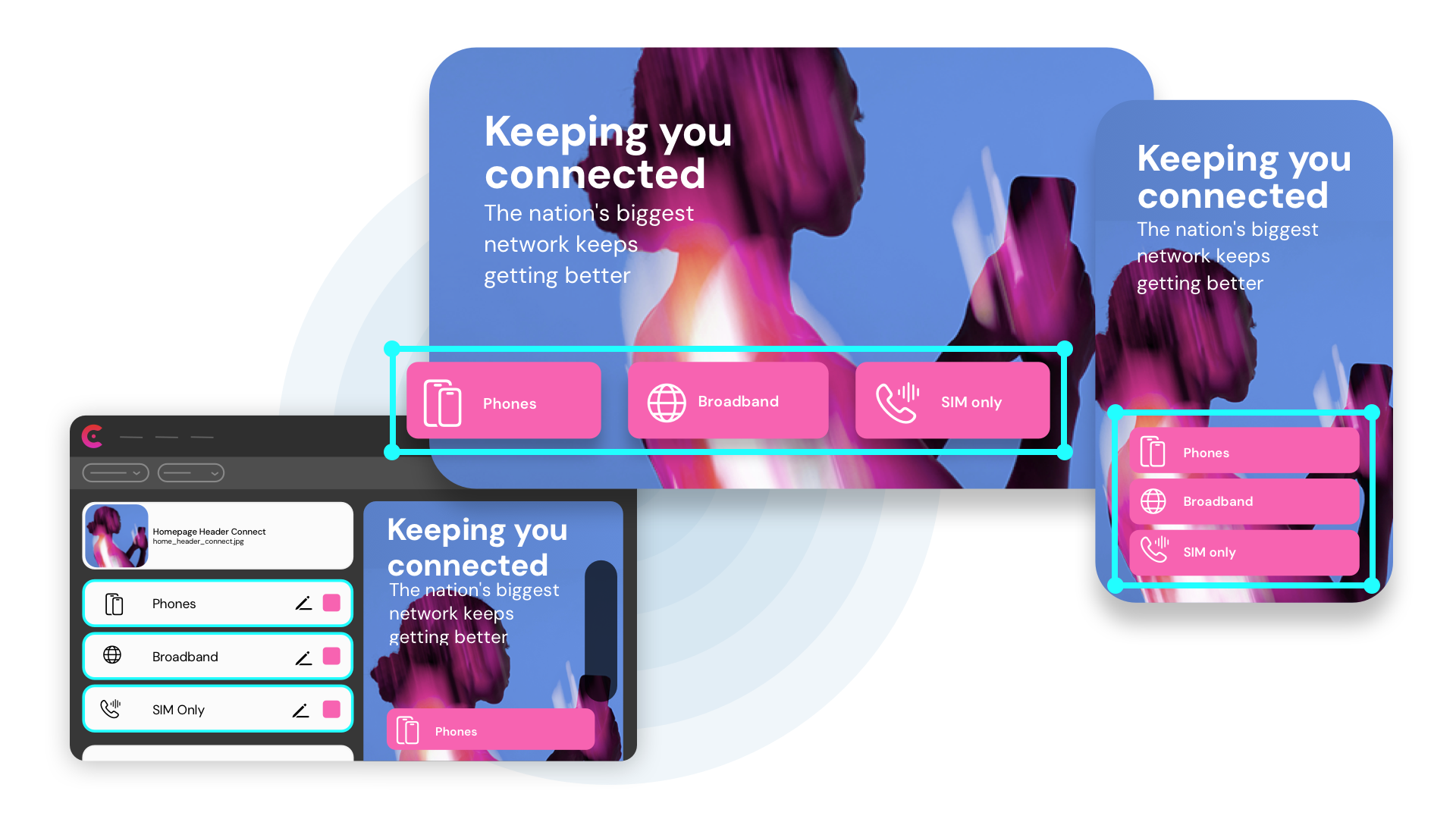
- Content teams get WYSIWYG editing, drag-and-drop layout, live preview, and in-context SEO control, to make updates fast in an intuitive user interface.
- Developers keep full control of the front end through the same APIs.
- Content is authored once and reused across every channel.
Why pure headless slows enterprise marketing
For marketing teams, the trade-off in pure headless shows up as lost speed. The same decoupling that gives developers control removes the visual tools content teams rely on, and the effect compounds across every campaign.
The "Marketer Gap":
Without visual editing or live preview, even small changes, a landing page, a line of campaign messaging, need developer support. Routine marketing work turns into development tickets, and experimentation slows to the pace of the release cycle.
Siloed data and personalization:
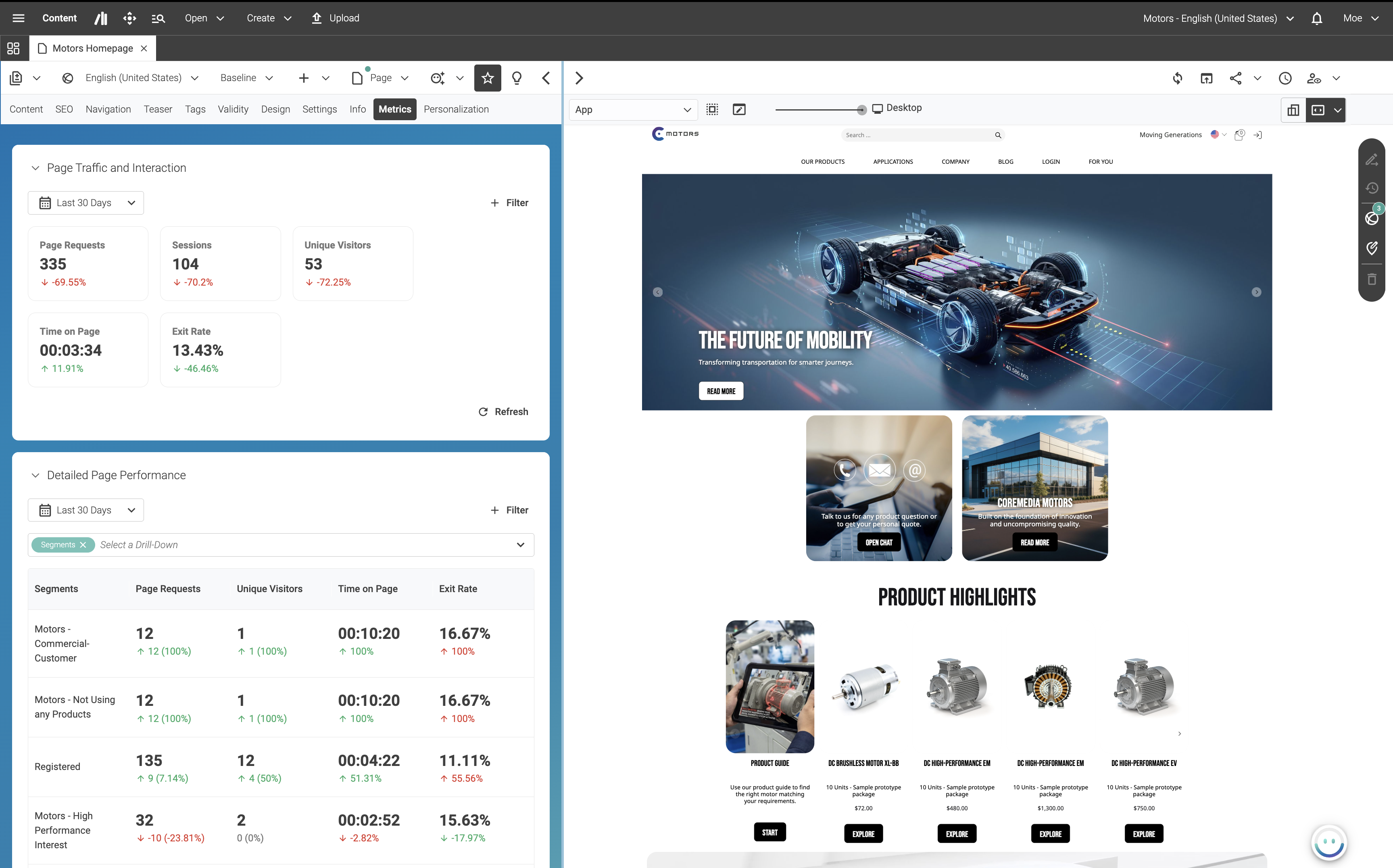
Real-time personalization depends on reading behavior and acting on intent as it happens. In many pure headless setups, the content layer sits apart from analytics and engagement systems, so behavioral signals are hard to turn into live changes. Teams end up adding third-party tools to personalize across channels, which brings its own lag.
Impact on time-to-market:
Publishing depends on custom frontend work, what makes launches and layout changes wait on engineering. For enterprises running across web, apps, and connected screens, that dependency delays campaigns and slows the response to whatever the market is doing right now. The cost side of that decision, license, implementation, and the total cost of ownership across monolithic, headless, and hybrid, is its own analysis.
Why hybrid CMS is the strategic choice
Restoring Marketing Autonomy:
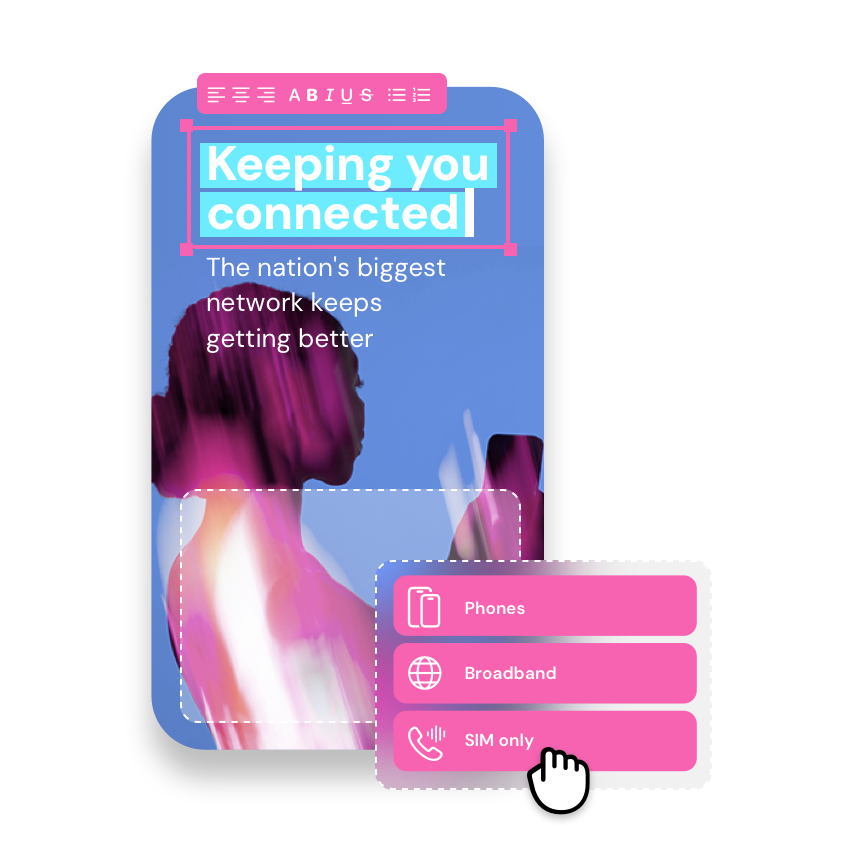
A hybrid CMS helps restore autonomy for business users responsible for content and campaigns by reintroducing visual editing capabilities without sacrificing developer flexibility. Unlike a pure headless CMS, a hybrid headless CMS provides WYSIWYG editing, drag and drop layout tools, and real-time content preview, allowing content editors to build and update experiences without writing code.
This approach enables teams to create landing pages, adjust layouts, and launch campaigns quickly across web channels, mobile apps, and other digital endpoints. Developers still retain the freedom to customize the frontend presentation layer, but everyday campaign execution no longer depends on development tickets. Organizations can also customize workflows to match their editorial and operational processes.
Inspirational Commerce:
Another advantage of hybrid CMS platforms is their ability to blend storytelling with transaction. Rather than separating content and commerce systems, a hybrid CMS architecture allows brands to connect editorial content directly with commerce platforms.
Blog posts, product guides, lookbooks, or videos can become interactive shopping experiences where customers move naturally from inspiration to purchase. Integrations with e-commerce platforms such as Salesforce or SAP make it possible to surface product data within content, turning engagement into measurable sales opportunities and revenue growth.
Global scalability:
For global enterprises, a hybrid CMS also simplifies managing large-scale customer journeys. Organizations can control content from a centralized platform while distributing localized experiences across multiple channels and regions.
This structure allows brands to manage multi-language websites, regional campaigns, and localized product information from a single content repository while maintaining brand consistency across every channel. For companies operating across international markets, this balance between centralized control and local flexibility becomes essential for scaling modern commerce experiences.
Phoenix Contact shows what that flexibility looks like at global scale. The industrial manufacturer operates in more than 100 countries and had its content spread across roughly 20 separate channels, each on its own system, which made consistency hard and slowed every update. Consolidating onto a single CoreMedia content hub gave its teams one place to manage assets and serve them to downstream systems, with automated workflows that cut manual effort and freed the content team for higher-value work. The first phase migrated 170,000 assets into that hub, delivered through CoreMedia's headless services so each system pulls exactly the content it needs. For a brand spread across regions and channels, that mix of central control and local flexibility is what keeps scale from turning into fragmentation.
Why content alone doesn’t convert
Content brings visitors in, but converting them depends on what happens once they show intent. This is where CoreMedia goes past a standard CMS, connecting content with an engagement layer so the response can match the moment:
- Publishing content is only half the job; the platform also reads how visitors behave and acts on it while intent is still live.
- When a visitor shows strong intent or hesitates, the platform can offer a live touchpoint, chat, click-to-call, or a video conversation with a specialist, instead of leaving them to navigate alone.
- High-value visitors can be routed to a person while automation handles routine questions, so human attention goes where it changes the outcome.
- Connecting content, behavioral signals, and service data in one place lets teams read intent across the journey and coordinate across channels.
That capability is a topic in its own right; how CoreMedia connects content and customer engagement covers it in full.
Comparison matrix: Traditional, headless and hybrid CMS
| Features | Traditional CMS | Headless CMS | Hybrid CMS (CoreMedia) |
|---|---|---|---|
| Architecture | Coupled: one integrated stack | Decoupled: backend-only | Decoupled delivery with a built-in presentation layer |
| Content model | Page and template based | Structured, presentation-neutral | Structured, reusable across channels |
| Delivery model | Built-in rendering; limited or add-on API | API-first, REST or GraphQL; no built-in rendering | API-first, REST and GraphQL, plus a built-in delivery path |
| Front-end rendering | Platform templates | You build it (SSR, routing, caching) | Custom front end or built-in server-side rendering |
| Authoring and preview | Built-in WYSIWYG, drag-and-drop, single site | None. Raw fields until the front end renders | WYSIWYG, drag-and-drop, live omnichannel preview |
| Developer flexibility | Limited. Tied to platform templates | Full front-end control, any framework | API-first + built-in delivery |
| Marketer autonomy | High on a single site | Dev-dependent | Visual editing with full autonomy |
| Omnichannel delivery | Limited, page-centric | API-based distribution | Built-in omnichannel |
| Personalization | Plugin or add-on | External tools | Integrated data + signals |
| Time-to-Web | Fast for one site, slows across markets | Slower campaign launches | Faster campaign publishing |
| SEO and GEO control | Built-in tools for editors | Developer-managed, no editor tools | Editors manage SEO and metadata in context |
| Commerce | Limited or bolted-on | Custom integrations | Native integrations |
| Long-term maintenance | Degrades as plugins and patches accumulate | Predictable backend, you own front-end upkeep | Managed platform, scales on a shared model |
Strategic decision framework: When to choose hybrid
Choose traditional if:
- You run a single site, with no real need to publish the same content to apps, kiosks, or other channels.
- Your team is comfortable within one platform's templates and rarely needs a custom front end.
- Speed to publish on that one site matters more than reaching many channels from one place.
Choose pure headless if:
- Your primary product is a mobile or software application, with little reliance on marketing-driven websites.
- Your organization has a large engineering team responsible for building and maintaining custom front-end interfaces.
- You rarely require non-technical editors to update layouts, campaigns, or brand messaging independently.
Choose hybrid if:
- Your organization operates with complex marketing strategies that require frequent updates across websites and multiple digital channels.
- You manage multiple brands, regions, and languages and need centralized governance with local flexibility.
- Your revenue model relies on inspirational commerce, where storytelling, product discovery, and transactions work together (common in luxury, retail, and B2B industries).
- Your organization needs real-time personalization based on behavioral signals and customer data.
- Business teams need visual editing tools such as WYSIWYG and drag-and-drop interfaces to launch campaigns quickly without developer bottlenecks.
For many global companies balancing developer flexibility with business agility, a hybrid CMS platform provides the most sustainable solution. For most global companies balancing developer flexibility with business agility, a hybrid CMS is the most sustainable choice. If the decision comes down to the pure headless vs. hybrid headless architecture specifically, this framework for solution architects breaks it down.
The CoreMedia advantage: a unified ecosystem
CoreMedia extends the hybrid model by combining content orchestration, engagement tools, and data-driven insight within a composable ecosystem.
A key capability is CoreMedia KIO, an AI-powered assistant that supports editorial workflows and internal knowledge discovery. CoreMedia KIO can help generate drafts, summarize conversations, and surface relevant information from a company’s website and digital assets while keeping humans in control through approval workflows.
Equally important is CoreMedia’s composable architecture. Organizations can integrate the platform with existing enterprise technologies such as Salesforce, SAP, and other commerce or analytics solutions, rather than replacing their entire technology stack. The platform’s strong integration capabilities allow organizations to connect commerce, analytics, and customer engagement systems without rebuilding their entire technology stack.
This approach allows companies to evolve their digital infrastructure while maintaining flexibility, governance, and consistent brand experiences across every channel.
Conclusion: Future-proofing your digital experience
The debate around headless CMS vs hybrid CMS ultimately comes down to balance. Developer flexibility is essential, but it should not come at the cost of marketing agility or business performance. When organizations prioritize architecture decisions based only on developer preference, they risk creating operational bottlenecks that slow campaign execution and limit the ability to convert traffic into revenue.
A hybrid CMS offers a more sustainable path forward. By combining API-first flexibility with intuitive editing capabilities and integrated delivery layers, enterprises can support both technical innovation and business speed. This approach allows organizations to adapt quickly to changing customer behavior, coordinate across global teams, and maintain consistent brand experiences across every channel.
For companies focused on long-term success, the goal is not simply managing content - it is creating a platform that connects strategy, technology, and engagement. Future-proof organizations invest in architectures that empower both developers and business leaders to work together toward measurable outcomes.
If your organization is exploring how to close the gap between traffic and conversion, it may be time to evaluate a hybrid approach.
Request a demo or consult with a CoreMedia expert to see how a unified platform can support your next stage of digital growth.
Frequently Asked Questions (FAQs)
What are the disadvantages of a headless CMS?
The main disadvantage lands on marketers, not developers. A pure headless CMS ships no visual editing or preview, so routine changes like a landing page or a campaign tweak wait on a developer to build and deploy them. For teams running frequent campaigns, that slows time to market and makes experiences harder to adapt. A hybrid CMS keeps headless delivery and gives those teams their visual tools back.
When does a hybrid CMS make sense?
Choosing hybrid CMS makes sense when content teams need to publish and adjust experiences often, across many channels, without routing every change through engineering. That covers enterprises with multiple brands, regions, or languages that want central governance with local flexibility, and businesses where content and commerce drive conversion together. If your main product is a single app run by a large engineering team, pure headless may still fit better.
What should we consider before replatforming?
Start with where your current setup breaks, not with a feature list. Map how often content changes, how many channels and regions you serve, where marketing waits on developers today, and which systems (commerce, CRM, analytics) the CMS has to connect to. Two parts of that decision have their own analysis: the architecture choice between pure and hybrid headless, and the total cost across monolithic, headless, and hybrid.
Does choosing hybrid mean vendor lock-in?
No, not by default. Lock-in comes from architecture, not from the hybrid label: it happens when custom work is tied to one vendor's proprietary stack with no clean way out. A hybrid CMS avoids that when it keeps an open delivery API and connects to the tools you already run instead of replacing them. CoreMedia's composable approach, with pre-built integrations to commerce, CRM, and analytics systems, is built to hold that flexibility.
How does a hybrid CMS handle content preview?
Through live, in-context preview: editors see how a page or campaign will render on each channel before it publishes, with no developer build in between. That is exactly what a pure headless CMS removes, since its content is authored as raw fields with nothing to show how it will look until the front end is built. For teams shipping frequent campaigns, that preview keeps publishing off the engineering queue.
Can a hybrid CMS improve conversion, not just traffic?
Yes, indirectly, by removing the delay between an idea and a live experience. When content teams can adjust pages, personalize, and connect content to commerce without a development cycle, they respond to how visitors actually behave, which is where traffic turns into conversion. The CMS doesn't create demand, but a rigid one wastes it by making every change slow.
Is a hybrid CMS a good fit for global, multi-brand enterprises?
Yes, and it's where hybrid tends to pay off most. A single content model with central governance lets teams manage many brands, regions, and languages from one place while tailoring experiences locally, instead of running separate systems per market. Phoenix Contact, present in more than 100 countries, is consolidating content once spread across roughly 20 separate channels onto a single CoreMedia hub. The bigger and more fragmented the operation, the more that central-plus-local balance is worth.