






















Many global enterprises have mastered traffic generation. But traffic alone doesn’t translate into business value. The gap between reach and revenue often comes down to fragmented digital platforms, disconnected digital touchpoints, and limited visibility into customer behavior (we approach it in depth in our Intent-based marketing blog article).
The modern approach to digital transformation reframes scalability. It’s not just about systems. It’s about orchestrating content, commerce, and human interaction into one cohesive experience layer. That’s where composable architecture and hybrid models come into play.
The hidden bottlenecks to scaling digital experiences
Despite significant investment in digital technologies and emerging technologies, many organizations struggle to scale consistently. The barriers are rarely visible at first but they directly impact business outcomes and long-term business success.
The marketer vs. developer divide:
Pure headless CMS platforms promised flexibility. In reality, they often shift too much control to developers, leaving marketing teams dependent on technical resources for even minor updates.
This slows content creation, delays campaigns, and limits responsiveness to market demands. When teams can’t act quickly, time-to-market slows down, digital experiences fall behind customer expectations, and opportunities are lost.
Global fragmentation:
Scaling globally introduces complexity — multiple brands, languages, and compliance requirements. Without centralized governance, teams duplicate efforts, and inconsistencies creep into the customer journey.
Disconnected systems make it difficult to maintain a unified brand voice across digital channels, reducing customer satisfaction and weakening customer loyalty.
The "Digital-Only" trap:
Automation has its place but removing human interaction entirely creates friction in high-value scenarios. In industries like luxury retail or B2B, customers expect guidance, reassurance, and expertise. (read how MásMóvil uses CoreMedia capabilities to add a “human touch” to their digital experience)
Pure self-service models fail to address complex customer needs. True scalability requires blending automation with human-assisted customer interactions, not replacing them.
4 pillars of true scalable digital experience
To close the gap between traffic and conversion, enterprises need a framework that aligns technology with business strategy. The following pillars define a scalable, future-ready approach.
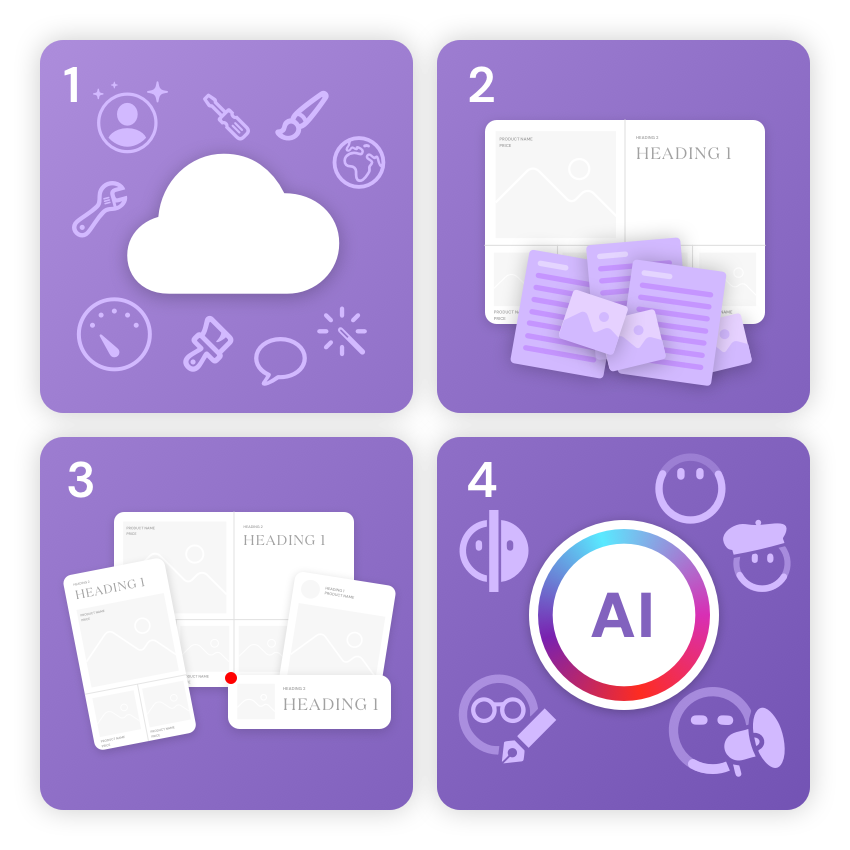
1. Composable cloud architecture
The shift from monolithic systems to composable, cloud-native environments marks a fundamental strategic shift in digital transformation initiatives.
Composable architectures allow organizations to integrate best-of-breed solutions—whether it’s Salesforce, SAP, or a customer data platform—without disrupting existing business processes. Rather than forcing a disruptive “rip and replace,” CoreMedia enables the existing technology stack and extends it, ensuring the platform adapts to evolving business needs without disrupting existing operations.
This modular approach enables teams to:
- Adapt quickly to evolving market demands and customer demands.
- Extend capabilities across new digital touchpoints.
- Maintain flexibility within the technology stack.
With CoreMedia’s cloud-native architecture, enterprises can scale horizontally across regions and brands, ensuring performance, resilience, and a scalable digital foundation that evolves with the business.
2. "Hybrid Headless" content delivery
Pure headless systems prioritize developers. Traditional CMS platforms prioritize marketers. Neither alone can scale modern digital experiences.
A hybrid headless approach bridges this divide.
With CoreMedia's Hybrid Headless CMS, enterprises combine API-first delivery with a WYSIWYG visual editing interface. This empowers marketers to manage and publish content independently, while developers retain flexibility to build across channels.
The impact is immediate:
- Faster campaign execution - stronger alignment between digital marketing and content teams.
- Reduced dependency on technical teams.
- Up to 75% faster time to web, as demonstrated by CoreMedia's customers.
This model also enables “inspirational commerce”—where storytelling becomes transactional. Blogs, lookbooks, and editorial content transform into shoppable digital experiences, driving customer engagement and increasing conversions.
3. Omnichannel and mobile fluidity
Today’s digital landscape is defined by constant movement between devices and platforms. Customers expect seamless interactions across web, mobile, and emerging channels.
Scaling across these environments requires centralization. CoreMedia enables this through a centralized content hub while expanding digital capabilities across all touchpoints—from websites and mobile apps to in-store displays and IoT environments, including interactive elements across physical and digital environments.
This ensures:
- Enable efficient management of global content from a single interface.
- Localize at scale while maintaining brand consistency.
- Dynamically adapt experiences based on context, device, and customer behavior.
By aligning digital platforms with user expectations, enterprises create cohesive journeys that reflect actual user behavior, not assumptions.
4. AI-accelerated content operations (ContentOps)
AI is reshaping how organizations approach digital transformation but scale requires more than automation.
CoreMedia KIO is native AI built into the CoreMedia Experience Platform, acting as a co-pilot that supports content teams across the full content workflow. By combining machine learning, predictive analytics, and intelligent automation, organizations can scale content operations without losing control.
This enables teams to:
- Automate repetitive workflows and content creation tasks.
- Deliver personalized experiences based on real-time customer data.
- Generate data driven insights from performance data and customer interactions.
By leveraging data from customers and performance, AI provides data driven insights that help teams identify patterns, predict customer intent, adapt to changing customer preferences and optimize digital experiences continuously.
However, maintaining a high-quality standard remains critical. Human oversight ensures brand consistency and protects against generic or misaligned messaging.
This balance between automation and control is essential for continuous improvement.
Bridging the digital-to-human divide (The customer engagement platform)
Scalability doesn’t end with digital interfaces. It extends into how organizations manage human interaction. In the digital age, customer service is no longer a separate function. It’s an integral part of the customer journey. Including both digital servies and human-assisted interactions.
But scalability is often misunderstood. It’s not about replacing people with self-service chatbots—it’s about making every human interaction smarter, faster, and more context-aware.
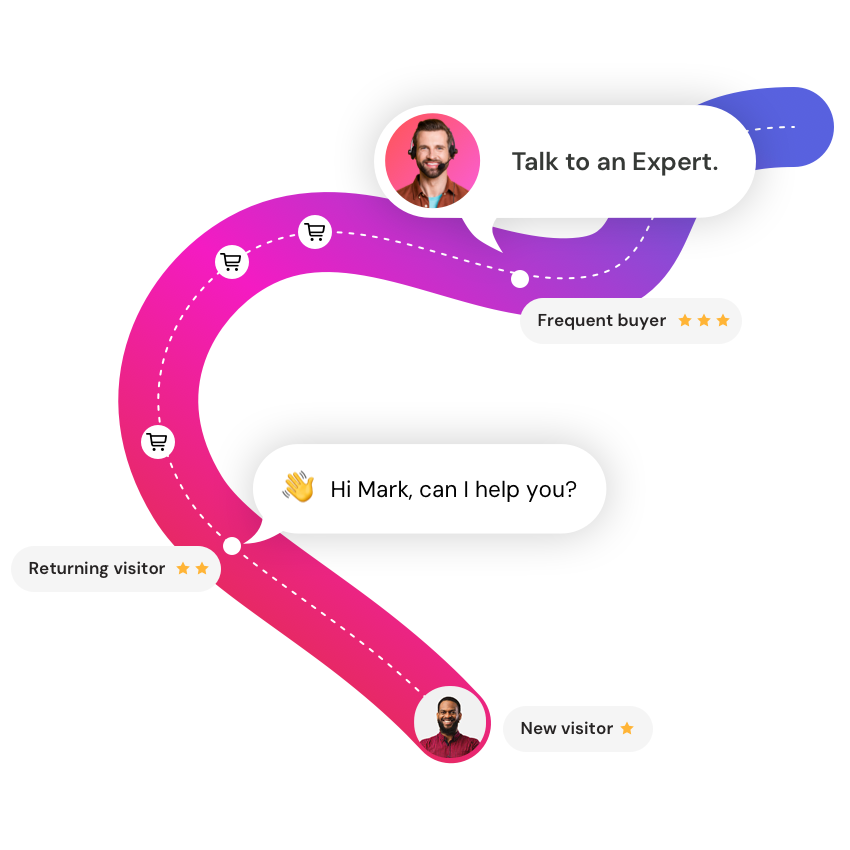
The most effective enterprises use their digital touchpoints not just as interaction channels, but as intelligence layers. Every click, search, and interaction generates valuable data that is captured and translated into real-time insights. Solutions like CoreMedia’s Lead Management system turn these signals—across web, live chat, and voice—into structured, actionable context that can be shared instantly with human teams and customer facing human-resources.
This creates a unified experience where:
- Customer context flows seamlessly from web to agent.
- Agents see real-time behavioral signals, not just static profiles.
- High-value interactions are identified and prioritized instantly.
- Sales, support, and advisory roles converge into a single experience.
By combining real-time insights - such as a deep understanding of customer behavior, intent and history - from digital touchpoints with human expertise, organizations deliver more meaningful customer interactions, especially in complex scenarios where automation alone falls short.
This is what true scalability looks like: not fewer human interactions, but better ones.
The result is higher customer satisfaction, stronger trust, and increased conversion rates, driven by a seamless connection between digital intelligence and human engagement.
Governance, security, and vendor evaluation
Data security & compliance:
Enterprises must ensure that their platforms support compliance without slowing innovation. Global organizations need to move fast — launching campaigns, adapting to market demands, and responding to customer needs in real time. As a result, expanding across markets introduces regulatory complexity. Managing data sovereignty, privacy, and security requires robust frameworks embedded within the digital infrastructure.
Without the right structure, speed leads to fragmentation.
Scalable digital operations require a model that centralizes control while empowering local teams. This means having:
- Shared standards for content, workflows, and approvals.
- Visibility across all digital platforms and digital touchpoints.
- Clear alignment between marketing, IT, and business stakeholders.
The goal is not to restrict teams but to create a foundation where they can scale effectively and support sustained growth without losing cohesion.
How to evaluate DXP software:
Most enterprise buyers today are choosing between three distinct approaches:
1. Monolithic platforms (e.g., Adobe Experience Manager)
These platforms offer an all-in-one suite with strong governance and built-in security. They are often seen as a safe choice for large organizations with strict compliance requirements.
But that control comes at a cost. Monolithic systems can be rigid, slower to adapt to new digital, strategic initiatives, and expensive to scale across multiple touchpoints.
2. Pure headless solutions (e.g., Contentful, Strapi)
Headless platforms prioritize flexibility and developer freedom. They fit well into modern technology stacks and support fast integration across digital channels.
However, they often shift complexity elsewhere.
Marketing teams lose visual control, increasing dependency on developers. Governance becomes harder to enforce across markets. And scaling digital experiences requires stitching together multiple tools — raising operational costs and slowing execution.
3. Composable, hybrid platforms (e.g., CoreMedia)
Hybrid headless platforms aim to balance both worlds.
They combine API-first flexibility with marketer-friendly tools, enabling teams to scale digital experiences without creating internal bottlenecks.
CoreMedia, for example, integrates into existing ecosystems while providing centralized control, built-in governance, and the ability to manage digital touchpoints globally from a single platform.
This approach supports both agility and structure, allowing organizations to achieve sustainable growth without compromising quality or speed.
The role of peer reviews (real-world validation):
Verified peer reviews on platforms like G2 and TrustRadius provide a clearer view of real-world performance — highlighting implementation timelines, marketer adoption, and the level of effort required to scale digital experiences across markets. This provides a more comprehensive analysis than analyst reports alone.
They also surface practical insights that rarely appear in analyst evaluations, such as how well a platform supports collaboration between business and technical teams, or how quickly organizations can move from deployment to measurable business outcomes.
For IT and marketing leaders, the "customer experience" perspective is critical. They turn vendor evaluation from a theoretical comparison into an informed decision grounded in actual experience.
Conclusion: Your path to faster time-to-Market
Scaling digital experiences is no longer about adding more digital tools or increasing traffic. It’s about building a system that connects everything—technology, teams, and touchpoints—into a unified engine for conversion.
Enterprises that went through a successful digital transformation understand this shift. They combine the flexibility of composable cloud architecture with the speed and autonomy of hybrid headless content management. At the same time, they recognize that digital experiences don’t end at the interface. They extend into human interactions, where context and empathy drive real business outcomes.
This alignment is what turns fragmented digital touchpoints into cohesive journeys. It’s what transforms disconnected traffic into measurable conversions. And it’s what enables organizations to scale effectively while maintaining quality, consistency, and control.
The result is more than operational efficiency. It’s sustainable business growth, driven by better customer experiences, faster execution, and smarter decision making - giving enterprises a clear competitive edge in a rapidly evolving digital landscape.
For global enterprises, the opportunity is clear: move beyond isolated digital initiatives and build a scalable digital foundation that supports long-term success, as the business grows and expands into new markets.
Request a demo and discover how CoreMedia helped Oniverse to scale content for 35+ country sites and multiple apps.