





















The "Speed of Culture" has an impact on the finance and insurance industry and leads to the following three most important challenges:
High expectations on the customer and employee side regarding omnichannel experience (Digital Experience Platform).
High penetration of the IT landscape with legacy back-end systems that are an essential part of the value chain and determine internal work processes; data silos need to be connected to make use of them (instead of collect only).
Necessity of trust-building and understandable communication without language barriers and considering increased sensitivity on the customer side with regard to sensitive, personal information.
High expectations on the customer and employee side regarding DXP
In view of a fast-paced digital world with far-reaching differentiation of technical devices and communication channels, reception and interaction are strongly influenced by progress and the latest developments.
Keeping up with this speed of culture and not losing customers with changing habits or even winning them over is the main task of a digital presence across all touchpoints.
Consistency in content and presentation is ensured by a content management service that supports both editorial and technical processes with maximum efficiency. From the very beginning, the CoreMedia Content Cloud follows the principle of a single source of truth and the very clean separation of content, structures and layout in its basic architecture.
The wider the touchpoints are spread in number, content and technical characteristics, the more difficult it becomes to display them consistently. Especially for small editorial teams, efficiency is a particularly important aspect in the competitiveness of a company that offers services and wants to set itself apart from competitors.
Omnichannel experience thought beyond online channels
Existing or potential customers of banks and insurance companies often first inform themselves in a digital channel in order to get a first impression of options regarding the conditions of financial/insurance products. Ideally, these digital channels are optimized for end devices (smartphone, tablet, laptop, high-resolution screen) or for typical forms of presentation (social media formats, image/text/sound/video-heavy) in order to achieve a good first brand impression and make the experience of this important target group as pleasant as possible.
In addition to the channel-specific presentation or delivery of content, the consistency of the content is a challenge, as a very high number of supplying systems/services are typically involved in the backend.
In this context, the customer journey reaches a further level of complexity when there is a switch between online and offline channels. In other words, when customers enter the threshold of the human-based communication in a physical world – or even have direct contact with bank employees, e.g. by phone (Human Touchpoint).
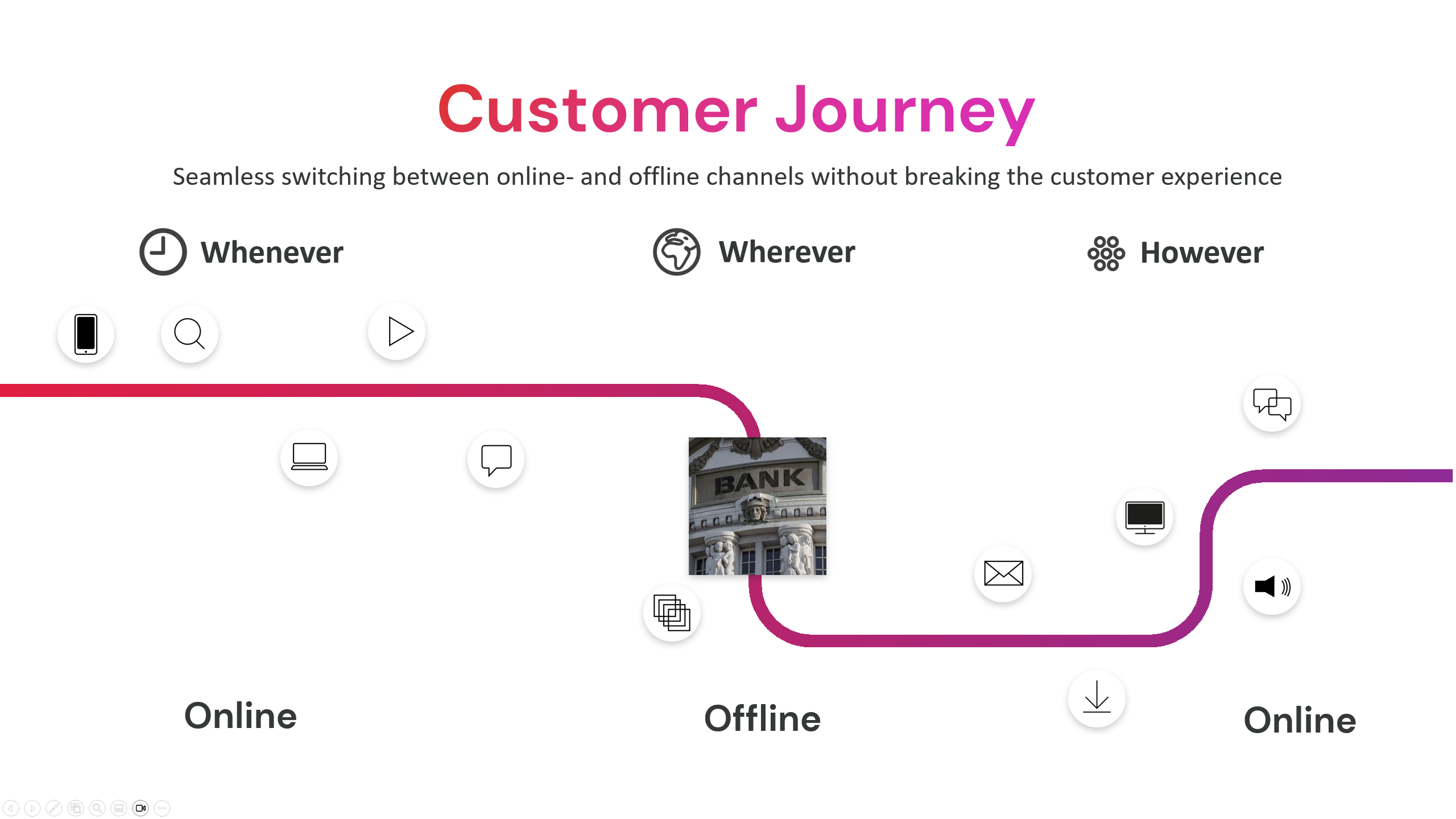
Smooth switching between online channels and offline communication, the user experience builds on each other.
Likewise, the subsequent follow-up, e.g. again in digital channels, is of crucial importance for a successful customer experience that changes the various touchpoints light-footedly without breaks.
The CoreMedia Experience Platform offers exactly this seamless channel switching and data exchange across system boundaries to achieve an optimal customer experience. On the one hand, content is managed and orchestrated within one single editorial tool and the "single source of truth" approach is maintained to ensure consistency in the touchpoints. On the other hand, data sources and context sources are collected and merged in such a way that targeted action can be taken in the area of personal customer contact in both the online and offline channels. Customer satisfaction and conversion rates increase without a significant burden on editorial effort through efficient tool use.
In the following illustration you can see several possibilities of addressing customers in the online channel. These range from smart chatbots (high automation) to a personal assistant (maximum individualization).
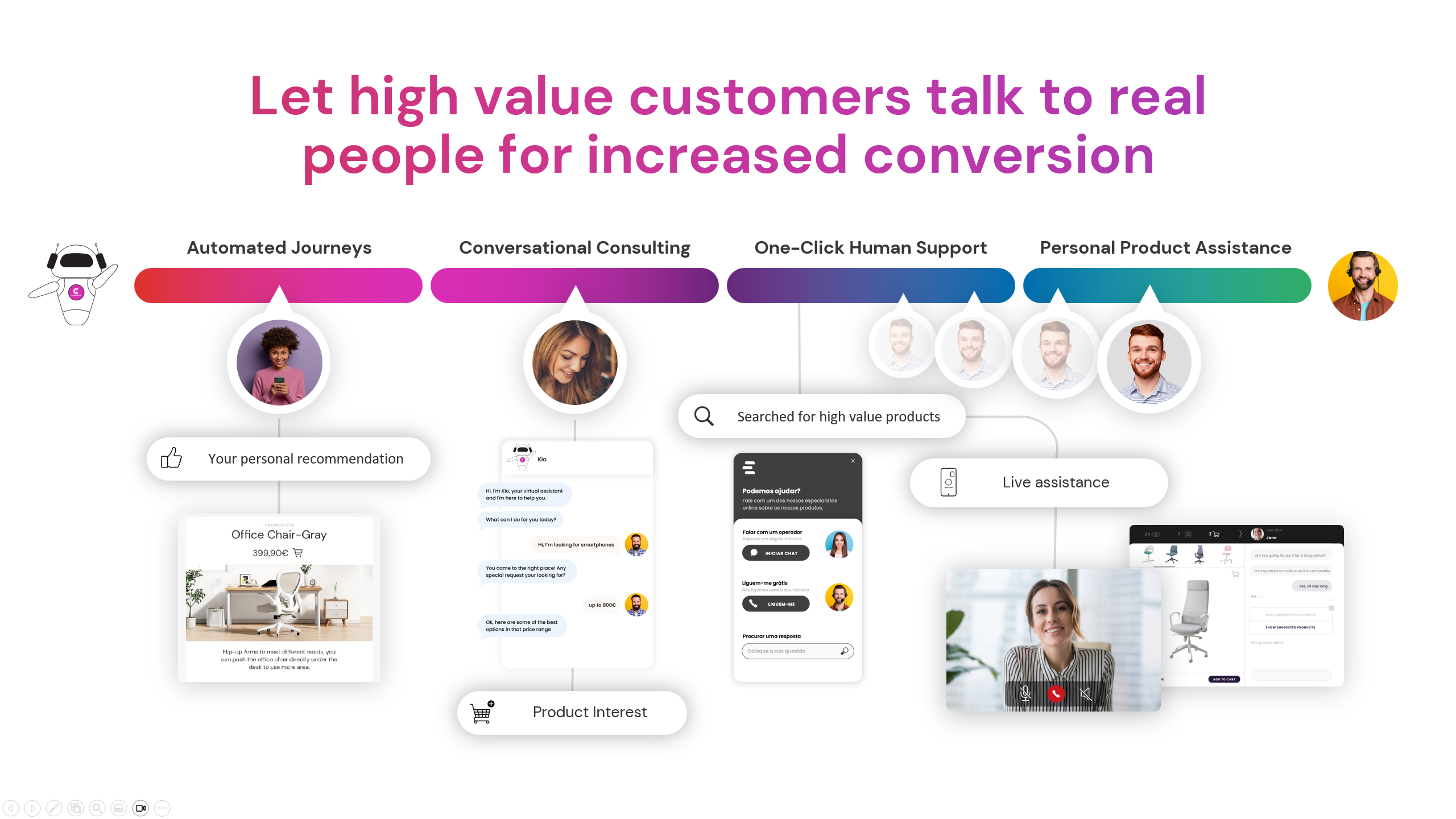
Highest level of the customer journey through personal contact for certain customer groups
The respective transitions between the different forms of communication are transparent and seamless for the customer, e.g. functions such as callback or video call are automatically activated and offered – based on customer segmentation in the background.
Cross-touchpoint personalization
Every touchpoint usage provides important information that should be used for the customer journey and the content offer. The context of use is essential for the success of good, customer-oriented and customer-centric communication.
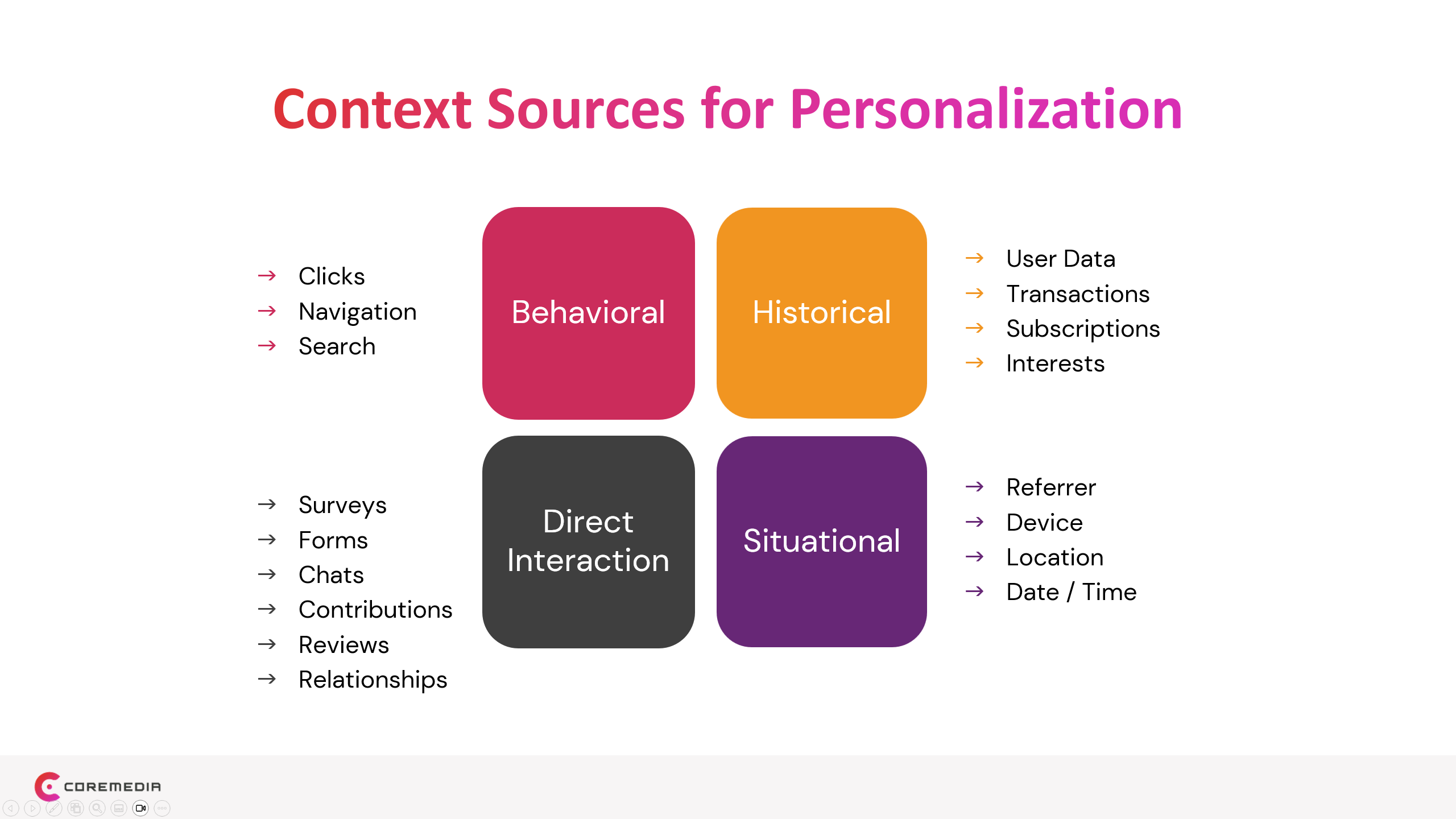
Contextual sources to use for personalized DXP
The contextual information that is important for personalization can be divided into the following categories:
Situation: At which location, with which device, which touchpoint, where did you come from, already known, logged in?
Behaviour: Click behavior, search terms.
History: Profile information, past purchase processes.
Direct interaction: newsletter subscription, form entry, feedback, contact by phone, announcement of interests.
With the help of the contextual information, visitors are categorized or segmented and provided with content that is relevant and suitable for them. This applies to the adaptive content level (which is of interest), as well as to the technical level (which format for which device). A first-time visitor typically has different information needs than a returning visitor, whose interest can be inferred from click behaviour and search terms. In the case of later contact in another channel such as online chat, call or branch visit, all information does not have to be collected again, and questions and answers have to be made more targeted and efficient. It is also nerve-wracking for the customer to have to go through the same question routines again and again with every new contact, digitally or in person, and to have to give information redundantly. "Reducing redundancy across digital and human touchpoints demonstrates respect for the customer, improves operational efficiency, and helps establish the trust required for long-term business relationships."
Data collection and data use in one step and across system boundaries
Collecting the necessary contextual information typically involves a variety of systems and services that have to interact on-the-fly.
It is not enough to collect data and to accumulate it in diverse, separate silos. The important step for successful personalization is to evaluate and merge at the right moment and with a goal.
The CoreMedia Experience Platform offers optimal support in this area due to its highly dynamic delivery architecture.
For a first-time visitor using a smartphone, content will be selected and displayed differently than for a first-time visitor using a high-resolution desktop screen. For a returning visitor, information from the last visit is of great importance: how long ago it was, what interests had become apparent, etc.
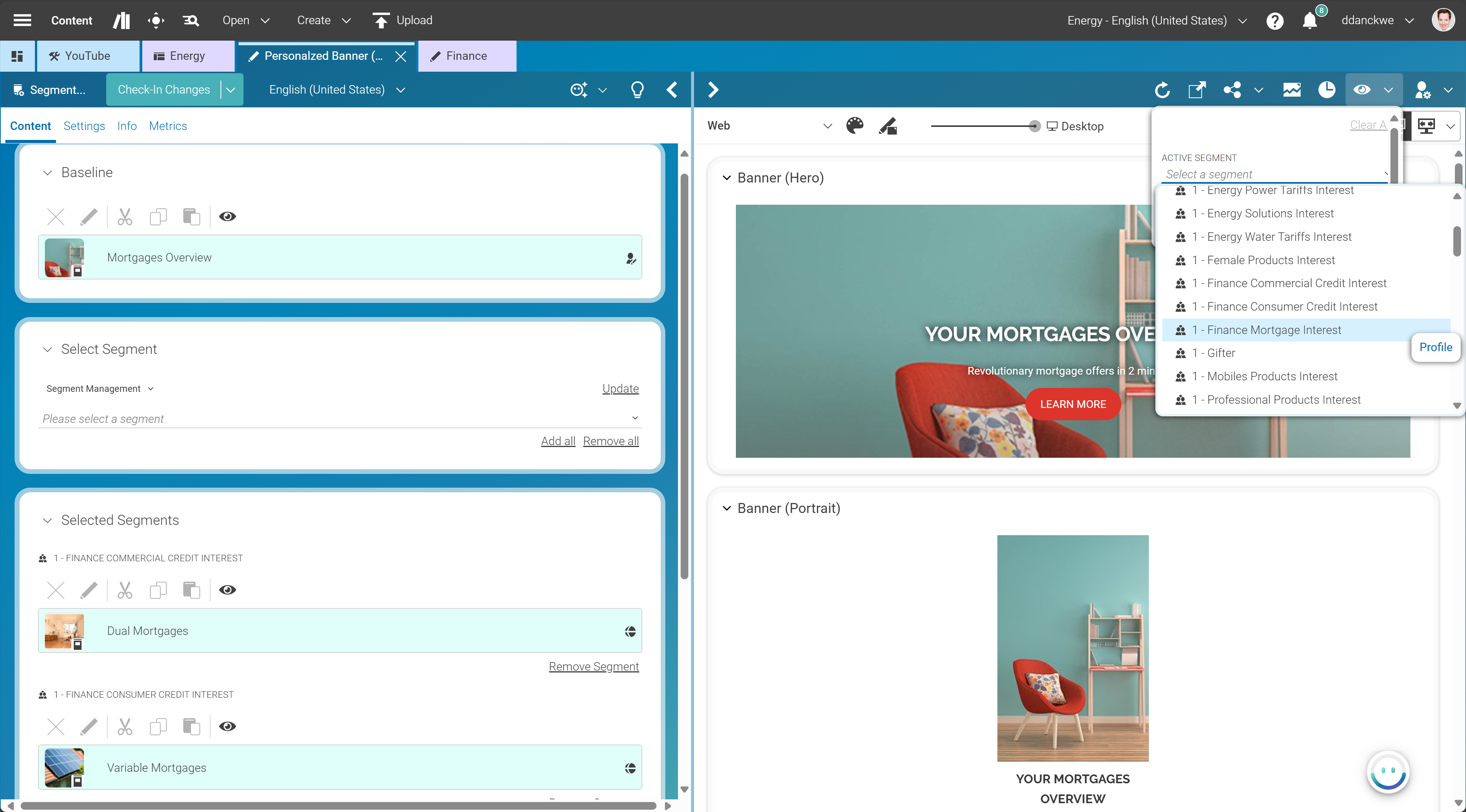
Easy creation of a segment-based personalized customer experience directly in the CoreMedia Studio including the integrated preview option through Persona-Chooser
CoreMedia DXP uses all information that is legally and technically possible and desired. In addition to click behaviour, this also includes reading times and activity behaviour as well as reactions to content-related offers and/or A/B testing.
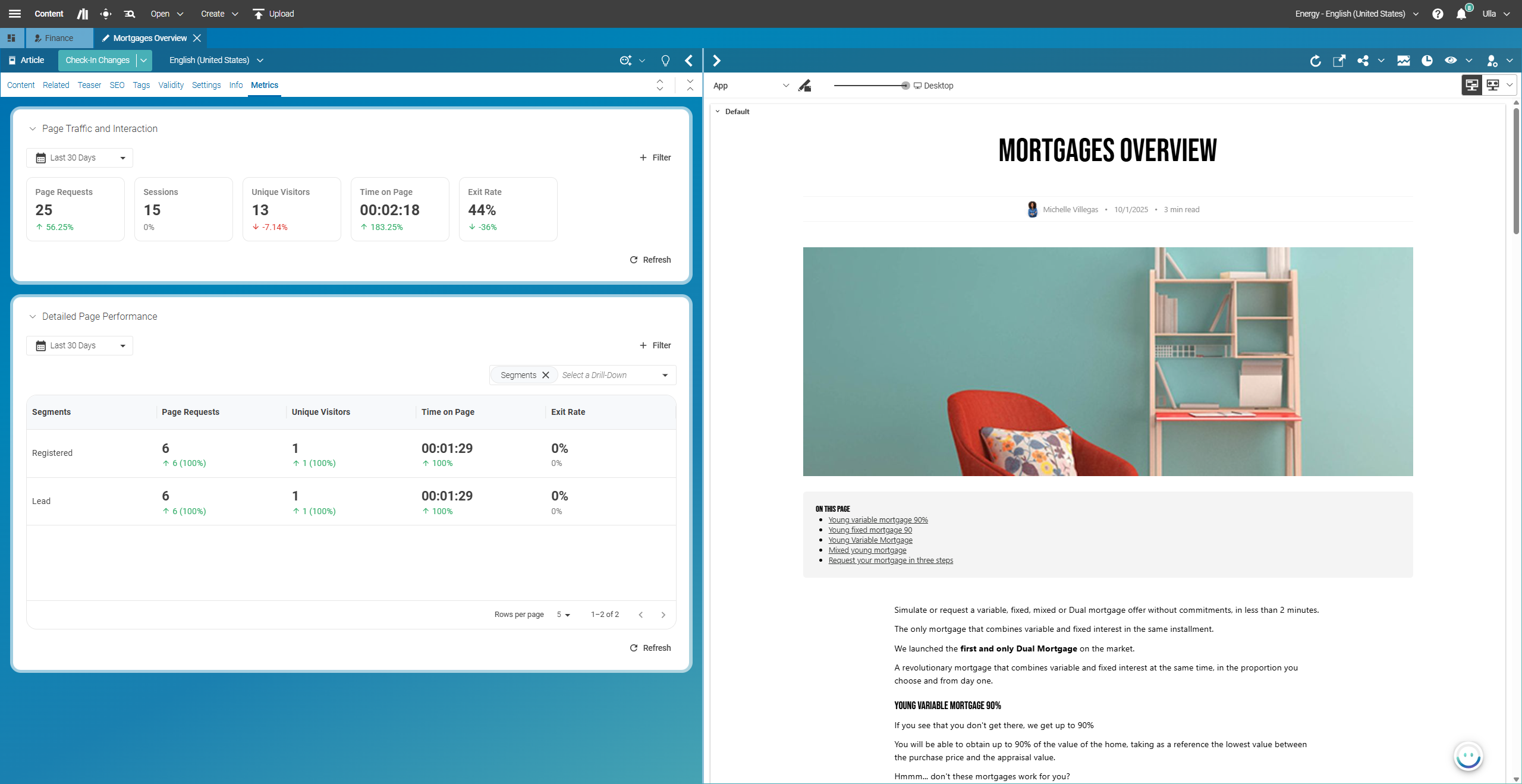
Content-centric work in CoreMedia Studio with direct access to analytics data to improve the customer experience and measure success factors
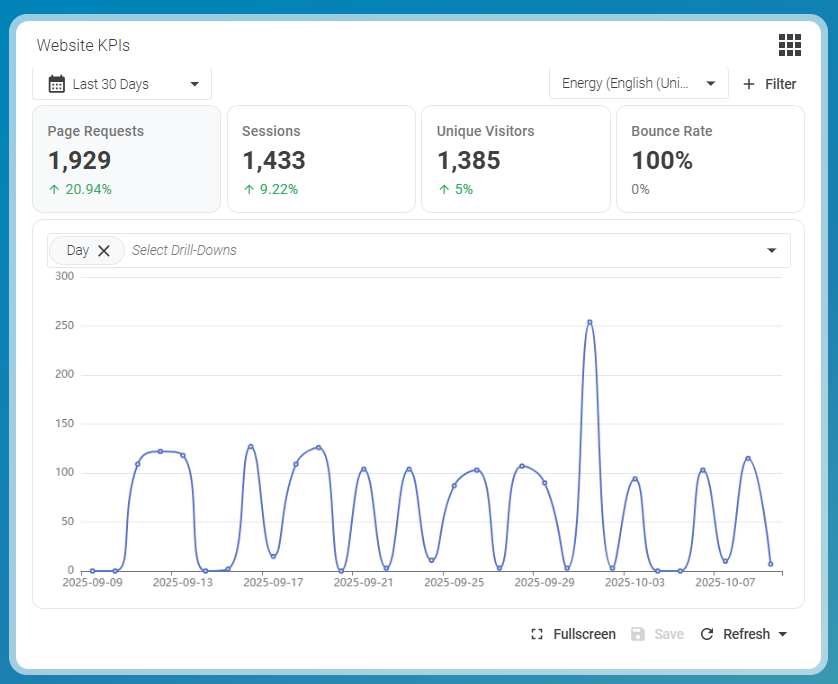
Clear display of analysis data in the CoreMedia Studio dashboard for success measurement (direct connection to the CoreMedia Engagement Cloud)
Important contextual information is widely dispersed across backend systems, especially in large organizations that have been on the market for a long time and have a heterogeneous IT landscape. The key to the use of the context sources is the high integration power of CoreMedia DXP through open interfaces and the principle of easy adaptability, which is strongly anchored in the architecture, e.g. through dedicated extension/plugin mechanisms that take system upgrades into account and simplify them.
If data is missing or should not be used without customer enquiries, it is a common practice for CoreMedia customers to query it directly from touchpoint visitors as so-called first-party data; e.g. by means of classic forms, surveys, etc. to correctly assess interests.
For example the insurance company Hansemerkur as a CoreMedia customer does not use https://hmrv.de/ a classic approach to get visitor’s interests via a form, but a rather lightweight, almost playful approach via a multi-level query using a product recommendation guide based on target groups (https://hmrv.de/).
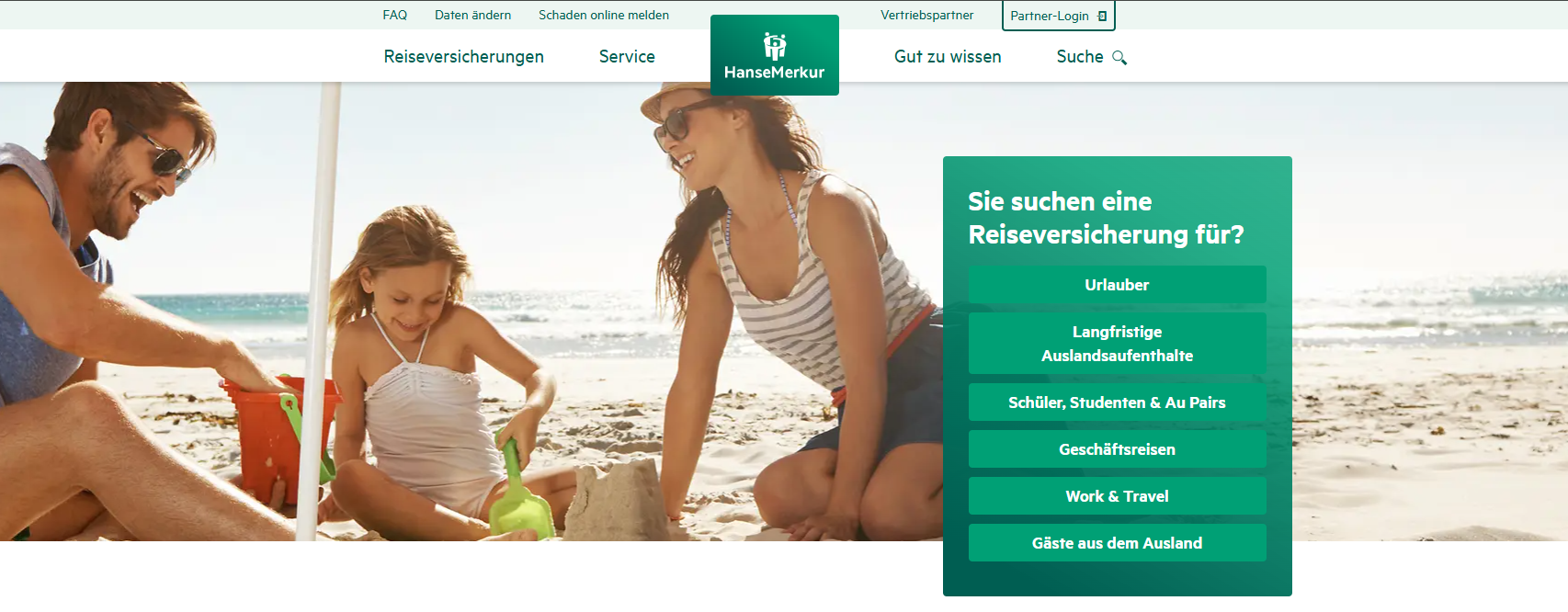
Product advice regarding travel insurance for CoreMedia customer Hansemerkur based on direct form-based user interaction (https://hmrv.de/)
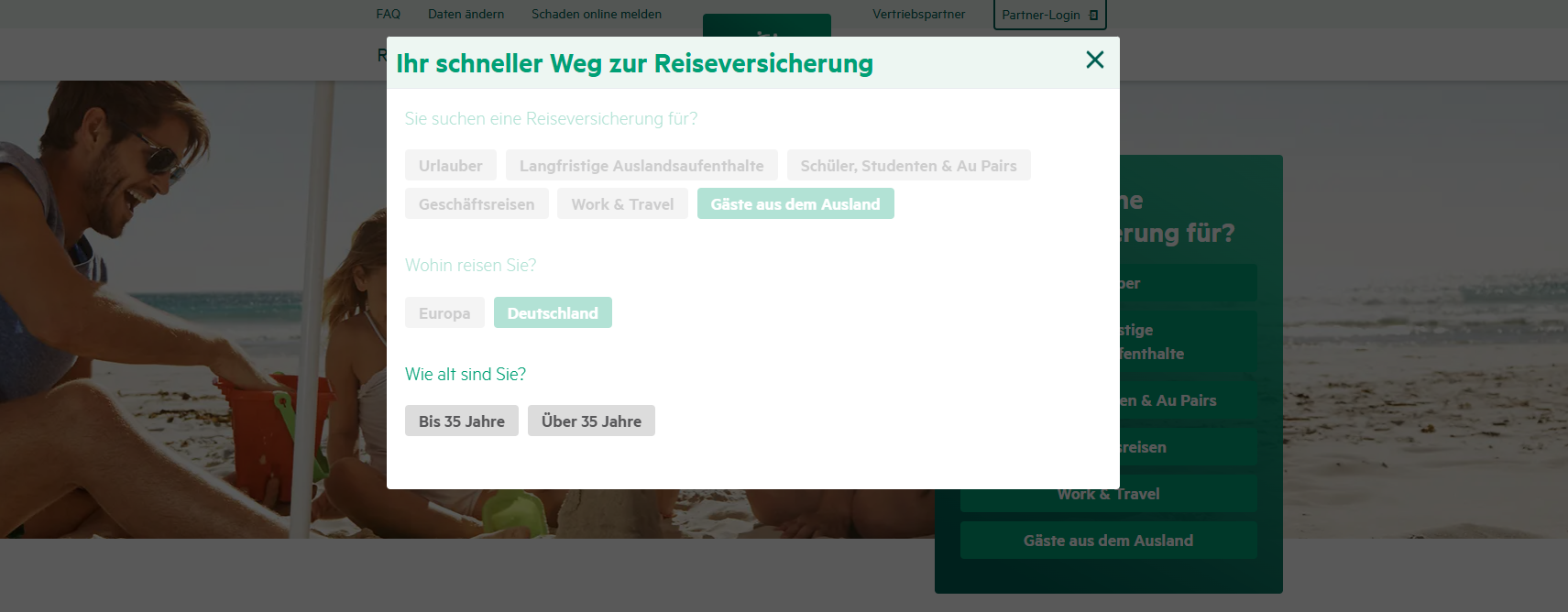
Multi-level forms for product advice for travel insurance at CoreMedia customer Hansemerkur
A further expansion stage would aim to offer a suitable interaction concept for specific target groups – both in form and format: classic form view vs. product guide, image-focused vs. moving image-emphasized, chat vs. telephone.
Classic forms are also an important part of the digital presences of CoreMedia customers. These are compiled directly in the CoreMedia Studio and seamlessly integrated into the customer experience. The integrated preview, on the other hand, offers easy control options for the business side.
Depending on the requirements, the forms and/or data are stored in the CoreMedia DXP or integrated via services (micro-service architecture). Various plug-ins for the CoreMedia Content Cloud, CoreMedia Engagement Cloud (native) and third-party systems (open-source and commercial) are available, see also CoreMedia Marketplace.
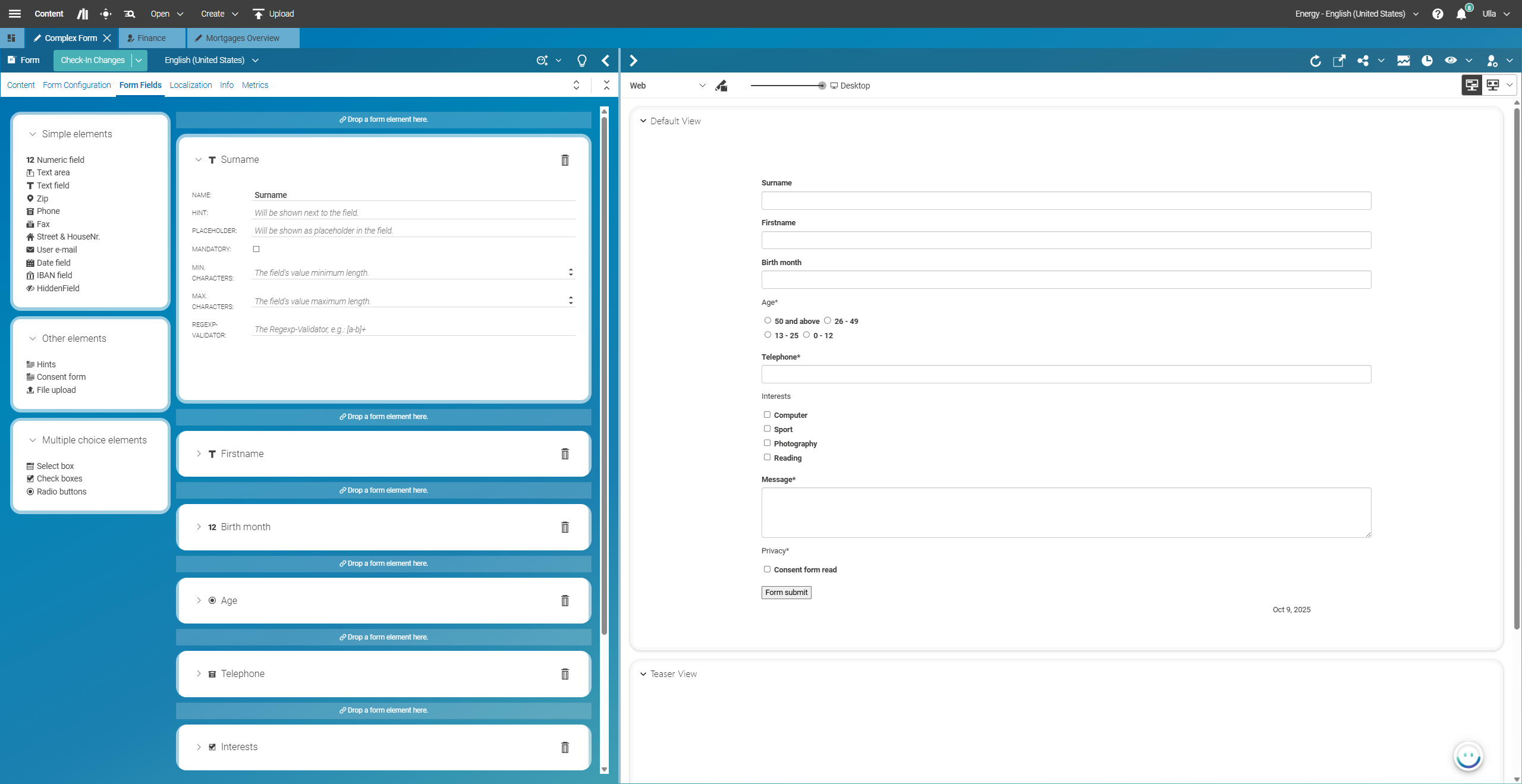
Form Builder in CoreMedia Studio (see Marketplace PlugIns "Form Editor" or "Formcentric")
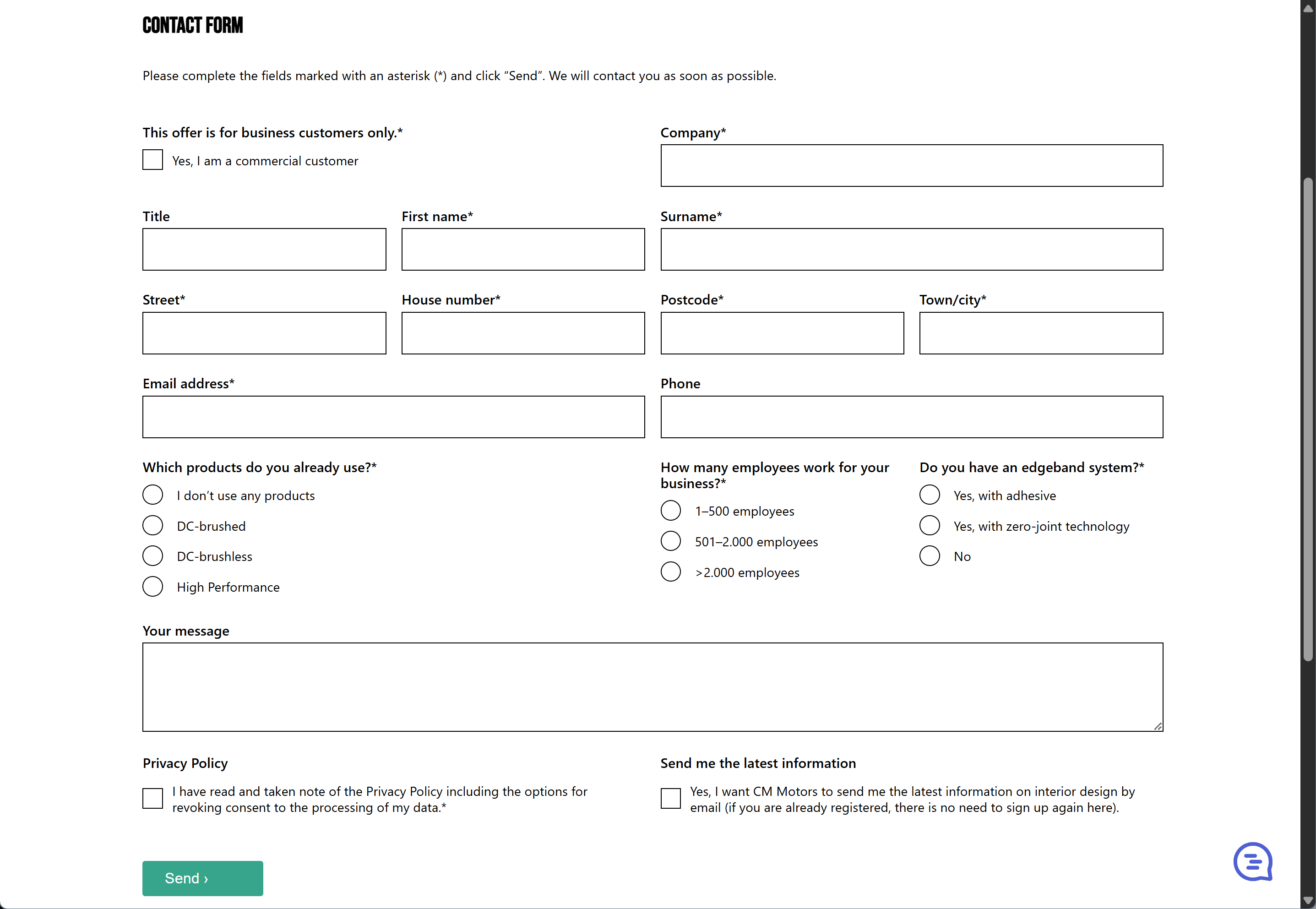
Classic form as part of the customer journey as part of a personalization strategy for the DXP
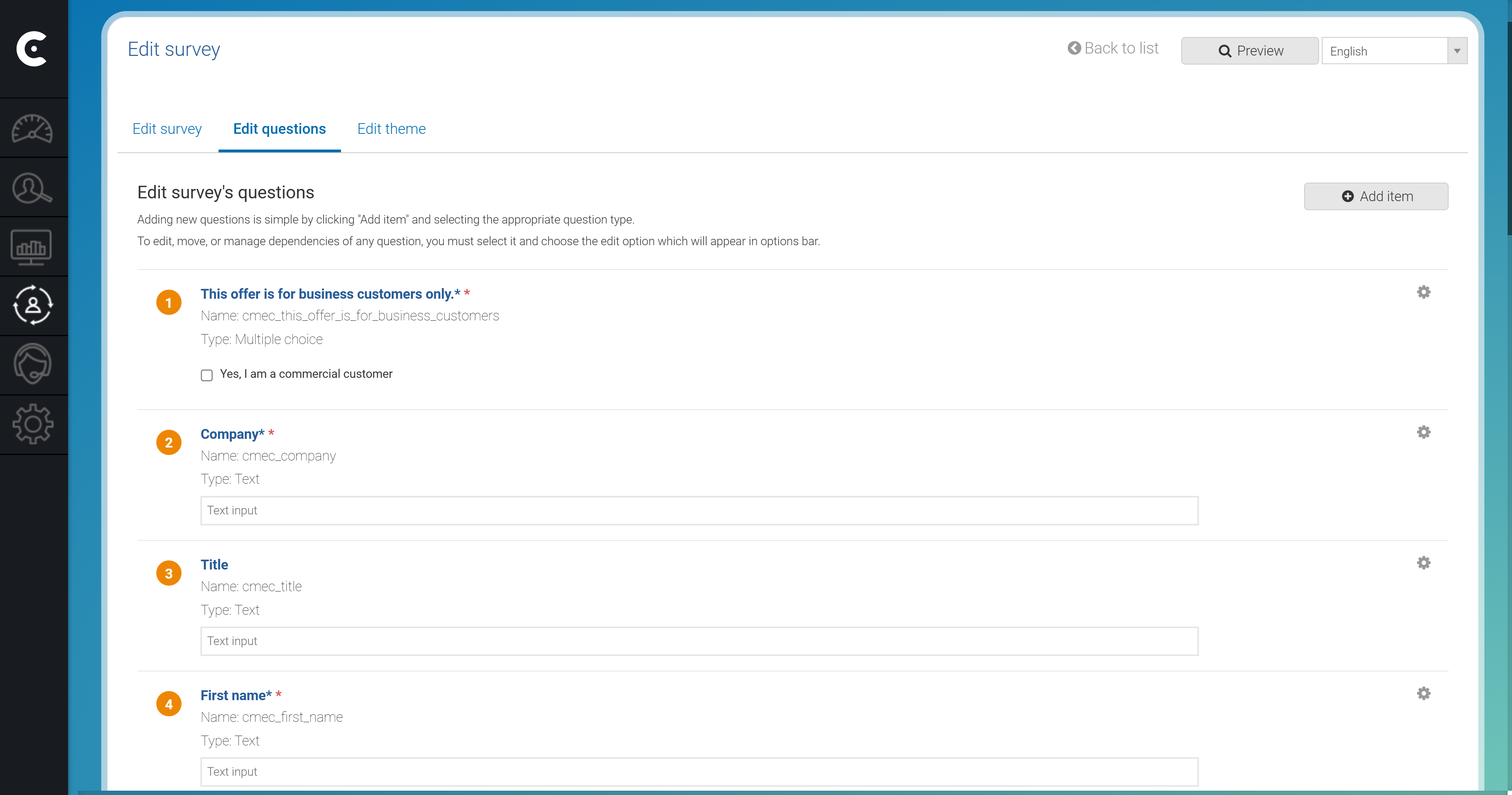
Form Builder in the CoreMedia Engagement Cloud
Modelling the Customer Journey in the CoreMedia Engagement Cloud 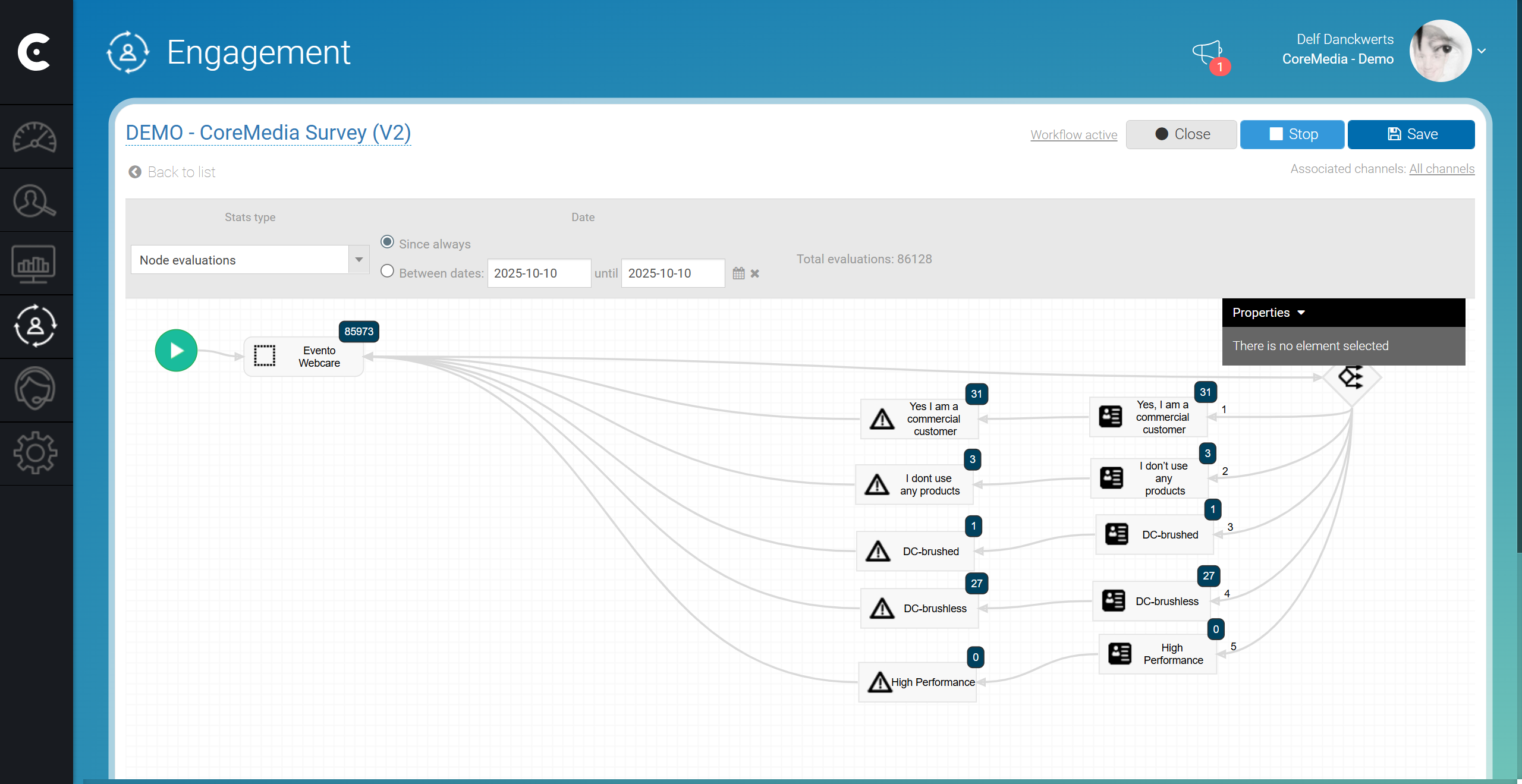
After the CoreMedia Studio supported creation of forms, the question of data storage arises, especially for sensitive information, the legal framework is strict.
The CoreMedia Experience Platform offers a wide range of options regarding persistency, which is based on the specific business and technical requirements. This can range from data storage in the CoreMedia Experience Platform itself to the integration of existing third-party systems / CDPs.
It is important to return relevant information and permitted data to the personalized customer journey – whether directly (automated or semi-automated personalization) or indirectly via personal advice (only agents would then have access to background information in order to be able to conduct a conversation unerringly).
Multilingualism and localization
Both for building trust in the communication process and for the long-term bond with the brand, the comprehensibility of products is an important aspect in the design of touchpoints. This means that multilingualism is an important aspect for every type of offer, regardless of country-specific playout. This means that all or at least essential content should be offered in their native language for those people who live in a country, e.g. have a migrant background and feel more confident in their own language than in the respective national language.
CoreMedia Studio Language-Chooser and Side-By-Side View for matching language/country variants with a master content (easy delta matching in case of content update processes) 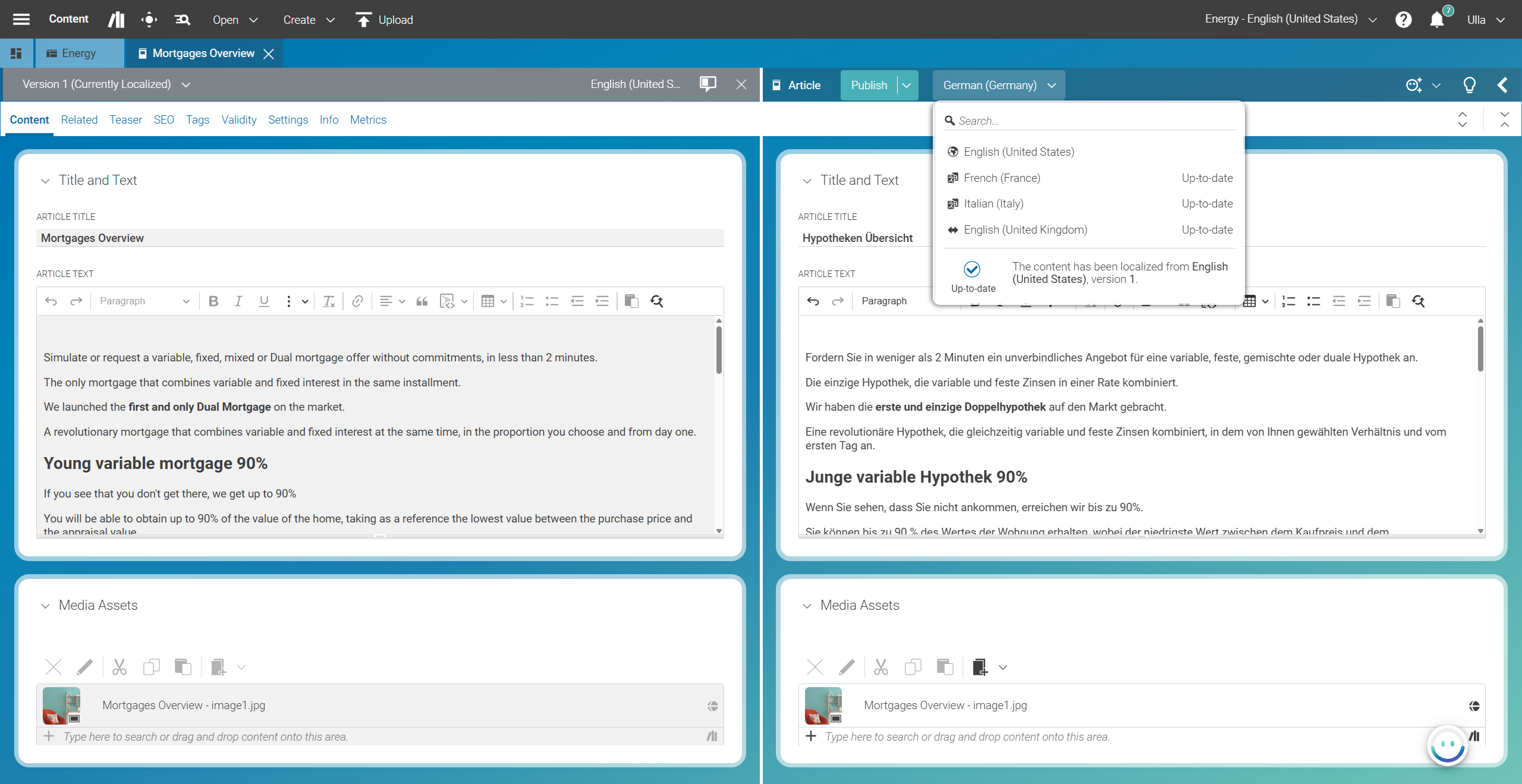
Target group-specific language, e.g. "easy language" is part of the CoreMedia multilingualism concept, which is based on the master/variant idea. From an editorial point of view, these variants are easily manageable with the help of integrated AI services such as CoreMedia KIO. Also, AI services are used for the handling of routine tasks, e.g. creation of ALT texts/descriptions as well as SEO aspects and (automatic) tagging for semantic referentiality.
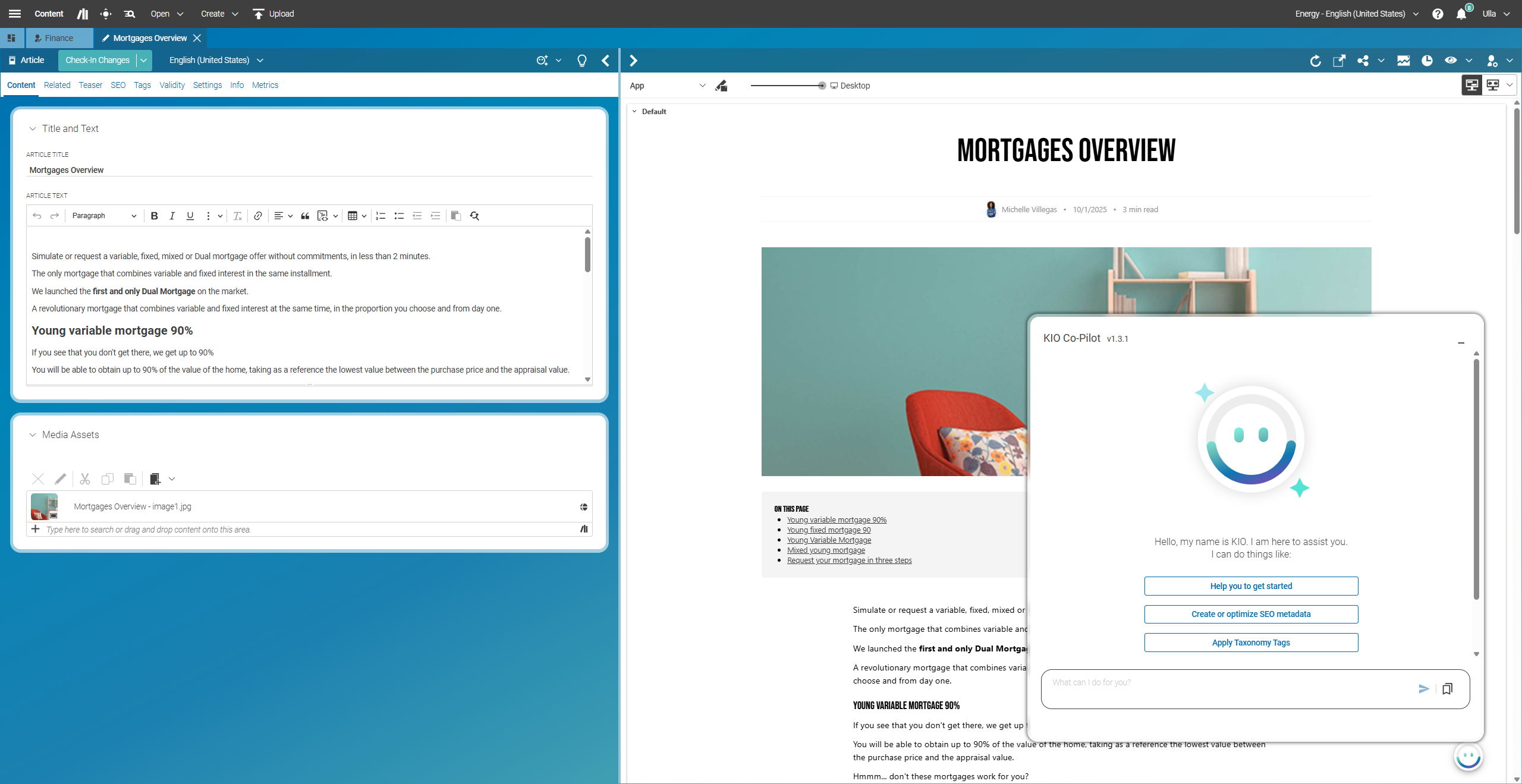
CoreMedia Studio integrated AI assistant to support editorial work and increase efficiency with the aim of focusing on the essentials instead of routine activities
Not to forget: service availability and security
An important and far-reaching aspect is the issue of availability and security. Especially in an environment of sensitive information, trust is an important asset in the communication process with (potential) customers.
If touchpoints are temporarily unavailable, if links lead nowhere, if performance is weak, or if the content is not consistent across the touchpoints or within a touchpoint, this has a direct impact on the relationship between customers and the brand. Customers wonder how carefully the company then handles other kind of data.
In order not to be put in such a bad light, complete availability and consistency in terms of links and content is a crucial criterion for business success.
The CoreMedia Experience Platform attaches the utmost importance to these aspects, which should not be underestimated and are therefore to be understood as part of the critical infrastructure. Many of CoreMedia's customers from the field of federal authorities and public institutions, such as e.g. the Deutsche Bundesbank, Deutsche Bundeswehr, German Parliament (Bundesrat/Bundestag), Federal Chancellery, Hanseatic City of Hamburg, Federal Office for Information Security (BSI) are proof of the reliability of the CoreMedia platform. Likewise, large health insurance companies are also relying on the CoreMedia Experience Platform: e.g. TK, Barmer, DAK, AOK, Generali and Hansemerkur.
The high level of sensitivity on the customer side is considered by no hidden tracking, but by proceeding openly according to the give-and-take principle. The CoreMedia Engagement Cloud offers a wide range of technical options for implementing a personalized customer journey and a controlled customer interaction across channel boundaries, taking into account the legal framework and customer sensitivities.
First-party data approach and no need for cookies with the CoreMedia Experience Platform 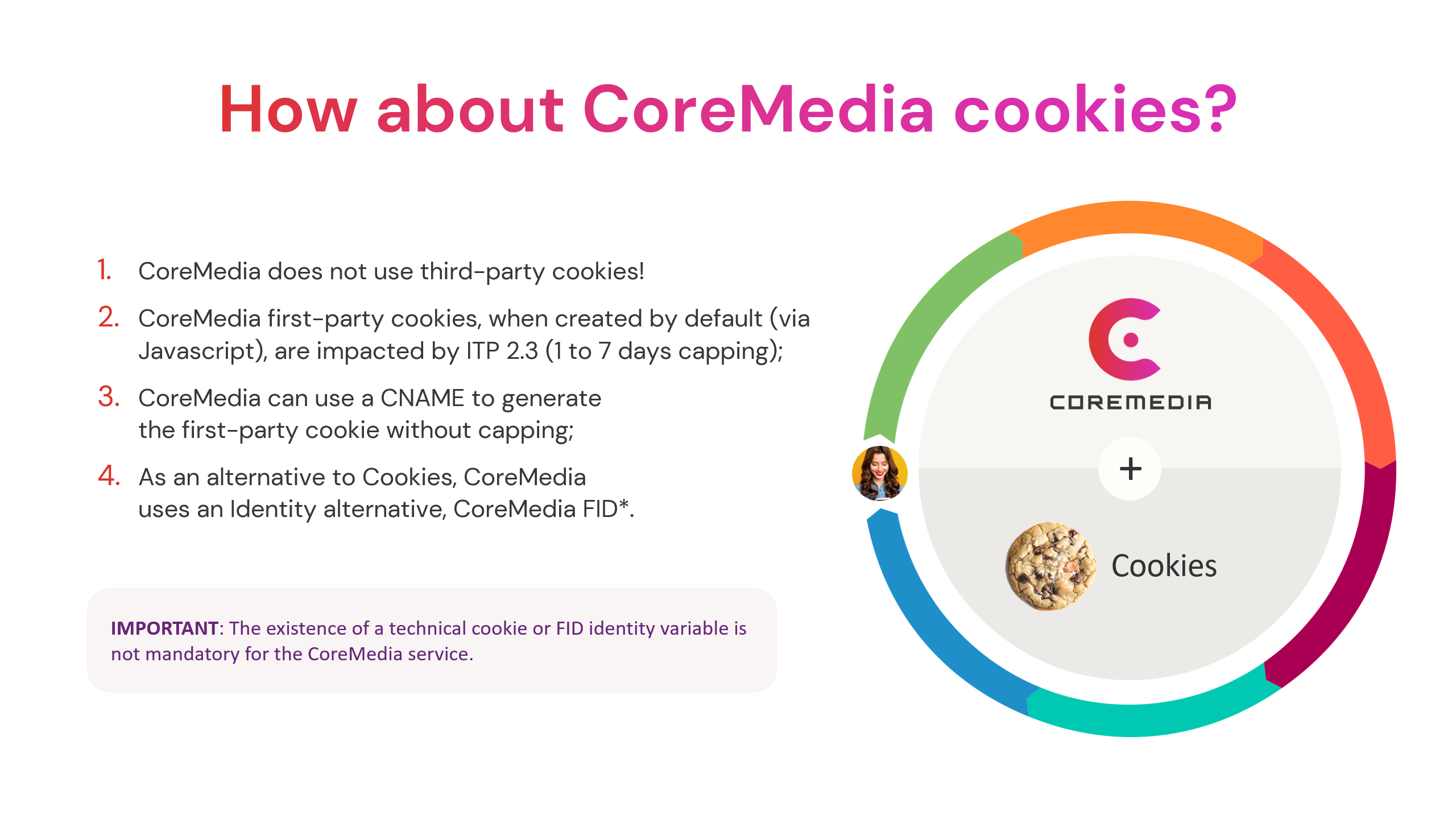
Conclusion
For the finance and insurance industry, a seamless customer journey that can playfully and imperceptibly switch between a wide variety of online and offline channels is of particular importance, as the services and products offered usually concern highly sensitive personal information and therefore a good foundation of trust in customer communication is a decisive prerequisite for a successful business deal. In addition, there are aspects such as the complexity of the products and bundles offered and the resulting need for advice across the touchpoints (including differentiation from the competition).
The challenge is to break through data and content silos that either already exist or are created by isolated solutions. The key is not only to collect data and create content, but also to intelligently dig up data treasures and skillfully link them with content to create a personalized user experience that does not end at touchpoint boundaries but goes beyond them. It's about efficiently using data for the benefit of DXP and optimizing the offer by deriving actions from the data on-the-fly.
The CoreMedia Experience Platform offers the optimal technical basis for the implementation of a comprehensive and constantly evolving customer journey on both the content management side and the engagement side (tracking, segmentation, personalization, omnichannel experience, A/B/n testing, CDP, etc.).
With the service approach, a lightweight entry and a step-by-step, minimally invasive approach to the use of individual functionalities is possible at any time. CoreMedia pursues the best-of-breed approach and is characterized by its high integration power, especially in heterogeneous system landscapes – the more complex the functional and non-functional requirements of today and/or tomorrow, the better the value of the CoreMedia PaaS Plus approach, which combines the advantages of pure SaaS solutions with those of pure PaaS solutions for the benefit of the customer and promises investment protection as well as project success.
Please contact us if you are interested and would like to exchange experiences.