





















Clearing your doubts about OpenText (FAQs)
All your questions answered.
Why are enterprises replacing legacy platforms like OpenText?
Legacy platforms often come with high maintenance costs, forced migrations due to product sunsets, and complex integration requirements. Modern CMS, as CoreMedia, alternatives streamline workflows, reduce technical debt, and help teams focus on delivering value continuously.
Why is a flexible integration model important for enterprise CMS platforms?
Flexible integrations allow organizations to bring in best-of-breed tools for CRM, analytics, commerce, and more — without being locked into a legacy ecosystem. This reduces risk, simplifies migration, and accelerates time-to-value.
Is migrating from OpenText to CoreMedia risky or disruptive?
No — a proven, low-risk migration process from OpenText to CoreMedia. Content models, metadata, workflows, and integrations can be mapped and adapted as part of the migration process, allowing teams to maintain continuity while modernizing their platform.
How does CoreMedia compare to OpenText for content management flexibility?
CoreMedia is built on a composable architecture, allowing teams to integrate third-party tools and update or replace them as business needs evolve. This supports flexible CMS setups and avoids dependency on a single bundled ecosystem.
What types of organizations typically migrate from OpenText to a modern CMS?
Organizations with complex enterprise content environments — such as global brands with multiple sites, teams, and systems — often migrate when they need faster publishing, modern integrations, and improved agility.
Low-risk migration from OpenText - in less than 90 days
Switching from OpenText doesn’t have to be difficult. With CoreMedia, you benefit from a proven, low-risk OpenText migration process, led by an experienced team that ensures all your content, metadata, users, and assets are moved with zero disruption and full continuity.
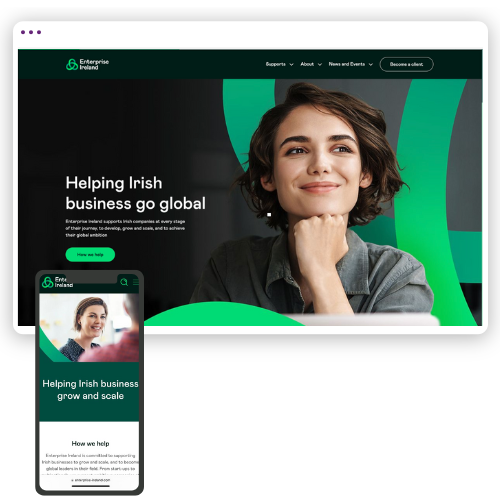
We begin the migration process with a discovery phase to identify what needs to move, streamlining the process and reducing complexity. Technically, we extract the content using OpenText’s built-in export features or API, transform it for CoreMedia, and import it via our robust ingest service to make sure all required assets are migrated and optimized for CoreMedia Content Cloud. By employing a smart agile methodology, Enterprise Ireland migrated to CoreMedia within just 90 days.