





















Beyond compliance: What is digital sovereignty in the DXP era?
While this is essential, this definition is no longer enough. Digital sovereignty means maintaining control over the entire customer experience - not just the infrastructure it runs on. This includes owning how data is created, structured, and activated - a capability that has become more critical than ever with the rise of AI, as data continuously drives content, decisions, and shapes customer experiences.
This is no longer just an IT concern. It's a strategic imperative for marketing, commerce, and digital leadership.
Without it, organizations risk a form of digital feudalism: dependence on closed ecosystems, rigid systems, and opaque cloud providers. In these environments, data is controlled externally, access is limited, and agility is lost, leading to fragmented digital assets and reduced ability to respond to customer intent.
True operational sovereignty goes beyond compliance checklists. It enables organizations to control their content supply chain, govern how information is structured and delivered, and adapt quickly to market demands - while meeting evolving digital sovereignty requirements across regions.
This is where digital sovereignty becomes a competitive advantage: not just in protecting data, but in enabling organizations to own their digital destiny and build for long-term resilience.
The three pillars of content & experience sovereignty
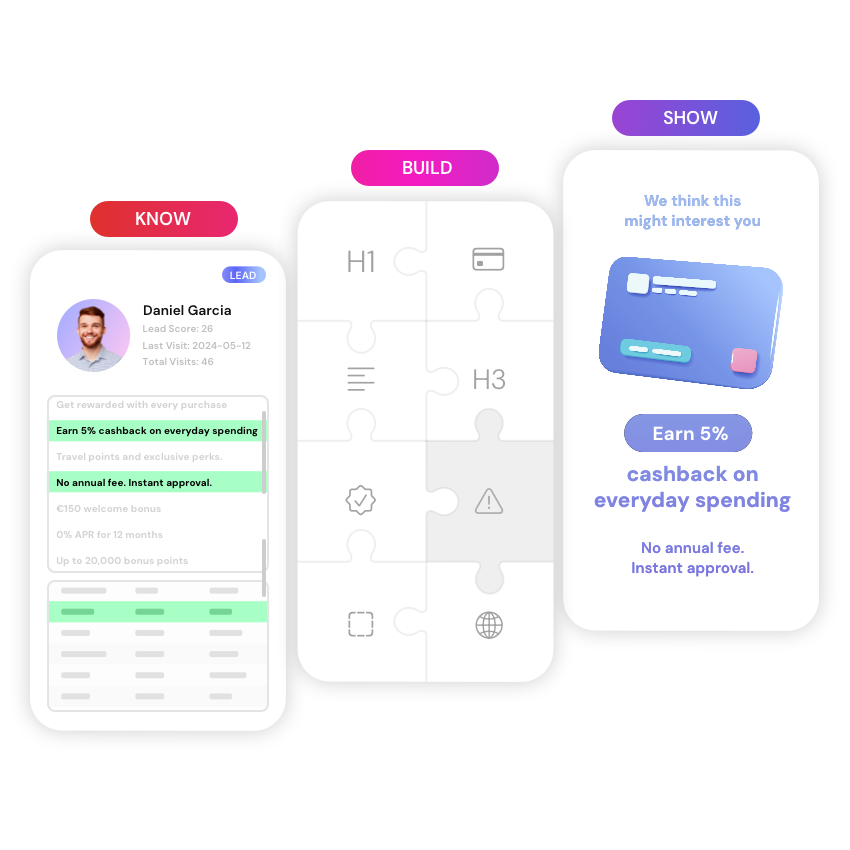
Digital sovereignty requires control across three layers: data, operations, and experience. At CoreMedia, we frame this through three essential pillars: knowing, building, and showing.
1. Data sovereignty (The "Know" layer):
At the foundation lies data sovereignty - the ability to own, govern, and activate customer data without dependency on external platforms. In many organizations, valuable insights remain fragmented across systems or locked within third-party tools, limiting the ability to fully access data and access insights in real time.
True sovereignty means that data flows are controlled by the enterprise, not intermediaries. It also means prioritizing first-party and zero-party data - data collected directly from customers through their interactions, preferences, and explicit input - reducing dependency on external platforms and ensuring full ownership of customer insight. It ensures that sensitive data and sensitive information are handled in accordance with data residency, data privacy, and evolving data sovereignty requirements, while still being accessible for meaningful use.
More importantly, it enables organizations to transform raw data into actionable insights. When data is unified and governed within a single environment - such as CoreMedia's Customer Engagement Platform - teams can generate a complete view of the customer, without relying on external platforms.
2. Operational sovereignty (The "Build" layer):
Owning data is only part of the equation. Organizations must also control how their digital systems are built, evolved, and integrated. This is where operational sovereignty becomes critical.
In traditional architectures, monolithic platforms create lock-in - limiting flexibility, slowing innovation, and increasing dependency on specific vendors or cloud providers. This directly impacts the ability to respond to market changes and adapt to new sovereignty requirements.
A composable approach, by contrast, enables organizations to select and orchestrate the right components for their needs:
- Swap out tools without rebuilding the entire system.
- Integrate new services (e.g. personalization, AI tools, or commerce platforms) as needed.
- Scale or adapt platforms for different regions and requirements.
This level of flexibility ensures that organizations can maintain agility while still meeting compliance requirements, supporting business continuity, and adapting to changing regulatory requirements across regions.
3. Brand sovereignty (The "Show" layer):
The final layer is where sovereignty becomes visible: the experience itself.
Semantic sovereignty ensures that content is structured, consistent, and meaningful across all channels - so that both humans and machines can understand and use it correctly. At the same time, brand sovereignty ensures that global consistency is maintained, while allowing for local adaptation across different locations and personalizing experiences based on individual customer needs.
Without this layer, even well-governed data and flexible infrastructure fail to deliver value. Content becomes fragmented, messaging inconsistent, and the brand experience diluted.
With the right platform approach, organizations can manage digital assets centrally to ensure global brand consistency, while setting the right guardrails for variations across channels, regions, and individual users - ensuring alignment with local laws, cultural context, and business goals.
The risks of fragmented ecosystems for global brands
For global enterprises, the challenge is not a lack of tools - it’s fragmentation. As organizations expand across regions and channels, their reliance on multiple cloud services and cloud providers increases complexity, creating hidden dependencies that undermine digital sovereignty and the ability to maintain control.
The "Headless" trap
Headless architectures promise flexibility but without the right orchestration, they often create new silos. The separation between backend systems and front-end delivery can disconnect marketing teams from execution.
As a result:
- Marketers lose visibility and control over how content is delivered.
- Campaigns depend on development cycles.
- Digital operations slow down.
Organizations gain technical freedom but lose operational coherence. The result is fragmented digital assets and inconsistent customer experiences.
Regulatory friction
Operating across regions means navigating cross-border data flows and a complex landscape of data sovereignty, data privacy, and evolving regulatory requirements. What works in one region may not be compliant in another.
Global campaigns must adapt to different local regulations, data residency constraints, and data protection expectations - particularly across the European Union and other regulated industries.
This creates friction between global consistency and local execution. Campaigns become slower, more complex, and harder to scale - limiting the ability to respond to market demands effectively.
The conversion gap
Fragmentation doesn’t just impact operations - it directly affects performance.
When data is disconnected across systems, organizations cannot generate a unified view of the customer. Insights remain incomplete, and experiences become generic. Without connected data flows, it becomes difficult to tailor interactions, optimize engagement, or fully access data across the data layer.
The result is a growing gap between interest and conversion. Inconsistent experiences reduce trust, weaken digital services, and ultimately impact revenue - as high-intent users fail to convert.
What to look for in a CMS to enable digital sovereignty
If fragmented ecosystems erode digital sovereignty, the answer is not more tools - it’s the right platform and infrastructure. CoreMedia’s Content Management System gives global enterprises the autonomy to maintain control - combining centralized governance with the flexibility to operate across markets.
Centralized control, local relevance:
CoreMedia’s CMS provides a single platform to manage content across regions and channels. Global teams define governance, structure, and standards, while local teams adapt content to meet local laws, language, and market needs - ensuring consistency without losing relevance.
Flexible deployment and hosting:
Digital sovereignty requires control over where data is stored and how systems are operated. CoreMedia supports cloud-agnostic deployment across public cloud, private cloud, hybrid environments, and full on-premises setups - enabling organizations to meet data residency, regulatory, and security requirements without being tied to a single provider.
This flexibility ensures business continuity and reduces dependency on external cloud providers or infrastructure constraints.
The "Hybrid" advantage:
CoreMedia’s hybrid headless architecture gives both developers and business teams control. With built-in WYSIWYG editing, marketers can manage content, launch campaigns, and personalize experiences directly - without relying on development teams.
At the same time, developers benefit from API-first flexibility to integrate and extend the platform as needed.
This balance restores operational sovereignty - enabling faster execution while maintaining governance and reducing dependency on IT.
Privacy-first personalization:
CoreMedia’s Content Management System enables organizations to deliver personalized experiences based on fully owned, privacy-compliant data - without relying on third-party platforms or exposing sensitive information.
Open source is not a shortcut to sovereignty
Open source is often associated with digital sovereignty, but access to code alone does not guarantee control. Operating and governing platforms at scale requires ongoing investment in security, compliance, and maintenance.
Enterprise platforms provide a more practical approach - combining flexibility with built-in governance, security, and scalability - so organizations can maintain control without taking on the full operational burden.
How to keep control of customer data without compromising privacy
While content sovereignty defines how experiences are created and delivered, data sovereignty determines whether organizations can truly understand and act on those experiences. Without control over interaction data, even the most advanced platforms remain blind to what actually drives engagement and conversion.
Bridging the gap:
Most organizations generate traffic but very little becomes actionable insight. Interactions remain anonymous, fragmented across channels, and disconnected from the systems that manage the experience.
CoreMedia’s Customer Engagement Platform closes this gap by turning passive traffic into active customer interactions. Whether through live chat, video, or voice, every interaction becomes a source of owned data - captured, structured, and retained within the enterprise ecosystem.
First-party data strategy:
As third-party cookies are increasingly restricted by browsers and privacy regulations, their role in tracking and targeting is declining. Organizations can no longer rely on external platforms to provide insight into their audiences.
CoreMedia’s Customer Engagement Platform ensures that interaction data - across support, sales, and service touchpoints - remains fully owned and governed by the enterprise itself. This includes signals like conversation history, buying intent, and browsing behavior, captured directly at the source.
By keeping this data within your own environment, organizations gain full control over how it is used, analyzed, and activated, supporting a resilient and compliant first-party data strategy aligned with evolving data security and data governance requirements.
Real-time personalization:
With CoreMedia’s Customer Engagement Platform, organizations can use their own data to deliver personalization in real time. Instead of relying on delayed, third-party processing, teams can respond immediately to user intent, adapting content, offers, and interactions as they happen.
This enables more relevant and timely customer engagement and conversion.
AI sovereignty: Innovation without risk (CoreMedia KIO)
AI is rapidly becoming part of how organizations create and manage digital experiences. Those that don’t approach it carefully risk losing control over their data, security, and ultimately their ability to deliver trusted, compliant experiences.
The AI dilemma:
Public AI models make it easy to generate content, automate workflows, and analyze data. But they often require organizations to send internal data to external systems, raising questions around sensitive data, compliance, and long-term control.
The challenge is not whether to use external AI, but how to use it without losing control.
For organizations in regulated industries, this becomes a strategic concern. Feeding proprietary content, customer interactions, or internal knowledge into external models can create risks around data exposure and governance—if not properly managed.
Keeping control over AI models and deployment:
CoreMedia KIO is designed to give organizations control over how AI is used—across models, data, and deployment.
Rather than relying on a single provider, KIO acts as an LLM-agnostic orchestration layer. Organizations can integrate and work with multiple models—such as OpenAI, Azure, Anthropic, or custom solutions—based on their specific requirements.
This allows teams to choose the right models for each use case, while managing how and where data is processed.
At the same time, CoreMedia supports cloud-agnostic and on-premises deployment models. This gives organizations flexibility to run AI in environments that meet their security, compliance, and data residency requirements.
By orchestrating AI across models and environments, CoreMedia’s KIO enables smarter, faster decision-making while ensuring that organizations retain full control over their data, model choices, and how AI is applied across the customer experience.
Human-in-the-Loop:
AI sovereignty is not just about infrastructure, it’s about responsibility. Organizations remain accountable for what AI produces and how it is used.
CoreMedia KIO is designed with human oversight built into every step of the workflow. AI supports teams with recommendations, automation, and insights, but outputs remain transparent, editable, and subject to approval.
This ensures that:
- Content and messaging stay aligned with brand standards.
- Decisions meet business and regulatory requirements.
- Organizations keep control over what gets published and delivered.
With CoreMedia KIO, organizations can strike the right balance between faster content management, smarter insights, and staying in control.
Strategic checklist: Is your stack sovereign-ready?
Digital sovereignty in content management requires practical validation. Use this checklist to assess whether your current solution supports control, flexibility, and compliance across cloud environments.
Data audit:
Do you know where your data resides, who has access to it, and how it moves across your tools? And if regulatory or political conditions change, can you move or isolate your data, or are you locked into a specific provider or setup? Ensure clear data governance, visibility into data flows, and secure data collection.
Agility check:
Can you launch a new product experience in a new market in weeks - not months? Modern IT infrastructures should enable fast deployment without being constrained by rigid infrastructure or legacy dependencies. Look for platforms that are composable and LLM-agnostic, so you can choose, switch, or combine models based on your needs - without losing control over your data or workflows.
Challenge the level of integration:
Does your CMS, commerce platform, and email marketing system truly work as one solution or are they just connected? Seamless integration across digital systems ensures consistent data flows, stronger personalization, and more effective digital services.
Case study: Sovereignty in action - German Bundestag
A leading public institution responsible for critical infrastructure, the German Bundestag, relies on CoreMedia to deliver secure, transparent, and scalable digital experiences to over 18 million users annually.
Managing more than 250,000 live documents within a unified digital platform, the system supports complex content journeys - connecting legislative processes, documents, and outcomes into a single, accessible experience.
This approach ensures that critical information remains structured, reliable, and easy to navigate, while meeting strict data sovereignty and compliance expectations. Content workflows are standardized, governance is enforced centrally, and updates can be published instantly across the platform - ensuring that information is always current and accessible.
At the same time, the architecture is built for resilience and scale - handling traffic spikes during key political events without compromising security or performance.
The result is a unified digital experience that strengthens trust, improves accessibility, and enables full control over the content lifecycle - demonstrating how organizations can deliver consistent, sovereign experiences across complex digital environments.
Conclusion: The ROI of digital independence
Digital sovereignty is no longer just about compliance - digital sovereignty is about trust. Organizations that maintain control over their content, data, and digital infrastructure are better positioned to deliver consistent, secure, and high-quality experiences across every customer journey.
This shift moves competition away from pricing alone and toward trust, reliability, and experience. When users trust that their data storage is secure, understand how their data is handled, and how information is delivered, it directly impacts conversion, engagement, and long-term loyalty.
In a digital economy shaped by increasing complexity and regulatory pressure, sovereignty becomes a driver of performance - not a constraint. It enables organizations to reduce risk, improve agility, and build stronger relationships across every interaction.
Own your digital destiny.
Schedule a demo to see how CoreMedia unifies content, data, and commerce into a sovereign, future-ready solution.