





















header-mobile-bg

Sanity alternative for enterprise: Why global brands choose CoreMedia’s DXP

When developer-centric content infrastructure is not enough to drive conversion at enterprise scale.

Sanity and CoreMedia both serve enterprise organizations managing complex digital content operations, but from distinct architectural starting points. Sanity gives development teams a headless, API-first content infrastructure. CoreMedia gives enterprises a unified DXP on top, where business users can manage content, commerce, and personalization without developer dependency at every step. 

For global enterprises evaluating a Sanity alternative or assessing whether pure headless CMS infrastructure can support their ROI goals, CoreMedia provides a composable platform that provides: 

  • Marketer autonomy without developer dependency: Enable marketing teams to create, preview and publish content independently with CoreMedia's Hybrid Headless architecture. 

  • Content connected to commerce: CoreMedia's Inspirational Commerce framework connects editorial content to transactional commerce engines via pre-built connectors, enabling conversion-oriented journeys without additional middleware or custom development. 

  • Native personalization without third-party dependency: CoreMedia delivers audience segmentation, behavioral targeting and dynamic content delivery natively within a platform. Pure headless architectures normally require additional tools to replicate. 

  • Deployment flexibility for regulated industries: CoreMedia supports cloud, private cloud, and on-premises deployment, giving enterprises full control over infrastructure, data residency, and compliance configuration. 

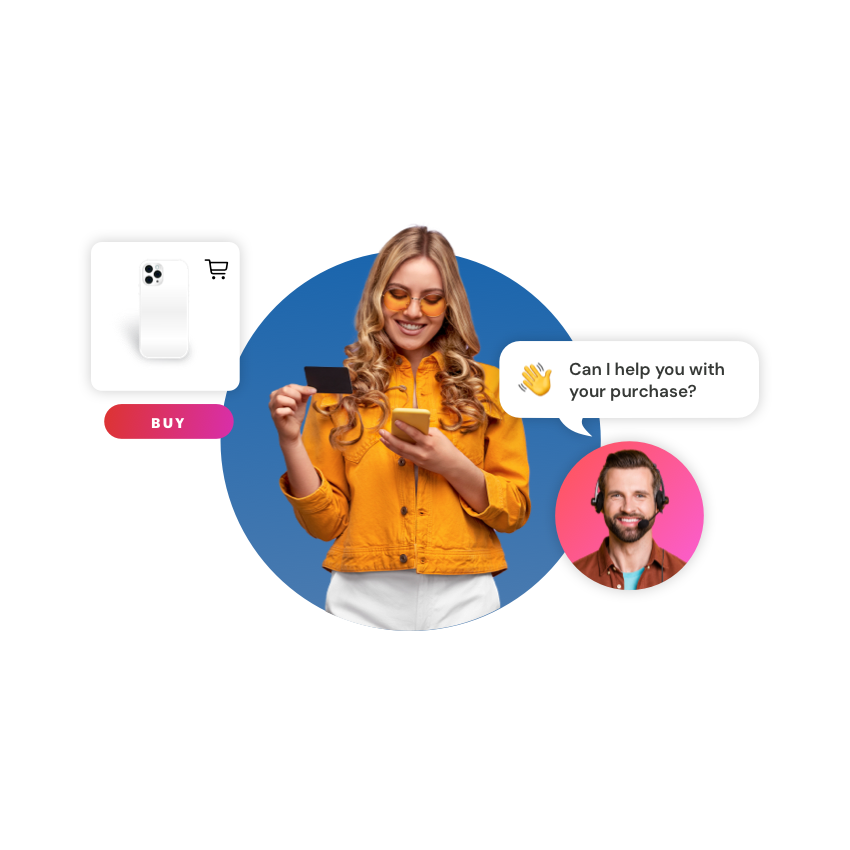
Inspirational Commerce 1

Why CoreMedia is the premier alternative over Sanity

Hybrid headless architecture for marketers and developers

Combines API-first content delivery with WYSIWYG visual editing, enabling marketing teams to create, preview, and publish content without developer involvement — supporting up to 75% faster time to web.

Native personalization built into the platform

Audience segmentation, behavioral targeting, A/B testing, and dynamic content delivery are included natively, with no third-party personalization tool required.

Inspirational commerce for conversion-driven journeys

Pre-built connectors to Salesforce Commerce Cloud, SAP Commerce, and other leading engines allow editorial teams to embed shoppable content and transactional elements directly within the CMS.

Digital content meets human assistance

Extend the CMS seamlessly with a Cloud Contact Center, enabling live chat, click-to-call, video shopping, and co-browsing triggered by visitor behavior.

Multi-brand and multi-region content governance

Role-based permissions, structured approval workflows, and localization tooling are built into a single editorial hub, without requiring developer-configured schemas to enforce governance.

AI-powered content workflows

CoreMedia KIO handles content generation, automated tagging, SEO optimization, and translation directly within editorial workflows using natural language, scaling output across regions without losing human control.

Flexible deployment for regulated industries

Supports cloud, private cloud, and on-premises deployment, giving enterprises in regulated industries full control over data residency and compliance configuration.

Omnichannel orchestration from a unified platform

Manages content delivery across web, mobile, commerce, and service touchpoints from one platform, reducing integration overhead across channels and regions.

Benefits of switching from Acquia to CoreMedia

Sanity's editorial interface, Sanity Studio, is a fully customizable, open-source editing environment built with React, where teams define their own content schemas, workflows, and design layouts. The flexibility this provides for developers is a genuine strength. However, because there is no front end built into the architecture, headless CMS sites usually require front-end development skills, and setting up live preview environments depends on developer configuration. 

CoreMedia's Hybrid Headless approach is designed to address this directly. Marketing teams can create, preview, and publish personalized content using drag-and-drop interfaces and in-context visual editors, without submitting requests to a development team. For enterprises where content velocity and campaign agility are business-critical, this architectural difference has a direct operational impact on time to market. 

Sanity structures content as data that flows between systems including ERP, CRM, and e-commerce platforms bidirectionally and in real time via APIs. This makes Sanity a capable data layer for commerce-driven architectures, but the editorial-to-commerce connection requires custom frontend development to surface product content, pricing, and transactional elements within the experience. 

CoreMedia's Inspirational Commerce framework provides pre-built connectors to leading commerce platforms and enables editorial teams to blend narrative content with transactional inputs directly within the CMS. This reduces the custom development effort required to create shoppable editorial experiences and shortens the path from content creation to revenue-generating interaction.

Sanity does not provide native personalization capabilities. Delivering personalized experiences on a pure headless architecture requires assembling separate tooling — a dedicated personalization engine, a behavioral data layer, and an experimentation platform — and integrating each with the CMS. This adds vendor dependencies, integration overhead, and ongoing maintenance complexity for marketing teams. 

CoreMedia delivers audience segmentation, behavioral targeting, A/B testing, and dynamic content delivery natively within the platform, giving marketing teams direct control without additional tooling. For high-value journeys where automated personalization is not sufficient, CoreMedia's Customer Engagement Platform extends this further — connecting digital content interactions to live chat, click-to-call, and video shopping, and allowing organizations to escalate visitors to human-assisted touchpoints based on behavioral signals.

Sanity supports multi-channel publishing, real-time collaboration, and fully customizable editorial workflows, and provides tools for building custom editorial interfaces suited to teams managing multiple markets. However, the governance model is largely schema-driven and depends on developer configuration to enforce workflows, localization pipelines, and multi-site coordination. 

CoreMedia provides structured, role-based editorial governance across brands, regions, and languages from a centralized platform with built-in approval processes, localization tooling, and publishing controls. This reduces the configuration and maintenance effort associated with large, distributed content operations and provides enterprise-grade governance without requiring custom development investment.

Sanity's Enterprise plan is available for organizations with complex security, support, and performance needs, with pricing negotiated directly with the sales team. Below Enterprise tier, the Growth plan charges $15 per occupied seat per month, with a cap of 50 seats. Beyond platform licensing, Enterprise Sanity implementations require custom frontend development, ongoing schema maintenance, and separate tooling for personalization, commerce integration, and contact center capabilities. Several organizations need to upgrade to Enterprise sooner than anticipated as content teams grow and usage patterns exceed Growth plan quotas for documents, API requests, and seats. 

CoreMedia's concurrent user pricing model is structured for large organizations where many users need access without proportional per-seat cost growth. A unified platform for content, personalization, commerce integration, and engagement reduces the number of third-party tools required, lowering the total cost of maintaining and integrating a multi-vendor stack over time.

Sanity is a cloud-native platform. There is no on-premises deployment option available. For enterprises in regulated industries with data residency requirements, specific compliance mandates, or organizational policies around infrastructure control, this represents a structural constraint that must be evaluated during vendor selection. 

CoreMedia supports cloud, private cloud, and on-premises deployment, giving enterprises full control over where the platform runs and how data is stored. This flexibility is a frequently cited factor in enterprise procurement decisions, particularly in financial services, telecommunications, and public sector organizations.

Sanity's enterprise offering includes access to dedicated technical teams and support through its global presence. Community-driven documentation and developer resources are well established and widely used. 

CoreMedia provides dedicated enterprise SLAs, onboarding support, and named account management for enterprise customers, with structured implementation methodology and ongoing upgrade support included as part of the enterprise relationship.

A fast, low risk CMS migration to CoreMedia – under 90 days

Migrating from a pure headless CMS environment to CoreMedia does not require rebuilding from scratch. The structured, API-based nature of Sanity's content model means that content assets, taxonomies, and data relationships can be mapped and migrated incrementally into CoreMedia's Content Management Systempreserving the editorial work already completed while restructuring the governance and delivery layer. 

CoreMedia follows a phased migration methodology designed to maintain business continuity throughout the transition. Existing content pipelines, commerce integrations, and regional configurations remain operational while the new platform is configured, content is migrated in structured phases, and teams are onboarded to the new editorial environment. This approach avoids the operational disruption of a full cutover and reduces the risk of content gaps or publishing downtime during migration. 

The primary transition effort in a Sanity-to-CoreMedia migration involves establishing the visual editing layer, configuring governance workflows for distributed teams, and connecting the Customer Engagement Platform and commerce integrations that Sanity environments typically handle through separate third-party tools.  

With structured planning, enterprises have completed this type of migration in as little as 90 days. Enterprise Ireland is one example of an organization that completed a full CMS migration within that timeframe, demonstrating that disciplined, phased execution enables rapid delivery without compromising stability. 
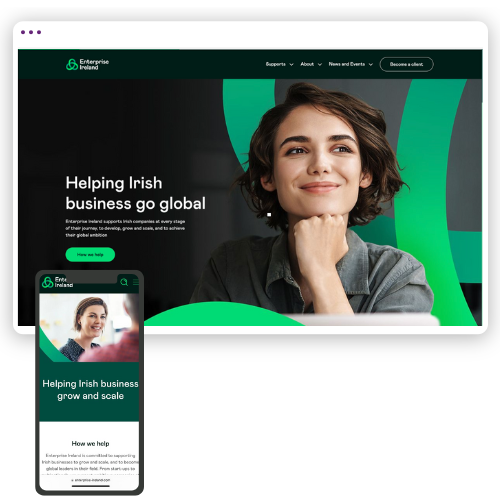
Read the story
Enterprise Ireland website

What our clients say

"We started by adopting CoreMedia Click2Call at Yoigo. We then integrated CoreMedia's other lead activation and personalization tools. The implementation has resulted in a very significant increase in the volume of relevant customer calls from different visitor profiles, and we couldn't be more pleased.”

Francisco Trujillo, Head of Online Sales, MásMóvil

“We picked CoreMedia after researching multiple content management systems for a couple of years. The learning curve for the non-technical user was really easy.”

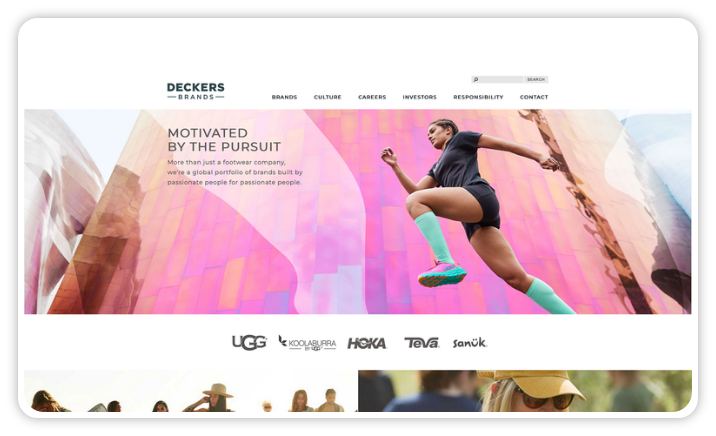
Nick Smotek, Global Director Digital Technology and UX, Deckers Brand

"With CoreMedia, the only limit is our imagination. We build fast, flexible experiences that scale globally – and deliver outstanding UX to our customers."

Marjori Blaske, Digital Marketing Manager, InSinkErator

"With CoreMedia, the technical setup is no longer a limiting factor for launching a new website. On the contrary, CoreMedia's latest technology standards enable us to launch websites faster than ever before and prepare us for the future."

Martin Schönfeld, Head of Digital Platform and Technology Management at Henkel

Frequently Asked Questions (FAQ's)

Everything you need to know

What is the core architectural difference between Sanity and CoreMedia?

Sanity is a pure headless CMS built around a real-time structured content database (the Content Lake) and a developer-configurable editing environment (Sanity Studio). Content is delivered via APIs to any frontend, with the presentation layer built and maintained separately by development teams. CoreMedia is a Hybrid Headless DXP that combines API-first content delivery with WYSIWYG visual editors, native personalization, commerce integration, and an Engagement Cloud, enabling marketing teams to manage and publish experiences without continuous developer involvement.

What is a strong enterprise alternative to Sanity?

For global enterprises that have outgrown developer-centric content infrastructure, CoreMedia is the leading alternative. Where Sanity requires development resources for frontend presentation, personalization tooling, and commerce integration, CoreMedia provides these capabilities natively within a single platform — giving marketing teams editorial autonomy and reducing the custom development overhead that typically accumulates in enterprise Sanity environments.

What are Sanity’s limitations for managing content across multiple brands and regions?

Sanity's governance model is largely schema-driven and depends on developer configuration to enforce workflows, localization pipelines, and multi-site coordination. As organizational complexity grows across brands and markets, this increases the developer effort required to maintain consistent governance — making it difficult for distributed editorial teams to operate independently. CoreMedia provides centralized editorial governance, role-based permissions, structured approval workflows, and localization tooling from a single platform, without requiring custom development to enforce those controls at scale.

Does CoreMedia support omnichannel content delivery like Sanity?

Yes. CoreMedia delivers content via API to web, mobile, commerce platforms, and other digital touchpoints, consistent with the headless delivery model Sanity uses. CoreMedia extends this with native management of the full experience layer, including personalization, visual editing, and the Engagement Cloud, which connects digital content delivery to human-assisted customer touchpoints such as live chat, video shopping, and voice interactions. All capabilities are composable and you only pay for what you need.

Does CoreMedia offer native personalization, or does it require a third-party tool?

CoreMedia provides native personalization within the CMS, including audience segmentation, behavioral targeting, A/B experimentation, and dynamic content delivery. Marketing teams can configure and manage personalized experiences from the same editorial environment they use for content creation, without requiring a separate personalization vendor or integration.

What is CoreMedia's Customer Engagement Platform, and does Sanity offer anything equivalent?

CoreMedia's Customer Engagement Platform is a native component of the CoreMedia Experience Platform that connects the CMS with a Cloud Contact Center. It enables organizations to escalate high-value digital customer journeys to live chat, click-to-call, and video shopping based on behavioral triggers, with agents able to initiate co-browsing sessions and supported by real-time AI insights and customer journey data. Sanity, as a headless CMS infrastructure, does not offer a native equivalent. Organizations requiring this capability must integrate separate contact center and conversational platforms, adding vendor relationships and integration complexity.

Can CoreMedia be deployed on-premises?

Yes. CoreMedia supports cloud, private cloud, and on-premises deployment. Sanity is exclusively cloud-hosted with no on-premises option. For enterprises in regulated industries, those with specific data residency requirements, or organizations operating in regions with strict data sovereignty rules, CoreMedia's deployment flexibility is a material factor in vendor selection.

What drives up the total cost of ownership for enterprise Sanity implementations?

The primary TCO drivers in enterprise Sanity implementations include custom frontend development to build and maintain the presentation layer, ongoing developer resources for schema configuration and workflow management, separate tooling required for personalization, commerce integration, and contact center capabilities not included in Sanity's platform, and potential usage-based cost increases as content volume, API requests, and team size grow. Organizations managing large content teams may also encounter seat ceiling constraints on the Growth plan before requiring Enterprise pricing. 

How long does it take to migrate from Sanity to CoreMedia?

With structured planning and a phased migration approach, enterprises can complete a migration from Sanity to CoreMedia in as little as 90 days. CoreMedia's migration methodology is designed to maintain business continuity throughout the transition, moving content, workflows, and integrations incrementally rather than requiring a full cutover. The actual timeline depends on content volume, the complexity of existing commerce and personalization integrations, and the number of regional sites or brands involved.

When should an enterprise choose Sanity over CoreMedia?

Sanity fits organizations where content is treated purely as a data layer: structured, API-delivered, and consumed by developer-built frontends. If your team has no requirement for marketer autonomy, native personalization, or commerce integration, a pure headless CMS is sufficient. CoreMedia is the stronger choice when the platform must do more: enable marketing teams to publish and personalize independently, connect content directly to commerce engines, and support customer journeys that extend beyond digital into human-assisted engagement — all without assembling those capabilities from separate vendors.